

Games that get the whole family excited! A collection of ideas you can start right away with no equipment

Looking for games the whole family can enjoy? Here are fun activities that anyone can join in on without using game consoles or smartphones.
Enjoy keeping time to a rhythm, get everyone laughing with gesture games, and spend a lively time using both your mind and body! We’ve gathered plenty of fun games that create smiles and a warm atmosphere—even without any props.
They’re great for all generations to play together, naturally strengthening family bonds.
So, what will you play to get everyone excited today?
- Games that get everyone excited without any equipment! A collection of simple ideas everyone can enjoy
- Get this excited with no props! A collection of Japanese play ideas
- Big fun with no props! A collection of party game ideas
- No props needed: games everyone can play—fun activities using only voices and gestures
- Indoor Games You Can Do in 5 Minutes: A Collection of No-Prep, Instant-Fun Ideas
- Games for 4 people with no equipment needed! Fun activities you’ll want to try right now
- Get moving and have a blast! A collection of safe play ideas
- Games to Play on Children’s Day: A Collection of Family-Friendly Ideas
- Fun for up to 10 people! A collection of easy, no-equipment games and activities
- Fun games for five people! No props needed—ideas you can enjoy right now
- A collection of fun indoor play ideas: easy-rule games that hype up the fun
- A game that the whole family can enjoy playing together
- A big hit at after-school childcare! A special feature on group games and activities you can play without any equipment
Games that get the whole family excited! A collection of ideas you can start right away without any equipment (1–10)
Limited Shiritori

Here’s an idea for a game the whole family can enjoy: play regular shiritori but add a themed restriction.
Narrow the scope to things like celebrity names, animal names, or items you can buy at convenience stores, and play with a time limit or your own custom rules.
By adjusting the difficulty or choosing categories with fewer options, you boost the fun of thinking on your feet.
Different themes highlight different strengths, so kids and adults each get chances to shine—making it enjoyable across generations.
It can even spark nostalgic stories, making it perfect for family communication.
It’s an intellectual game that lets you exercise both creativity and memory.

C game

The family-favorite “C Game” is a fun game that gets everyone laughing whether you nail the answer or not.
The rules are simple: just like the name suggests, you look for and say words that end with “C,” pronounced “shii” in Japanese.
For example: oishii (delicious), tanoshii (fun), vitamin C, and so on.
Before your answer, add a related lead-in like “If it’s XX, then…” or “As for XX, …,” and take turns responding.
If you can keep the rhythm, you’re safe and it moves to the next person.
Any number of people can join, so why not enjoy it with your family?

Word association game

An association game where you infer the answer from given hints.
It’s fun and satisfying when you think through various possibilities from the clues and finally arrive at the answer, isn’t it? There are many types of association games, such as guessing animals or fruits from three hints, or figuring out the answer from gestures.
A version where you derive the answer from onomatopoeic sound clues also sounds interesting.
The key is to come up with sound effects that might lead to the answer but don’t directly give it away.
Even something that makes you think, “Does that sound effect even exist?” is fine if it can prompt the right association—try getting creative!

Family fun games! A collection of ideas you can start right now with no equipment (11–20)
Gesture Game

The “gesture game” gets you moving your arms and legs, using your whole body, and even gives your brain a workout as you think.
It can be enjoyed by any number of people, from small to large groups, so it’s perfect for family fun! It’s also fun to figure out how to convey the prompt using only gestures within the time limit.
If you have a large family, you could make multiple teams and compete in a team match—that might be exciting, too.
Give it a try!

Beef Tongue Game

The Gyu-tan Game is a rhythmic game where you say “gyu-tan, gyu-tan, gyu-tan-tan” in time with the beat, gradually adding more “tan.” Since you coordinate by clapping both hands as you go, it requires syncing your hands and voice, making it great for developing a sense of rhythm and concentration.
If someone gets the order wrong or loses the rhythm, it usually gets a laugh and instantly lightens the mood.
You can make it even more exciting by speeding up the tempo or substituting a different word for “tan.” The rules are simple but it really livens things up, so it’s a great game to play with the family.
31 game
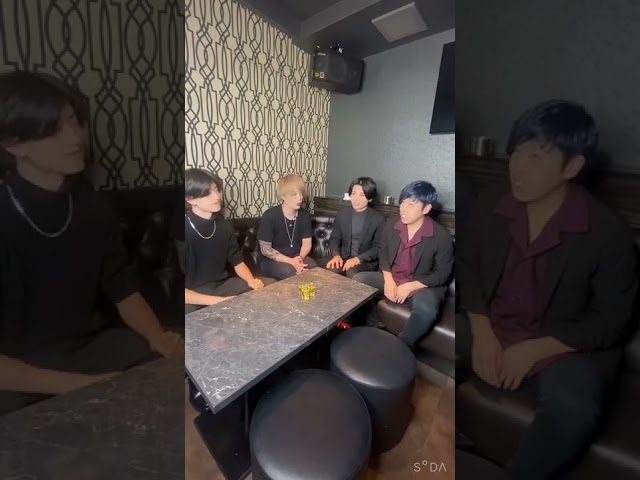
The 31 game is a simple game where the person who says 31 last loses.
It’s simple, but it can be surprisingly addictive once you get into it.
You’ll probably find yourself thinking hard about how to participate without ending up saying 31.
Not just for 31—there seems to be a little trick to avoid saying the final, designated number.
For example, you can try to control the flow so that you say the number that is one less than the forbidden number, or make it a point to go first and say 1.
If you use your head to plan a strategy and take on the game, you might just see a path to victory.
Telephone game
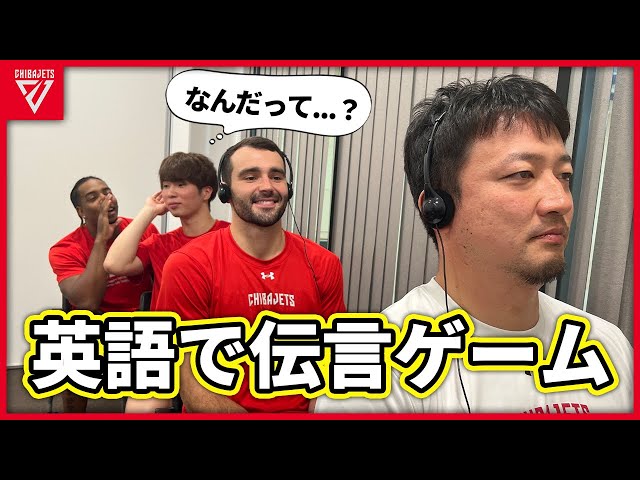
The telephone game is a game where you pass a word or phrase along to the next person.
It’s fun to watch how the original prompt changes along the way.
Let’s try making the prompts for this telephone game in English.
Even in Japanese, the final person sometimes ends up with something completely different from the original word.
Using English would make it even more challenging and probably funnier as the words change.
English education for kids has become quite robust lately.
Single words are fine, but why not try passing full sentences in the game? The kids might even show English skills that rival those of adults.