

Games that get the whole family excited! A collection of ideas you can start right away with no equipment

Looking for games the whole family can enjoy? Here are fun activities that anyone can join in on without using game consoles or smartphones.
Enjoy keeping time to a rhythm, get everyone laughing with gesture games, and spend a lively time using both your mind and body! We’ve gathered plenty of fun games that create smiles and a warm atmosphere—even without any props.
They’re great for all generations to play together, naturally strengthening family bonds.
So, what will you play to get everyone excited today?
- Games that get everyone excited without any equipment! A collection of simple ideas everyone can enjoy
- Get this excited with no props! A collection of Japanese play ideas
- Big fun with no props! A collection of party game ideas
- No props needed: games everyone can play—fun activities using only voices and gestures
- Indoor Games You Can Do in 5 Minutes: A Collection of No-Prep, Instant-Fun Ideas
- Games for 4 people with no equipment needed! Fun activities you’ll want to try right now
- Get moving and have a blast! A collection of safe play ideas
- Games to Play on Children’s Day: A Collection of Family-Friendly Ideas
- Fun for up to 10 people! A collection of easy, no-equipment games and activities
- Fun games for five people! No props needed—ideas you can enjoy right now
- A collection of fun indoor play ideas: easy-rule games that hype up the fun
- A game that the whole family can enjoy playing together
- A big hit at after-school childcare! A special feature on group games and activities you can play without any equipment
Family fun games! A collection of ideas you can start right now with no equipment (11–20)
The ‘It fell, it fell’ game
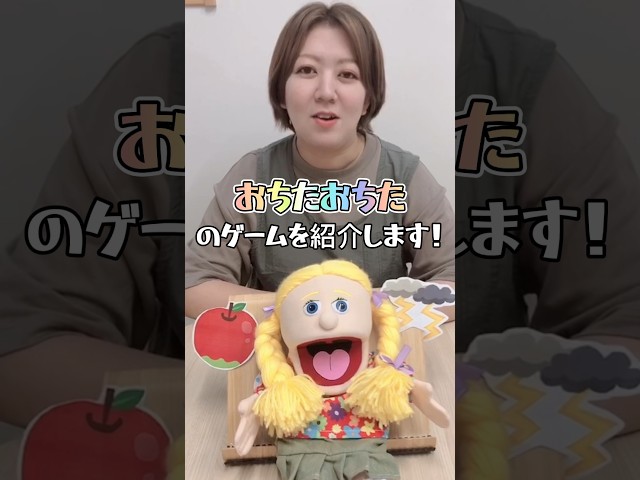
How about trying a simple game you can play during a little family time? This time, we’re introducing a game the whole family can enjoy: “Ochita, ochita” (It fell, it fell).
You don’t need any preparation.
While clapping your hands, everyone says together, “It fell, it fell.
What fell?” When it’s your turn, say something like “An apple fell” or “Thunder.” If an apple fell, pretend to catch it; if it’s thunder, hide your belly button—move your body by imagining what fell.
Of course, it’s also fun to say things that make you think, “Can that even fall?”

after-the-fact rock-paper-scissors

Ato-dashi rock-paper-scissors looks simple, but it’s actually a great brain-training game that makes you think! The rules are easy: after your opponent plays, you choose rock, paper, or scissors that will beat what they showed.
After trying a few rounds, challenge yourself with the version where you deliberately lose on the follow-up.
Quickly figuring out how to win or lose at rock-paper-scissors, and making big movements with your fingers, provides just the right amount of stimulation for your brain.
It’s quick and fun, so it’s also recommended as a casual game to play with your family!

A game about finding the correct moves

Act out the prompt’s movement and have others guess it.
For example, if the prompt is “forward roll,” the guesser should try various movements that come to mind.
The children around, who know the prompt, should react to each movement.
Decide in advance how to react when the movement is close to the prompt—for example, by cheering.
Using those reactions, the guesser narrows down the correct answer.
It’s also fun to have multiple guessers or to play team versus team.
You don’t need any materials, it’s a simple game, and it’s sure to get everyone excited.
NG word game

It’s a game where you try to get the other person to say a word that makes them lose.
For example, let’s say the opponent’s NG (forbidden) keyword is “computer.” While chatting during the game, skillfully guide the conversation to make them say the NG word.
The key is to casually include questions like, “Have you bought anything new recently?” If your questions are too obvious, you might tip them off about the NG word, so ask carefully.
It takes some thought, but it’s a game you can play in a short amount of time.
Without Katakana

We use katakana for many names in daily life.
Katakana is familiar, but let’s try playing without using it.
First, show items that have katakana names and have people describe them without using katakana.
For example, for “pen,” someone might answer, “something you write with that isn’t a pencil.” It’s a game where you shift your thinking a bit, describe the given topic without using katakana, and have others guess.
If the topic is “game,” you could describe it as “something where you use your fingertips to control characters on the screen.” From there, everyone tries to guess the topic together.
Explaining with your current vocabulary makes for a good brain exercise.
Pin Pon Pan Game

How about trying the “Ping-Pon-Pan” game, which requires no preparation and can be played with any number of people? First, form a circle and choose the first person.
That person says “Ping.” The person to their left says “Pon,” and the next person to the left says “Pan.” The person who says “Pan” points at someone, and starting from that person, the sequence “Ping, Pon, Pan” continues again.
When you’re suddenly pointed at, you might panic and say the wrong word, so you can’t let your guard down.
It’s the kind of game that tends to be more fun with a larger group.

Family-Fun Games! A Collection of Ideas You Can Start Right Now Without Any Equipment (21–30)
Simple rhythm game

Let me introduce a simple rhythm game that can also serve as jump rope practice.
Place a circle on the ground to mark the starting position, and use it as your reference point for jumping.
Follow the caller’s instructions on where to jump.
At first, you’ll get simple commands like “forward,” “right,” and “up,” but as the level increases, combinations like “right-left” or “front-back” get mixed in, testing your reflexes.
The more complex it gets, the more excited kids are likely to be.
It doesn’t take up much space, so give it a try!