

Karaoke songs that are easy to sing even if you’re not confident in your pitch (for women in their 50s)


When you’re invited to go to karaoke with friends or coworkers, it’s hard to decline just because you’re not good at singing or you’re not a fan of karaoke, right? So in this article, we’ve gathered songs that seem easy to sing even for women in their 50s who aren’t confident singers.
If you’re going to sing, familiar tunes are best, aren’t they? With that in mind, we’ve focused on hit songs from the ’80s and ’90s, and we’ve also included some new releases by artists who were active back then! The article includes tips for singing as well, so please use it as a reference and enjoy your karaoke time! And for younger readers, we hope this helps you choose songs when you go to karaoke with people in their 50s.
- [For People in Their 50s] Ranking of Easy-to-Sing Karaoke Songs [2026]
- Easy-to-sing Japanese karaoke songs recommended for women in their 50s
- [Karaoke] A roundup of songs that are easy for women to sing!
- Even if you’re tone-deaf, it’s okay! Easy karaoke songs for women
- A must-see for low-voiced women! Popular songs that are easy to sing at karaoke
- Recommended for women in their 50s! A curated selection of classic and popular karaoke hits that will get the crowd going
- Recommended for women in their 60s! Easy-to-sing Japanese karaoke songs
- Famous songs we’d like women in their 50s to sing (by age group)
- [Women in Their 40s] Even If You’re Tone-Deaf, You Can Sing! Karaoke Songs That Fit a Woman’s Vocal Range
- Recommended for women in their 60s! Songs that get the crowd going at karaoke
- Easy-to-sing karaoke songs: Classic picks for women in their 40s
- [Calling all low-voiced women in their 40s!] Songs that are easy to sing at karaoke
- Recommended for millennial women who aren't confident singers: easy-to-sing karaoke songs
[Women in their 50s] Easy-to-sing karaoke songs even if you're not confident in your pitch (21–30)
TANGO NOIRNakamori Akina

Among women in their 50s—especially those in their late 50s—many may have admired Akina Nakamori.
With her sultry low voice and captivating performances, she was so stunning that even women couldn’t help but be enthralled.
Of her songs, the one I especially recommend as easy to sing is “TANGO NOIR.” Since it’s composed in a lower range, there’s no strain from belting high notes.
If you’re a woman in your 50s with a low voice, definitely give it a try.

FriendsREBECCA

For women in their 50s who want to sing a fast-paced rock song at karaoke, I highly recommend “Friends.” Released in 1985 by Rebecca, a rock band active since the 1980s, it’s known as one of their signature tracks.
NOKKO’s supple vocals over a passionate rock sound make a strong impression.
When singing it at karaoke, the key is to project energetically in time with the up-tempo rhythm.
Give this rock number a try to lift the mood in the karaoke room.

[Women in their 50s] Easy-to-sing karaoke songs even if you're not confident in your pitch (31–40)
From a distant townImai Miki

Miki Imai’s hidden gem “Tooi Machi Kara” (“From a Distant Town”).
Released in 2015, it remains one of her most serene and cherished masterpieces among fans.
While the song doesn’t have a particularly narrow vocal range, it can be sung throughout in a whispery style, making it easier to perform than it sounds.
It may seem like a high-pitched song, but it doesn’t require falsetto, and the higher notes can be reached smoothly by thinning the voice.
It’s recommended for those whose natural pitch is high but who struggle with vocal power.
Even when I become an old ladyMoritaka Chisato
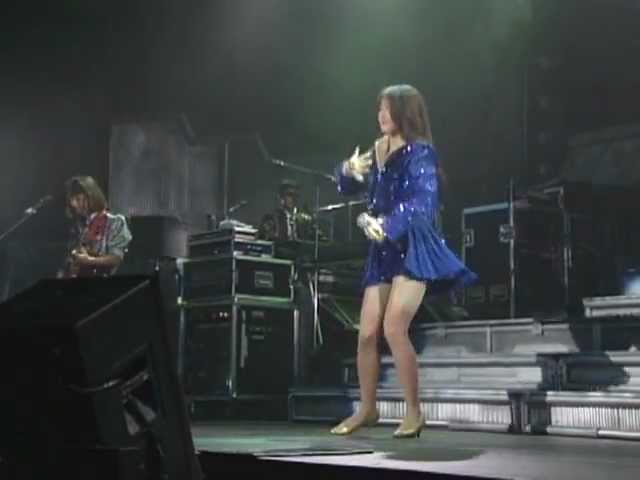
Released in June 1992, this is Chisato Moritaka’s 16th single.
When she debuted, she arrived with the catchphrase “Declaration of a Non-Talented Idol!” Given that it’s one of her hits, you don’t need any high-level vocal skills to sing this song at all (lol).
Keep it light, upbeat, and cute, and you’ll be just fine.
These days, if a woman in her 50s sings this, some people might say, “Huh? Not ‘even when I become an obasan’—you’re already an obasan!” But let’s actively ignore such mean-spirited comments and have fun singing anyway (lol).

A Midsummer Night’s DreamMatsutōya Yumi

Released in July 1993, this was Yumi Matsutoya’s 24th single.
It was also the theme song for the sequel to the drama that became a hot topic thanks to Shiro Sano’s chilling performance as Fuyuhiko—‘Zutto Anata ga Suki Datta’—with the sequel titled ‘Dare ni mo Ienai.’ So even if you’re not a Yuming fan, many of you have probably heard this song.
The orchestral hit right before the chorus strongly evokes the sound trends of the era when it was released.
As is true of all the songs introduced in this theme, this one doesn’t require an extremely wide vocal range.
The melody is designed so anyone can sing it without strain, so if you just make sure not to lag behind the slightly bouncy rhythm, even those who aren’t confident singers should be able to pull it off nicely.
RomanceIwasaki Hiromi
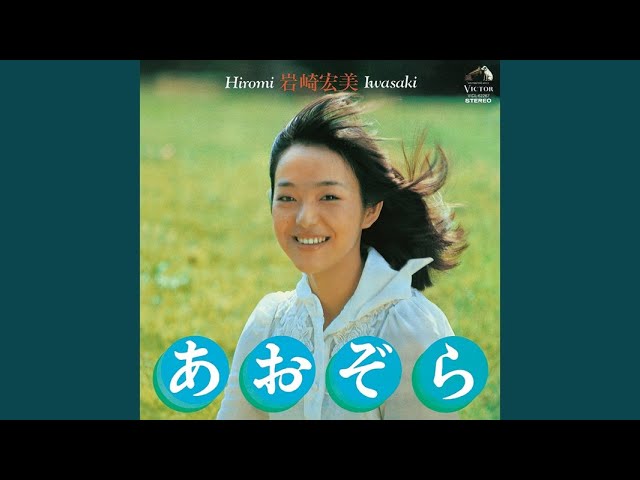
This was Hiromi Iwasaki’s second single, released on July 25, 1975.
It sold over 900,000 copies, making it a true classic of the Showa-era kayōkyoku genre.
As of 2021, I’d wager there isn’t a single woman in her 50s who hasn’t heard this song.
It predates the emergence of what was then called “new music,” which grew out of folk singers, and it very much carries the feel of a song composed by seasoned professionals.
In that sense too, it’s a masterpiece.
For better or worse, every detail is meticulously crafted—truly the work of pros! Be sure to enjoy it at karaoke as well!
TOMORROWMayo Okamoto

This was Mayo Okamoto’s debut single, released on May 10, 1995.
It was the theme song for the TBS drama “Second Chance,” and reached No.
1 on the Oricon Singles Chart in its eighth week on the chart.
Notably, this single remains her only No.
1 on that chart.
If you’re in your 50s, chances are you’ve heard this song at least once.
The mid-1990s, when this song was released, was truly the golden age of J-pop, a time when million-selling hits were coming one after another from various labels and artists.
One factor considered crucial back then for aiming at a million-seller was “being easy to sing at karaoke.” This song is no exception; starting with its chorus, it features melodies that are very easy to sing and remember, making it a comfortable choice even for those who aren’t confident singers.
The vocal range used in the melody isn’t very wide either, so don’t be afraid—give it a try!