

Karaoke songs that are easy to sing even if you’re not confident in your pitch (for women in their 50s)


When you’re invited to go to karaoke with friends or coworkers, it’s hard to decline just because you’re not good at singing or you’re not a fan of karaoke, right? So in this article, we’ve gathered songs that seem easy to sing even for women in their 50s who aren’t confident singers.
If you’re going to sing, familiar tunes are best, aren’t they? With that in mind, we’ve focused on hit songs from the ’80s and ’90s, and we’ve also included some new releases by artists who were active back then! The article includes tips for singing as well, so please use it as a reference and enjoy your karaoke time! And for younger readers, we hope this helps you choose songs when you go to karaoke with people in their 50s.
- [For People in Their 50s] Ranking of Easy-to-Sing Karaoke Songs [2026]
- Easy-to-sing Japanese karaoke songs recommended for women in their 50s
- [Karaoke] A roundup of songs that are easy for women to sing!
- Even if you’re tone-deaf, it’s okay! Easy karaoke songs for women
- A must-see for low-voiced women! Popular songs that are easy to sing at karaoke
- Recommended for women in their 50s! A curated selection of classic and popular karaoke hits that will get the crowd going
- Recommended for women in their 60s! Easy-to-sing Japanese karaoke songs
- Famous songs we’d like women in their 50s to sing (by age group)
- [Women in Their 40s] Even If You’re Tone-Deaf, You Can Sing! Karaoke Songs That Fit a Woman’s Vocal Range
- Recommended for women in their 60s! Songs that get the crowd going at karaoke
- Easy-to-sing karaoke songs: Classic picks for women in their 40s
- [Calling all low-voiced women in their 40s!] Songs that are easy to sing at karaoke
- Recommended for millennial women who aren't confident singers: easy-to-sing karaoke songs
[Women in their 50s] Easy-to-sing karaoke songs even if you're not confident in your pitch (41–50)
Nancy of Summer ColorsHayami Yū

Amid the idol boom of the 1980s, Yū Hayami achieved especially remarkable success.
She has produced many classic songs, and among them, “Natsuiro no Nancy” garnered particularly great popularity.
Although the song stands out for its bright and refreshing melody, the vocal line is surprisingly gentle in its rises and falls, and the range isn’t very wide.
The pitch is easy to follow as well, making it a singable choice for women in their 50s who are familiar with the track.
Consider adding it to your repertoire.

[Women in their 50s] Easy-to-sing karaoke songs even without confidence in pitch (51–60)
UFOpinku redii

This was the sixth single by Pink Lady, a hit duo in Japan in the 1970s, released in December 1977—and their biggest hit.
As of 2019, if you’re in your 50s, this song needs no introduction! Many of you probably remember scenes in elementary school classrooms all over Japan where nearly every girl in the class was singing and dancing to this tune when it was a hit.
Maybe you, reading this now, were one of them.
A lot of people even copied the signatures of the two members of Pink Lady, didn’t they? Every time they released a new song, their costumes and choreography drew attention.
I don’t know whether the song was composed with that in mind, but the melody itself is very simple and easy to sing.
So even if you’re usually not confident about singing, I hope this song brings back memories of your elementary school days and that you give it a try.
And if you still remember the choreography, by all means, enjoy it with the moves!

TouchIwasaki Yoshimi

Released in March 1985, this is Yoshimi Iwasaki’s 20th single.
It served as the theme song for the hit anime Touch, based on the original work by Mitsuru Adachi.
It’s a classic that has been covered by many singers, most notably by Noriko Hidaka, who voiced the heroine Minami Asakura in the anime.
With a wistful melody much loved by Japanese listeners and an easy-to-sing structure, it’s a strongly recommended choice for those who aren’t confident in singing and want something for karaoke.
The key should be manageable for most people in the original key.
It also has a pleasantly brisk, slightly rockabilly-style rhythm, so when you sing it, be careful not to let the rhythm get heavy.
Lullaby of the Holy MothersIwasaki Hiromi

Released in May 1982, this was Hiromi Iwasaki’s 28th single.
It was also used as the ending theme for the two-hour drama series Tuesday Suspense Theater.
Initially, only one chorus was produced for the drama’s ending theme, but due to the strong response after the broadcast, the rest of the song was quickly created and it was released as a single—so the story goes.
As you’d expect from a song by Hiromi Iwasaki, who was renowned for her vocal ability, this track can be a bit challenging for those who aren’t confident singers.
That said, the composition itself isn’t particularly difficult, so even people who don’t sing often should definitely give it a try.
To achieve the powerful high notes in the chorus like Iwasaki herself, you might need to take some vocal training lessons.
If the high notes are tough, try lowering the key.
lover; mistress; extramarital partnerTeresa Ten

Teresa Teng left us with many timeless songs.
For women in their late 50s, many of her hits are likely cherished memories of their youth.
Among them, the one I especially recommend is Lover.
Many people may have resonated with its lyrics, which poignantly depict a mature romance.
What makes this song particularly easy to sing is its kayōkyoku-style vocal line.
The range is neither too wide nor too narrow, and the rhythm is easy to follow, so for those who find melodies common in enka and kayōkyoku easy to sing, this can be considered a low-difficulty song.
If the mid-to-high notes in the chorus feel challenging, try lowering the key by one semitone.
BEACONDREAMS COME TRUE

For women in their 40s, isn’t DREAMS COME TRUE arguably the most popular musical duo? They have many classic songs, but the one I recommend as an easy pick even for those who aren’t great at singing is BEACON.
This relatively new track was released in July 2025 as the theme song for the TV drama “The Great Pursuit: Metropolitan Police Department SSBC Major Crimes Unit.” The song marks a return to the late-1990s to early-2000s style, featuring a wistful yet nostalgic melody.
In particular, the bass line carries a nostalgic effect that you don’t often hear in contemporary Japanese pop.
As for the vocal line, it has a relatively narrow range for a DREAMS COME TRUE song.
While there are plenty of long sustained notes, the overall pitch movement is gentle.
Time goes byEvery Little Thing
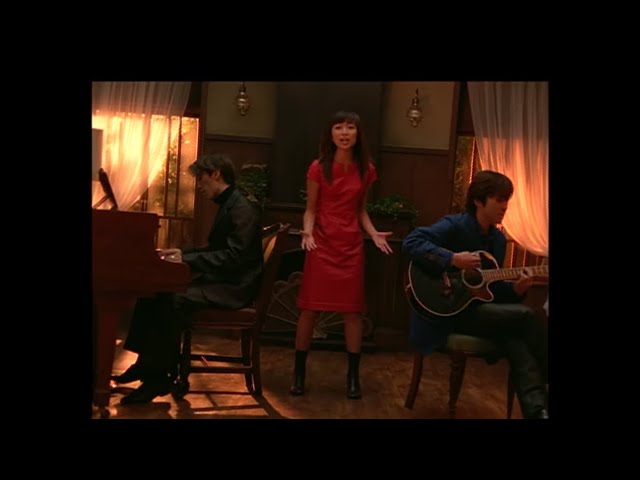
When it comes to karaoke with coworkers or friends, a great song for women in their 50s is “Time goes by.” The music duo Every Little Thing released it in 1998, and it’s known as one of their signature tracks.
It was used as the theme song for the TV drama “Amai Kekkon” (“Sweet Marriage”), so some people may feel a sense of nostalgia.
The key to singing it well is to keep your delivery calm in the first verse, then gradually add volume and intensity from the pre-chorus into the chorus, all over a beautiful, piano-centered melody.
Since the tempo is slow, it’s easy even for those who aren’t confident at karaoke.
It has been covered by many artists across eras, making it a great pick for karaoke gatherings with a wide range of ages.
