

[Women in Their 40s] Even If You’re Tone-Deaf, You Can Sing! Karaoke Songs That Fit a Woman’s Vocal Range


As you enter your 40s, not only does age-related decline set in, but the cumulative effects of lifestyle habits like drinking and smoking can also make it harder to produce your voice.
If you feel you’re tone-deaf, you may be even more sensitive to these changes.
This time, we’ve selected karaoke songs that are easy to sing for women in their 40s who struggle with being tone-deaf!
We also touch on specific tips, so if you want to build your vocal technique and overcome tone-deafness, don’t miss this!
- [2026 Edition] Karaoke Songs That Will Get the Crowd Going—Perfect for Women in Their 40s
- Easy-to-sing karaoke songs: Classic picks for women in their 40s
- [For People in Their 40s] Karaoke Songs That Are Easy to Sing: 2026 Ranking
- A must-see for low-voiced women! Popular songs that are easy to sing at karaoke
- Karaoke songs that are easy to sing even if you’re not confident in your pitch (for women in their 50s)
- [Calling all low-voiced women in their 40s!] Songs that are easy to sing at karaoke
- Famous songs we’d like women in their 40s to sing, by age group
- Even if you’re tone-deaf, it’s okay! Easy karaoke songs for women
- [For Women in Their 40s] A Collection of Songs That Score High at Karaoke [2026]
- [Karaoke] A roundup of songs that are easy for women to sing!
- Attractive songs recommended for women in their 40s: Karaoke tracks that are popular with men
- Karaoke songs that make it easy to score 100 points [for women]
- [Recommended for women in their 30s] Popular and latest songs that are easy to sing at karaoke
[Women in their 40s] Songs Even the Tone-Deaf Can Sing! Karaoke Tracks That Fit the Female Vocal Range (61–70)
Azure RabbitNoriko Sakai
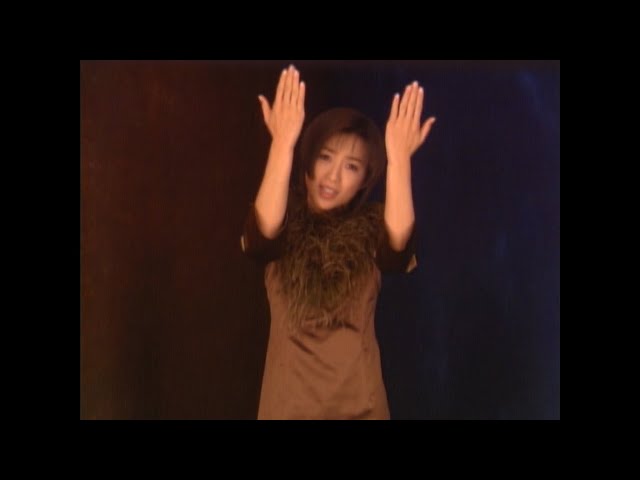
Noriko Sakai, affectionately known as Nori-P, has also been active as a singer and has left behind several classic songs.
Among them, the one I especially recommend for women in their 40s as an easy song to sing is Aoi Usagi (Blue Rabbit).
Incorporating elements of kayōkyoku, it features a mellow, distinctly Japanese melody throughout that’s easy to sing.
In addition, there are no high-register parts, so women in their 40s should be able to sing it without difficulty.
If you like mature melodies, be sure to give this song a try.

If spring comes tomorrowMatsu Takako

Takako Matsu has appeared in numerous masterpieces as an actress and found success as an artist as well.
Although she hasn’t been particularly active as an artist recently since Frozen, women in their 40s likely watched her at the exact time she was thriving as a musical artist.
Ashita, Haru ga Kitara is a classic from the period when Takako Matsu was enjoying major success as an artist.
Arranged as a simple pop song reminiscent of Kiroro, it features a chorus with a slightly higher range; however, the vocal line is generally easy, with rhythms and melodies that are straightforward to follow.
A midsummer passing showerUtada Hikaru

After a period of hiatus from music, Hikaru Utada returned with this first track, “Manatsu no Tooriame” (Mid-Summer Showers).
This song carries a sorrowful image and is said to be a tribute to her late mother.
Recommended to be sung slowly and tenderly at a low tempo, it features steady piano accompaniment that makes it easy to keep the rhythm.
The absence of abrupt pitch changes also contributes to its ease of singing.

You’re My Only Shinin’ StarNagayama Miho

“You’re My Only Shinin’ Star” is a song by Miho Nakayama, written and composed by Toshiki Kadomatsu, released in November 1999 as her 25th single.
It was also used as an insert song in the TBS drama Mama wa Idol, in which she starred.
The song is notable for its very smooth and beautiful melody, and since the vocal range it requires isn’t particularly wide, it should be enjoyable even for women who aren’t confident singers to choose as a karaoke number.
Kadomatsu later released a self-cover version as well, so you might want to check that out too!

PRIDEImai Miki

It’s a song that was chosen as the theme for the TV drama “Doc” and is also well known for having been produced by the world-renowned musician Tomoyasu Hotei, who is famous as the guitarist of BOØWY.
As one of Miki Imai’s signature and biggest hit songs, it’s always performed at her concerts, so it’s likely a classic that every woman in her 40s—the generation that grew up with it—will know.
With its relaxed tempo and simple melody, it’s easy to sing at karaoke and is recommended for those who aren’t confident in their singing.

I miss youBEGIN

BEGIN is a band from Okinawa that has been active for many years.
With songs like Umi no Koe, which gained popularity through commercials, they’re still going strong at the forefront today.
Among their works, the song I especially recommend is Koishikute.
It sings of a faint, nostalgic love from the past and is arranged throughout with a blues feel.
While blues may often evoke a masculine image, this track also suits a woman’s supple vocal tone perfectly.
There aren’t any particularly high parts, so it’s easy to sing—even while having a drink.
ETERNAL WIND ~A Smile in the Shining Wind~Moriguchi Hiroko

Hiroko Moriguchi’s song “ETERNAL WIND ~Hohoemi wa Hikaru Kaze no Naka~,” released as the ending theme for Mobile Suit Gundam F91.
Since Gundam is typically aimed at a male audience, I don’t think many people were familiar with this song in real time, but it’s very easy to sing.
The piece sits in the mid to mid-range and maintains a slow tempo throughout.
Although it’s slow, it surprisingly doesn’t include many long sustained notes, so even women in their 40s—when the voice can start to show signs of decline for some—should be able to sing it without issue.