

[Women in Their 40s] Even If You’re Tone-Deaf, You Can Sing! Karaoke Songs That Fit a Woman’s Vocal Range


As you enter your 40s, not only does age-related decline set in, but the cumulative effects of lifestyle habits like drinking and smoking can also make it harder to produce your voice.
If you feel you’re tone-deaf, you may be even more sensitive to these changes.
This time, we’ve selected karaoke songs that are easy to sing for women in their 40s who struggle with being tone-deaf!
We also touch on specific tips, so if you want to build your vocal technique and overcome tone-deafness, don’t miss this!
- [2026 Edition] Karaoke Songs That Will Get the Crowd Going—Perfect for Women in Their 40s
- Easy-to-sing karaoke songs: Classic picks for women in their 40s
- [For People in Their 40s] Karaoke Songs That Are Easy to Sing: 2026 Ranking
- A must-see for low-voiced women! Popular songs that are easy to sing at karaoke
- Karaoke songs that are easy to sing even if you’re not confident in your pitch (for women in their 50s)
- [Calling all low-voiced women in their 40s!] Songs that are easy to sing at karaoke
- Famous songs we’d like women in their 40s to sing, by age group
- Even if you’re tone-deaf, it’s okay! Easy karaoke songs for women
- [For Women in Their 40s] A Collection of Songs That Score High at Karaoke [2026]
- [Karaoke] A roundup of songs that are easy for women to sing!
- Attractive songs recommended for women in their 40s: Karaoke tracks that are popular with men
- Karaoke songs that make it easy to score 100 points [for women]
- [Recommended for women in their 30s] Popular and latest songs that are easy to sing at karaoke
[Women in Their 40s] Songs Even the Tone-Deaf Can Sing! Karaoke Tracks That Fit the Female Vocal Range (21–30)
Aino Katachi feat. HIDE (GReeeeN)MISIA
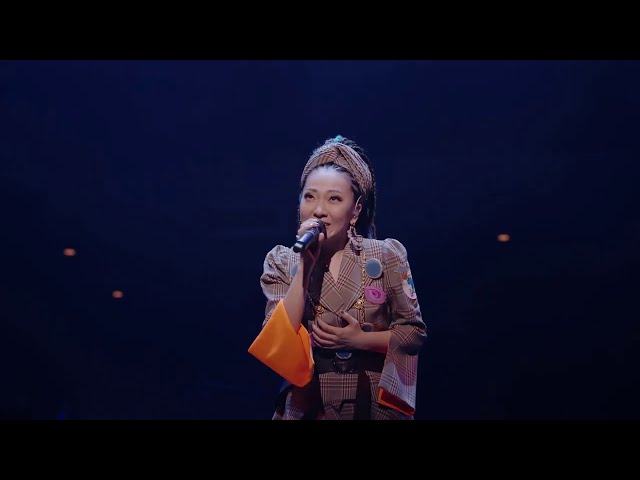
The 2018 collaboration between GReeeeN’s HIDE and MISIA, “Ai no Katachi feat.
HIDE (GReeeeN).” As a song that rivals “Aitakute Ima” and “Everything” in popularity, many women in their 50s are likely familiar with it.
This piece is arranged within a slightly narrower vocal range of mid1 A to mid2 F, making it easier to sing even for those who struggle with high notes.
However, the average pitch is mid1 G#, which is low for a women’s song, and the final big chorus features high phrases close to mixed voice.
Keep these two points in mind when singing.

rainbow-coloredayaka

This is Ayaka’s 13th single overall.
It was released digitally first in April 2014, followed by a CD release in June of the same year.
The song has a lightly bouncing, brisk rhythm, but the overall feel is very calm.
It’s the kind of piece that would suit women in their 40s—not just that they can sing it, but it might actually feel even more fitting for those around that age.
Ayaka is often seen as an authentic singer with a bit of a black music flavor, so some people might hesitate to try her songs.
However, this track has a very cute and simple melody, making it relatively approachable even for those who aren’t confident in their singing.
As mentioned, the slightly bouncy rhythm is a signature of the song, so try to sing it with an overall cute vibe to keep it from feeling heavy.

[Women in their 40s] Songs Even the Tone-Deaf Can Sing! Karaoke Tracks That Suit the Female Vocal Range (31–40)
To the futureKiroro

Released in June 1998 as Kiroro’s second single.
Since it became a staple song for graduation ceremonies, many people probably picture those scenes when they hear it.
The track came out toward the end of the 1990s, a period often called the J-pop bubble when million-sellers were coming out one after another.
While other artists were making their melodies and chord progressions increasingly complex to break new ground, Kiroro arrived with a simplicity in melody, chords, and arrangement that felt almost like an antithesis to that trend—and it was wonderfully refreshing.
Built on an extremely familiar, easy-to-hum melody, this song is highly recommended even for those who aren’t confident singers.
era; age; time; periodNakajima Miyuki

This song was released in 1975 as Miyuki Nakajima’s second single, and since then many alternate versions have been made and numerous artists have covered it—a true classic.
Despite the weight of more than 40 years and the many deep meanings it seems to contain, I think it’s extremely difficult to sing this song the way Miyuki Nakajima herself would.
However, the composition itself—both the melody and the chord progression—is very simple, almost a textbook example of 1970s folk, so even those who aren’t very confident singers will likely find it relatively approachable.
For women in their 40s, each of you has surely passed through your own “era,” so if you sing while recalling the “times” you’ve lived through, I’m sure you’ll deliver a performance that truly resonates with listeners.
Don’t give up on your dreamsOkamura Takako

This was Takako Okamura’s fifth single, released in February 1987.
It’s a song with a very straightforward melody line and lyrics that leave a strong impression.
Compared to many modern songs that tend to be a bit more twisted, I think this one is very easy to sing even for people who aren’t confident singers.
The vocal range it uses isn’t very wide either, and combined with its bright tone, it’s surely a track that’s easy to sing and makes singing enjoyable even for those who struggle with it.
mysteryKomatsu Miho

For those who have just entered their 40s, I recommend Nazo, sung by Miho Komatsu.
This song was used as the opening theme for the anime Detective Conan, and it’s such a classic that anyone who watched the early seasons has likely heard it at least once.
Because it’s a theme song for a show aimed at children, the vocal lines are kept simple throughout.
Many people might feel it sounds a bit high, but the overall range is actually narrow, so even people in their 40s who struggle with pitch or high notes should be able to sing it without trouble.
Tears aren’t just for show.Nakamori Akina

Akina Nakamori’s 10th single overall, released in November 1984.
Lyrics and composition by Yosui Inoue.
Many people cite “not being able to hit high notes” as a reason they struggle with singing, but since this song was created for Nakamori—whose charm lies in her naturally lower voice—it doesn’t require extreme high notes.
That makes it an easy challenge even for those who aren’t good with high registers.
Reflecting the era in which it was released, the melody follows in the vein of Showa kayō and New Music, making it very easy to remember and sing.
It’s a great recommendation for people who feel they’re not good at singing!