

[Women in Their 40s] Even If You’re Tone-Deaf, You Can Sing! Karaoke Songs That Fit a Woman’s Vocal Range


As you enter your 40s, not only does age-related decline set in, but the cumulative effects of lifestyle habits like drinking and smoking can also make it harder to produce your voice.
If you feel you’re tone-deaf, you may be even more sensitive to these changes.
This time, we’ve selected karaoke songs that are easy to sing for women in their 40s who struggle with being tone-deaf!
We also touch on specific tips, so if you want to build your vocal technique and overcome tone-deafness, don’t miss this!
- [2026 Edition] Karaoke Songs That Will Get the Crowd Going—Perfect for Women in Their 40s
- Easy-to-sing karaoke songs: Classic picks for women in their 40s
- [For People in Their 40s] Karaoke Songs That Are Easy to Sing: 2026 Ranking
- A must-see for low-voiced women! Popular songs that are easy to sing at karaoke
- Karaoke songs that are easy to sing even if you’re not confident in your pitch (for women in their 50s)
- [Calling all low-voiced women in their 40s!] Songs that are easy to sing at karaoke
- Famous songs we’d like women in their 40s to sing, by age group
- Even if you’re tone-deaf, it’s okay! Easy karaoke songs for women
- [For Women in Their 40s] A Collection of Songs That Score High at Karaoke [2026]
- [Karaoke] A roundup of songs that are easy for women to sing!
- Attractive songs recommended for women in their 40s: Karaoke tracks that are popular with men
- Karaoke songs that make it easy to score 100 points [for women]
- [Recommended for women in their 30s] Popular and latest songs that are easy to sing at karaoke
[Women in their 40s] Songs Even the Tone-Deaf Can Sing! Karaoke Tracks That Fit the Female Vocal Range (41–50)
Time goes byEvery Little Thing
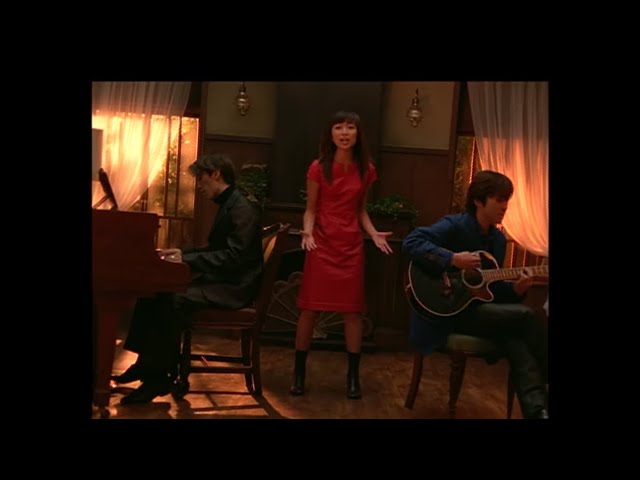
Every Little Thing’s 8th single, released in February 1998.
It was ELT’s first ballad single and, to date, their best-selling million-seller.
Although the song is constructed in a rather intricate way, with multiple key changes throughout, the melody itself is very pop and accessible, making it quite easy to sing even for those who aren’t confident singers.
I’d recommend it as a karaoke pick even for people who say, “I don’t really get today’s music.”

TOMORROWMayo Okamoto

This is the debut single by Mayo Okamoto, a singer-songwriter who epitomized the 1990s.
The song was used as the theme for the TV drama “Second Chance,” and although it was her debut, it’s also known as one of her signature tracks.
With lyrics that evoke vivid scenes and an uplifting melody, it likely encouraged many women in their 40s who listened to it in real time.
While it features a driving, fast-paced beat, it doesn’t have tricky elements like a sudden jump in pitch in the chorus, making it an easy karaoke choice even for those who aren’t confident singers.

deep forestDo As Infinity

Do As Infinity is a male-female rock duo that was active around 2000.
For women in their early 40s, you could say they’re the perfect band.
Although they’re labeled a rock band, most of their songs are J-pop, and Deep Forest is especially easy to sing among them.
Wrapped in a serious melody, this song features a slightly higher range and a simple vocal line.
That said, “higher” doesn’t mean it requires falsetto.
It just leans toward the upper midrange, so women with low to average voices should be able to sing it without any trouble.
There are also many spots where the long tones are cut off cleanly without vibrato, which makes it easier to sing in that respect as well.

Roppongi HeartbreakAn Ruisu

This is Ann Lewis’s 24th single, which became a long-running hit thanks to sustained support on karaoke and cable music channels after its release.
The track was used in a commercial for Godo Shusei’s Warikka Highball CAN.
Its powerful, cool lyrics and melody feel great to sing at karaoke.
While the rock arrangement gives it a driving sense of speed that might seem challenging, the melody itself is simple with limited dynamics, making it a good choice even for those who aren’t confident at karaoke.
If your karaoke companions add call-and-response shouts during the chorus, you can sing it with even more energy—an upbeat rock tune that even people who struggle with singing can power through on momentum.
cherrysupittsu

Spitz, a band that’s hugely popular in Japan.
Their appeal lies in their catchy sound that strikes a chord with everyone.
When it comes to Spitz’s iconic songs, many people probably think of Cherry, right? A lot of people feel this song has a wide vocal range.
It’s true the range isn’t narrow, but when you try singing it, it’s surprisingly easy.
Especially for women, even in their 40s, it should be no problem to hit the notes.
The melody is simple too, so definitely give it a listen.
I love you more than anyone.Furuchi Toko

As you enter your 40s, you may find that your voice doesn’t come out the way it did when you were younger.
Because of that, you might only be able to sing songs that fit your current range.
Among those people, many probably want to sing music from their own generation.
For anyone like that, I recommend “Dare yori Suki na no ni” performed by Toko Furuuchi.
It’s a love song that was a big hit in the late 1990s.
The song has a relatively narrow vocal range, making it easier to sing even if your voice doesn’t project like it used to.
On top of that, it incorporates elements of Black music, letting you deliver it in a stylish way.
Be sure to check it out.
La La LaDaikoku Maki

This is Maki Ohguro’s 10th single, released in October 1995, and her biggest hit, having sold over a million copies.
While Maki Ohguro is often associated with “cool rock songs,” this track showcases a very cute, charming world.
That said, her signature vocal prowess is still on full display here, so for those who aren’t confident singers… well, it might be a bit challenging.
However, as mentioned, it’s an extremely cute song, so unlike many of her other tracks, you don’t need dynamic belting or powerful high notes to sing this one.
Relax your shoulders and try singing it sweetly, focusing on conveying the bright, slightly laid-back melody and adorable lyrics.
The chorus might even be fun to sing together as a group with friends!