

[Women in Their 40s] Even If You’re Tone-Deaf, You Can Sing! Karaoke Songs That Fit a Woman’s Vocal Range


As you enter your 40s, not only does age-related decline set in, but the cumulative effects of lifestyle habits like drinking and smoking can also make it harder to produce your voice.
If you feel you’re tone-deaf, you may be even more sensitive to these changes.
This time, we’ve selected karaoke songs that are easy to sing for women in their 40s who struggle with being tone-deaf!
We also touch on specific tips, so if you want to build your vocal technique and overcome tone-deafness, don’t miss this!
- [2026 Edition] Karaoke Songs That Will Get the Crowd Going—Perfect for Women in Their 40s
- Easy-to-sing karaoke songs: Classic picks for women in their 40s
- [For People in Their 40s] Karaoke Songs That Are Easy to Sing: 2026 Ranking
- A must-see for low-voiced women! Popular songs that are easy to sing at karaoke
- Karaoke songs that are easy to sing even if you’re not confident in your pitch (for women in their 50s)
- [Calling all low-voiced women in their 40s!] Songs that are easy to sing at karaoke
- Famous songs we’d like women in their 40s to sing, by age group
- Even if you’re tone-deaf, it’s okay! Easy karaoke songs for women
- [For Women in Their 40s] A Collection of Songs That Score High at Karaoke [2026]
- [Karaoke] A roundup of songs that are easy for women to sing!
- Attractive songs recommended for women in their 40s: Karaoke tracks that are popular with men
- Karaoke songs that make it easy to score 100 points [for women]
- [Recommended for women in their 30s] Popular and latest songs that are easy to sing at karaoke
[Women in Their 40s] Songs Even the Tone-Deaf Can Sing! Karaoke Tracks That Fit the Female Vocal Range (21–30)
Feeling refreshedMoritaka Chisato

Chisato Moritaka, who was active not only as a singer but also as an actress.
For those whose youth was in the late 1980s to the 1990s, she’s a singer everyone knows.
While she’s categorized as a singer, in reality she enjoyed idol-like popularity and released many cute songs.
Among them, the one I especially recommend is Kibun Sōkai.
It’s a work that fully showcases her adorable vocals.
There are no high parts and the melody is simple, so it’s also recommended for people who aren’t confident in their singing.

A Midsummer Night’s DreamMatsutōya Yumi

Yumi Matsutoya’s 24th single, released in July 1993.
The song also became a hit as the theme for the sequel to the 1992 smash-hit drama “Zutto Anata ga Suki Datta,” which drew attention for the character “Fuyuhiko-san,” titled “Dare ni mo Ienai.” As of 2019, many people in their 40s likely tuned in every week, hearts pounding at the unfolding plot.
Now, if you’re planning to sing this song at karaoke, there’s nothing to worry about! The vocal range used in the melody isn’t very wide—in fact, compared to recent songs, it’s constructed within a very narrow range—and there aren’t any particularly difficult parts in the melodic development.
You could say it’s a simple song for better or worse, so fully conveying the song’s worldview might be a bit challenging, but there’s no need to fuss over details.
As the theme song of a nostalgic drama, just have fun singing it.

wailing in griefKudō Shizuka

Shizuka Kudo, an idol who symbolizes the 1990s.
She has many great songs, but for something especially easy to sing—and recommended for women in their 40s—check out Dokoku.
Combining cool style with catchiness, this track actually lowers the energy in the chorus, making it perfect for those without strong vocal power.
There’s a slightly higher section in the bridge (C-melo), but it doesn’t require a mix voice, so even those who struggle with high notes should find it easy to sing.
Love StoryAmuro Namie

The diva of the Heisei era! This is Namie Amuro’s 38th single under her solo name, released in December 2011.
As of 2019, for women in their 40s, Amuro-chan was truly in real time—almost a symbol of their generation, wasn’t she? Many of you were probably Amurers back in the day, too.
Now, this song is a ballad by Amuro-chan, and it might seem a bit challenging for those who aren’t confident singers.
Still, there are surely many who secretly want to try singing it.
Indeed, when you listen to her performance, you can feel a touch of influence from Black music, and there are some vocal phrases that require advanced technique.
But try picking out the melody—using a piano app on your smartphone or anything else—and when you come across parts you find “difficult,” simplify or omit them and give it a try.
I’m proudKahara Tomomi

It was Tomomi Kahara’s 3rd single, released in March 1996.
If you’re a Japanese woman in your 50s, you’ve probably heard this massive ’90s J-pop hit produced by Tetsuya Komuro at least once! In fact, it reportedly became a million-seller in just six weeks after its release.
The chorus features quite a few high notes, so if you’re not comfortable singing in a high register, you might hesitate to try it at karaoke.
However, the melody itself is very catchy, easy to remember, and singable, so I encourage you to give it a try.
If you force your voice too much on the high parts, it can put a lot of strain on your throat, so try to relax your throat as much as possible and use some falsetto to sing without overdoing it.
Of course, changing the key is totally fine too!
I’m sorry…Takahashi Mariko
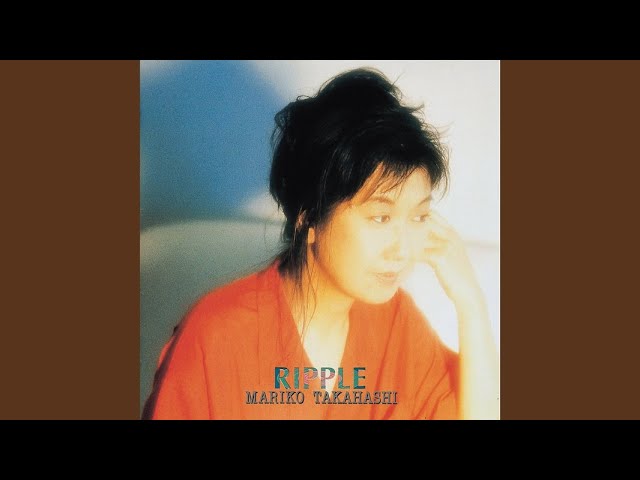
Ms.
Mariko Takahashi is a female singer who has remained at the forefront of the scene for many years.
Although she was active from the 1970s through the 1990s, her song “Gomen ne…” can be considered one that represents her work in the ’90s.
The piece features a vocal line close to kayōkyoku, making it generally easier to stay on pitch.
Also, as you’ll notice when you try singing it, there are no sustained notes in the mid-to-high range or above, so it’s a song that’s easy to sing even for those who find it difficult to hold high notes for long.
fragileEvery Little Thing

The 17th single by Every Little Thing, known by the abbreviation ELT.
A signature song used as the theme for the dating reality show “Ainori,” it won the Excellence Award for Cable Music at the 34th Japan Cable Radio Awards and the Gold Award at the 43rd Japan Record Awards.
It may feel challenging due to the melodic leaps in the chorus, but the tempo is relaxed, so you’ll be fine if you sing calmly.
It’s a number I’d like women in their 40s—who likely heard it in real time, including on TV—to try singing at karaoke.
