

[Women in Their 40s] Even If You’re Tone-Deaf, You Can Sing! Karaoke Songs That Fit a Woman’s Vocal Range


As you enter your 40s, not only does age-related decline set in, but the cumulative effects of lifestyle habits like drinking and smoking can also make it harder to produce your voice.
If you feel you’re tone-deaf, you may be even more sensitive to these changes.
This time, we’ve selected karaoke songs that are easy to sing for women in their 40s who struggle with being tone-deaf!
We also touch on specific tips, so if you want to build your vocal technique and overcome tone-deafness, don’t miss this!
- [2026 Edition] Karaoke Songs That Will Get the Crowd Going—Perfect for Women in Their 40s
- Easy-to-sing karaoke songs: Classic picks for women in their 40s
- [For People in Their 40s] Karaoke Songs That Are Easy to Sing: 2026 Ranking
- A must-see for low-voiced women! Popular songs that are easy to sing at karaoke
- Karaoke songs that are easy to sing even if you’re not confident in your pitch (for women in their 50s)
- [Calling all low-voiced women in their 40s!] Songs that are easy to sing at karaoke
- Famous songs we’d like women in their 40s to sing, by age group
- Even if you’re tone-deaf, it’s okay! Easy karaoke songs for women
- [For Women in Their 40s] A Collection of Songs That Score High at Karaoke [2026]
- [Karaoke] A roundup of songs that are easy for women to sing!
- Attractive songs recommended for women in their 40s: Karaoke tracks that are popular with men
- Karaoke songs that make it easy to score 100 points [for women]
- [Recommended for women in their 30s] Popular and latest songs that are easy to sing at karaoke
[Women in their 40s] Songs Even the Tone-Deaf Can Sing! Karaoke Tracks Suited to Female Vocal Ranges (11–20)
Sign of LovePUFFY
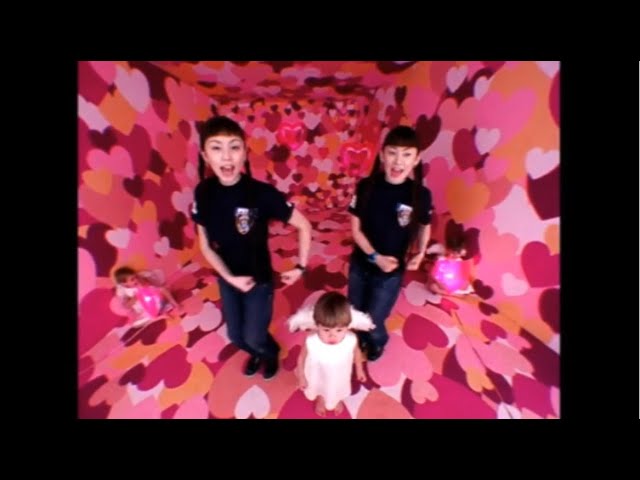
Among people in their early 40s, PUFFY can be considered a very popular music duo.
Many of you may have imitated their fashion, too.
Of all PUFFY’s songs, the one I especially recommend is “Ai no Shirushi” (“The Sign of Love”).
Its vocal range is mid2B to hiB, which is low enough that it wouldn’t be unusual even for a male vocalist.
The highest note only appears twice in the chorus, so even those who tend to go off-pitch on high notes should be able to sing it without trouble.

CRAZY GONNA CRAZYTRF

Even within the broad label of “people in their 40s,” the music you grew up with differs greatly depending on whether you’re in your early or late 40s.
That said, TRF can be considered an artist popular across the entire 40-something demographic.
Among their songs, CRAZY GONNA CRAZY is particularly easy to sing.
Because it’s primarily dance music, it can be hard to notice, but the song actually has a narrow vocal range and doesn’t feature complex melodic leaps.
As long as you adjust the key to suit your voice, even those who feel their voice doesn’t come out easily should be able to sing it without trouble.
Consider adding it to your repertoire.
wicked womanNakajima Miyuki

Miyuki Nakajima has released a lot of hit songs.
One I’d like to recommend, with a comfortable vocal range, is “Akujo” (Bad Girl), released in October 1981.
Just from the title you might think, “Is it a dark song?” but the tune is surprisingly bright and the melody is easy to remember.
When you look at the lyrics, though, you’ll think, “It’s kind of a bittersweet song…” The verses (A-melo to B-melo) are sung fairly low, almost like speaking, and there’s a part in the chorus where the pitch suddenly jumps up, so watch out there.
Time your entry for the high notes and throw yourself into it—project your voice with momentum! That way you can sing comfortably without straining your throat.
If your timing is off it’ll feel odd, so keep practicing until you nail the timing.

ChaO!Kōda Kumi

ChaO! is more about the groove than the “singing.” If you really move your body and get into the rhythm as you sing, you’ll find it consistently enjoyable, so if you’re not confident in your pitch, a song like this is a great choice! The chorus uses a lot of notes around the mid–2 range, but if you’re locked into the groove, that range should come out smoothly.
Don’t tense up—let the notes flow comfortably.
At the very end of the song, you might wonder whether to sing the lyrics line or the long-held note; either one sounds cool, so just go with the one you want to sing!
PledgeAnjura Aki

Angela Aki is a female singer-songwriter who is also active as a musical theater composer.
Released in 2025, her song “Pledge” centers on the theme of accepting oneself as they are, and an emotional atmosphere permeates the entire piece.
The song features a lot of low-register passages and a relatively narrow vocal range overall.
While this means you need to sing it with emotional nuance, it is still, fundamentally, a song that’s easy to perform.
The strong and fleeting onesCocco

For those in their early 40s, songs from the 1990s are likely more memorable than those from the late 1980s.
Among female singer-songwriters who made a big splash in the ’90s, one track by Cocco that I especially recommend is “Tuyoku Hakanai Monotachi” (“The Strong and the Fragile”).
This piece features a rhythm with a bounce reminiscent of reggae, while the vocal line maintains an ennui-like quality.
The song has a relatively narrow vocal range and contains no phrases that require sudden jumps in pitch, making it easy to sing for people with any kind of voice.
[Women in Their 40s] Songs Even the Tone-Deaf Can Sing! Karaoke Tracks That Fit the Female Vocal Range (21–30)
Future Projection IIDREAMS COME TRUE

Known by the nickname DoriKamu, DREAMS COME TRUE has long been at the forefront of the J-POP scene with melodious songs that, while showing influences from funk and soul, appeal to Japanese tastes.
Did you know that despite being a famous song almost everyone has heard at least once—even non-fans—it has never actually been an A-side single? Among DCT’s many challenging tracks, this one has a relatively simple melody, making it easy to sing even for those who aren’t confident singers.
In particular, women in their 40s are the right generation for it, so it’s a sure-fire crowd-pleaser at karaoke regardless of singing ability.
