

The Aesthetics of Darkness: An Introduction to Gothic Rock — Notable Bands

“Gothic” is one of the architectural styles that emerged around the 12th century, but are you familiar with “gothic rock” as a music genre?
Primarily featuring dark themes and drawing inspiration from literature, film, and even philosophy, it refers to bands—mainly from the UK—that appeared from the late 1970s to the 1980s.
Many of these bands crafted highly original sounds, exerting a major influence on later alternative rock acts and, in Japan, on visual kei bands.
There is also a genre called “gothic metal,” but in this article we’ll focus on bands in “gothic rock” as a subgenre of post-punk and introduce some of the most representative groups!
- The Profound World of Western Gothic Metal: Best and Popular Songs [2026]
- A classic masterpiece of visual kei. A staple and popular song representing V-kei rock.
- [BUCK-TICK Masterpieces] Popular Songs by the Legendary Band with an Overwhelming Presence
- Classic digital rock tracks. Recommended popular songs.
- [80s] A Collection of Iconic Songs Representing the New Romantic Movement [New Wave]
- [Intoxicating Vibes] A Beginner’s Guide to Classic Psychedelic Rock Songs (Western Music)
- The allure of 70s glam rock! A host of masterpieces that colored a dazzling chapter of music history
- Iconic dark and cool Western songs — with some lesser-known gems too!
- [Western music] What is post-hardcore? — Summary of representative bands
- [Foreign Music] A Guide to Post-Rock: Essential Classics and a Recommended Pick
- [J-Pop] From Rising Stars to Legends! Japan’s Must-Listen Alternative Rock Bands
- [J-Rock] Timeless masterpieces that colored the 1990s. Nostalgic hit songs.
- [Low End] A collection of Japanese songs with high-difficulty bass parts [Cool]
Aesthetics of Darkness: An Introduction to Gothic Rock — Featured Bands (1–10)
Decline and FallVirgin Prunes

Virgin Prunes were a completely different kind of entity from a conventional rock band, a singular group that presented music—art—that clearly isn’t for everyone.
In fact, the Irish outfit were childhood friends of Bono from the world-famous rock band U2, and the boy featured on U2’s classic debut album Boy is the younger brother of a Virgin Prunes member.
Unlike U2, Virgin Prunes immersed themselves in an entirely underground culture, incorporating elements not only of music but also theater and visual art into their performances, offering a total underground art expression and continuing their distinctive activities in the subculture scene.
They released two albums: their 1982 debut …If I Die, I Die and their second and final album, The Moon Looked Down and Laughed, in 1986.
The former, in particular, is regarded as a classic of post-punk, positive punk, and gothic rock, but—as you can tell just from the intensely eerie atmosphere of its album cover—it’s not exactly easy listening, even within the boundaries of gothic rock.
Their true essence is best experienced in their live performances, so if you’re intrigued, be sure to watch their live footage.

FrontierDead Can Dance

Dead Can Dance is a male-female duo from Australia, known—alongside the Cocteau Twins—as one of the flagship groups of the 4AD label.
From their formation in 1981 until their breakup in 1998, they released seven albums, and since their 2005 reunion they’ve continued to work at their own pace, putting out new material as well.
Describing Dead Can Dance’s musical style is extremely difficult: their sound world, drawing on everything from world music to sacred music, is entirely unlike conventional rock, as if it had arrived from some other realm.
Even so, they enjoy strong popularity within the gothic rock scene—enough to inspire tribute albums by artists in that sphere—largely thanks to the approach showcased in their early work.
Their self-titled 1984 debut, also known in Japan as “East of Eden,” has a strong ritualistic element suggested even by its cover art, said to be based on a ceremonial mask from New Guinea.
Blending folk traditions and tribal beats with songs in the direct lineage of post-punk reminiscent of early Cocteau Twins, it’s highly regarded as a gothic rock classic.
The eerie, otherworldly atmosphere that seems to transport listeners to a different dimension is something you won’t easily find elsewhere.
If you want to grasp the group’s essential appeal, I recommend checking out their sixth album, Into the Labyrinth (1993), which was a worldwide hit.
Say It AgainThe Danse Society

If you’re fond of the term “positive punk,” the so-called Posipunk Big Three—Sex Gang Children, Southern Death Cult, and The Danse Society, the subject of this piece—probably spring to mind immediately.
Formed in 1980 around frontman Steve Rawlings, whose striking looks also drew attention in Japan, they scored an impressive No.
3 on the UK Indie Chart with their 1982 debut mini-album Seduction.
Compared to other posipunk and gothic rock bands, their sound clearly leaned toward more danceable rhythms; while it carried the darkness and decadence typical of gothic rock, it also possessed a groove you could move to—arguably a defining trait of theirs.
After signing to a major, their 1984 release Heaven Is Waiting became a smash, peaking at No.
39 on the UK chart.
However, perhaps unable to reconcile external expectations with their own identity, the band began to lose direction.
Following the release of their next album, Looking Through, all members except Rawlings left, and the group ultimately disbanded.
In a surprising turn, they reunited in 2011 and have been active since, now featuring a female vocalist.
Aesthetics of Darkness: A Guide to Gothic Rock — Introducing Representative Bands (11–20)
Romeo´s DistressChristian Death

Most of the famous gothic rock bands are from the UK, but Christian Death, the band featured here, hails from the United States.
In fact, despite being the most famous and important group in America’s underground, goth-leaning subculture, their complicated biography makes them a daunting entry point for beginners.
Christian Death was formed in 1979 by vocalist Rozz Williams and released their debut album, Only Theatre of Pain, in 1982, a record hailed as a landmark of gothic rock.
While the playing can be rough in a technical sense, the morbid darkness and occult atmosphere packed into the simple, solid band ensemble are terrifyingly potent.
The album’s influence on the American music scene is immense, and it’s highly regarded as a pioneering work of the style known as deathrock.
The complication came when guitarist Valor Kand, who joined later, took over as frontman after Rozz departed—only for Rozz to relaunch Christian Death with his wife, Eva O.
In other words, there ended up being two Christian Deaths.
Sadly, Rozz took his own life in 1998, bringing the original Christian Death to an end, while the Valor-led Christian Death continues to perform well into the 2020s.
As a result, their discography is vast, and the unusual situation of two bands sharing the same name makes it hard to know where to begin.
Personally, I recommend starting with the earliest releases featuring Rozz as the frontman!
MoonchildFields of the Nephilim
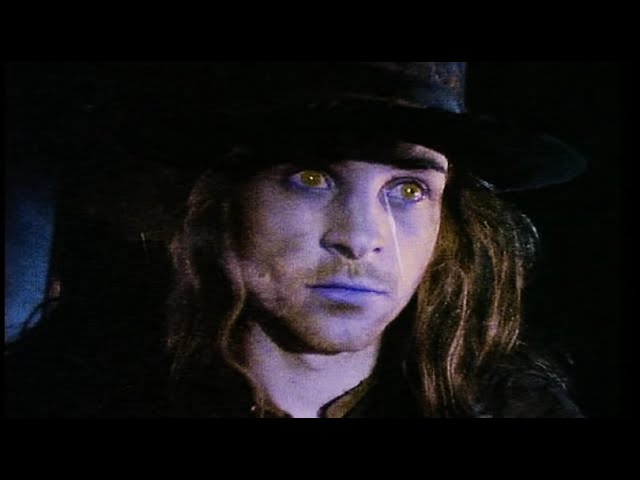
Gothic rock is a genre heavily inspired by horror films and literature, and the band that brought those elements to the forefront and gained popularity for it is Fields of the Nephilim.
Formed in 1984 around vocalist Carl McCoy—who has deep knowledge of occult and religious mysticism—they drew attention from the mid-to-late 1980s as followers of The Sisters of Mercy.
After releasing three albums, they disbanded once, then later reunited and released two more albums in the 2000s.
Among their discography, their second album, The Nephilim, released in 1988, is especially lauded as a gothic rock classic.
It features McCoy’s distinctive low, raspy vocals; a sound that, while dark, also retains strong melodicism; song titles that quote Aleister Crowley’s works and horror movie titles; and recording sessions held in a former courthouse in Somerset, England where executions were once carried out.
The album distills the band’s tastes and values to the utmost, and anyone interested in gothic rock is sure to love it.
As you can tell from the music videos of the time, their look wasn’t the typical all-black gothic rock fashion; in particular, McCoy’s trademark was a Western hat.
As mentioned at the start, their strong horror-movie flavor is a defining trait—one that may divide opinions.
DesireGene Loves Jezebel

Among the positive punk–new wave and gothic rock acts of the 1980s, Gene Loves Jezebel—from Wales—drew attention in Japan as well for their striking looks.
Centered on the handsome Ashton twins, Michael and Jay, the band formed in 1980 and has enjoyed a long career, even releasing new material in 2017.
Unfortunately, due to disputes over rights between the brothers, it seems that activities with both of them together have become virtually impossible.
The early works in which the two fronted the band are all highly regarded in the history of gothic rock and post-punk, and their flawless style—post-punk–derived, steely guitars and floating soundscapes, paired with alluring melodies sung by beautiful frontmen, conjuring a decadent world—continues to captivate many aesthete goth fans today.
They likely had a considerable influence on Japan’s visual kei scene as well, so if you came to gothic rock through visual kei, be sure to pick up the first four albums featuring the Ashton brothers!
Wax and WaneCocteau Twins

If you introduce Cocteau Twins in the context of gothic rock, listeners who know them for their dream pop and shoegaze elements might find it a bit jarring.
Debuting in 1979, Cocteau Twins brought together uniquely distinctive musicians: Robin Guthrie, an inventive guitarist who also thrived as a producer, and Elizabeth Fraser, a singer with a truly inimitable, bewitching voice.
As mentioned at the outset, they released landmark works that exerted a tremendous influence on later genres like dream pop and shoegaze.
They also helped define the aesthetic of the esteemed 4AD label, and the sonic world they created remains one that contemporary artists continue to revere.
That said, Cocteau Twins originally played a sound rooted directly in post-punk.
The debut album Garlands (1982)—with its drum-machine-driven, monotonous rhythms, bass lines that lead the songs, neo-psychedelic guitars heavy on flanger, and Elizabeth’s eerie yet fresh vocals (she was reportedly 18 at the time)—might surprise listeners who only know them from the stylistic shift that came with their third album onward.
Elizabeth was apparently a huge fan of Siouxsie Sioux of Siouxsie and the Banshees, and the band itself seems to have been influenced by them.
If you want to discover Cocteau Twins from a gothic rock angle, give their debut album and early EPs a listen.