

The Aesthetics of Darkness: An Introduction to Gothic Rock — Notable Bands

“Gothic” is one of the architectural styles that emerged around the 12th century, but are you familiar with “gothic rock” as a music genre?
Primarily featuring dark themes and drawing inspiration from literature, film, and even philosophy, it refers to bands—mainly from the UK—that appeared from the late 1970s to the 1980s.
Many of these bands crafted highly original sounds, exerting a major influence on later alternative rock acts and, in Japan, on visual kei bands.
There is also a genre called “gothic metal,” but in this article we’ll focus on bands in “gothic rock” as a subgenre of post-punk and introduce some of the most representative groups!
- The Profound World of Western Gothic Metal: Best and Popular Songs [2026]
- A classic masterpiece of visual kei. A staple and popular song representing V-kei rock.
- [BUCK-TICK Masterpieces] Popular Songs by the Legendary Band with an Overwhelming Presence
- Classic digital rock tracks. Recommended popular songs.
- [80s] A Collection of Iconic Songs Representing the New Romantic Movement [New Wave]
- [Intoxicating Vibes] A Beginner’s Guide to Classic Psychedelic Rock Songs (Western Music)
- The allure of 70s glam rock! A host of masterpieces that colored a dazzling chapter of music history
- Iconic dark and cool Western songs — with some lesser-known gems too!
- [Western music] What is post-hardcore? — Summary of representative bands
- [Foreign Music] A Guide to Post-Rock: Essential Classics and a Recommended Pick
- [J-Pop] From Rising Stars to Legends! Japan’s Must-Listen Alternative Rock Bands
- [J-Rock] Timeless masterpieces that colored the 1990s. Nostalgic hit songs.
- [Low End] A collection of Japanese songs with high-difficulty bass parts [Cool]
Aesthetics of Darkness: A Guide to Gothic Rock — Introducing Representative Bands (11–20)
Walking On Your HandsRed Lorry Yellow Lorry
When it comes to Leeds in the UK from a gothic rock perspective, it’s known as the birthplace of The Sisters of Mercy, but fellow Leeds natives Red Lorry Yellow Lorry were also a group that drew attention in the gothic rock and positive punk spheres.
Their band name doesn’t sound particularly gothic, but it’s said to come from an English tongue twister.
Formed in 1981, they attracted notice with a sound directly rooted in post-punk, akin to Joy Division, early The Cure, and Killing Joke.
Their debut album, Talk About the Weather, released in 1985, is often considered their masterpiece.
For those who love this style, the growling basslines and the distinctive groove forged by a mechanical drum machine, guitar work with hints of neo-psychedelia, and the singer’s dark, velvety baritone are irresistible.
In their later period, they incorporated live drums to gain a more rock-like dynamism, though it never quite became a straightforward rock sound—a fate perhaps inherent to bands of their ilk.
They’ve also released a best-of compilation, so starting there to explore their sonic world might be a good idea.

Promised LandSkeletal Family

If you’re familiar with British rock, the band name Skeletal Family might ring a bell.
Formed in 1982, they borrowed their name from “Chant of the Ever Circling Skeletal Family,” a track on David Bowie’s classic album Diamond Dogs.
With female vocalist Anne-Marie at the helm, Skeletal Family drew attention as the band poised to follow in the wake of Siouxsie and the Banshees.
Their sound—marked by a distinctly post-punk, highly mobile bassline, driving drums, solid guitar riffs, and Anne-Marie’s vocals—will definitely resonate with fans of gothic rock and post-punk.
While they may lack an overpowering individuality or sense of menace, their touches—like incorporating saxophone on certain tracks—are quite interesting.
They released their debut album, Burning Oil, in 1984, followed by their second album, Futile Combat, in 1985, continuing steadily until, unfortunately, frontwoman Anne-Marie left the band.
They brought in a new vocalist but eventually disbanded; in the 2000s, they reunited and have released new material.
If this piques your interest, be sure to listen to Promised Land, one of their signature and truly great tracks!
DecadanceUK Decay

While they may be less well-known than prominent bands like The Cure, Bauhaus, and Siouxsie and the Banshees, UK Decay—formed in London in 1978—are regarded among gothic rock fans as one of the genre’s pioneering acts.
There’s even an anecdote that in the early 1980s, the band’s frontman, Steve “Abbo” Abbott—who now works as a producer and manager in the music industry—jokingly referred to their sound as “goth” in a magazine interview, which some consider the first instance of “gothic rock” being defined within the post-punk movement.
Emerging from the punk scene with an overtly political stance, their music nevertheless possesses a distinct character that transcends labels like gothic rock and positive punk: a voice both raw and decadent, guitar riffs that are cold and razor-sharp in true post-punk fashion yet charged with hardcore intensity, and a rhythm section whose supple explosiveness gives the band a unique appeal unlike their contemporaries.
Although their initial period of activity lasted roughly five years—and they reunited in 2005 to release new material—those seeking to experience their gothic rock allure should start with their 1981 debut album, For Madmen Only.
Long unavailable on CD and considered something of a lost classic, it was reissued on CD in 2009 with a large number of bonus tracks.
A DayClan of Xymox

Though not very well-known in Japan, Clan of Xymox—formed in 1981—have never disbanded and remain an active, hard-working band as of 2022.
If you’re familiar with the early 4AD catalog, you may have come across their name.
Their early works were released on 4AD, and their 1985 debut album, Clan of Xymox, has been compared to bands like The Cure and Joy Division.
Characterized by cool, lyrical keyboard tones within the straightforward gothic rock sound typical of the mid-’80s, their music has led them to be called pioneers of “darkwave.” It’s also worth noting the involvement of John Fryer—known as a member of This Mortal Coil—as an engineer.
In terms of their career, their third album, Twist of Shadows (1989), and Phoenix were released on a major label and achieved commercial success, including in the United States.
Sonically, these works lean heavily into synth-pop, so if you want to enjoy their more gothic rock-oriented sound, check out their 4AD-era releases.
As a side note, frontman Ronny Moorings composed Atsushi Sakurai of BUCK-TICK’s solo track Yokan (Premonition).
Nick The StripperThe Birthday Party
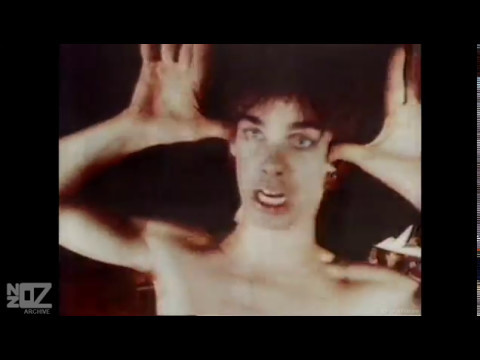
The Birthday Party was a legendary post-punk band featuring Australian Nick Cave—known not only for his musical career but also as a distinctive actor—as the vocalist, and it launched innovative musicians like Mick Harvey and Rowland S.
Howard.
Formed in 1977 under the name The Boys Next Door, they released their debut album, Door, Door, in 1979, making a name for themselves on the underground scene.
At that time, their sound, though experimental in parts, had the rough-hewn quality of youthful post-punk and even included romantic, melodic tracks like Shivers.
After changing their name, they moved from Australia to London, where they developed an intense stage presence and a decadent, cryptic sound; disillusioned with the London scene, they returned to Australia and eventually relocated to West Berlin, only to break up the following year.
Despite their brief existence of just a few years, the three albums they released as The Birthday Party are celebrated for their quintessentially “new wave” sound—combining icy madness and intellect with destructive impulses, sometimes freaky, sometimes bluesy—and they are regarded as highly influential works within the realm of gothic rock.
SeverinaThe Mission

The Mission is a group newly formed by guitarist Wayne Hussey and Craig Adams, who helped bring about the birth of the Gothic rock landmark debut by The Sisters of Mercy, First and Last and Always, but left the band afterward.
Naturally, if you’re interested in Gothic rock, this is a band you absolutely should check out—one of the famous names that inevitably comes up in conversations about the genre.
Having started in 1986, broken up twice, and still active in the 2020s, they enjoyed commercial success particularly with their first three albums—their peak period—and have continued to delight fans by releasing new work at regular intervals.
While their style has evolved with the times, it’s reassuring that their core “Gothic” appeal has always remained intact.
That said, if you’re about to dive into their albums, I recommend starting with those first three releases mentioned above.
They’re packed with the essence of classic British Gothic rock, and their melodies are relatively accessible, making them an easy entry point even for newcomers to the genre.
Aesthetics of Darkness: A Guide to Gothic Rock – Introducing Representative Bands (21–30)
LeavesThe Gathering

The Gathering is a Dutch rock band known for mastering a variety of genres such as trip hop, ambient, and gothic rock.
Among their songs, a particularly dark and cool track I highly recommend is Leaves.
This piece strongly highlights the gothic rock elements that defined their early sound.
Beyond its dark, striking vibe, the sultry, captivating vocals are nothing short of breathtaking.
Be sure to check it out.

In conclusion
This time I introduced bands that debuted from the late 1970s to the 1980s—essentially the pioneers and up to around the second generation of gothic rock. Even after the 1990s, bands playing pure “gothic rock” have been emerging in the underground, so if you’re interested, I encourage you to dig deeper and sink into the gothic world of darkness.