


“Gothic” is one of the architectural styles that emerged around the 12th century, but are you familiar with “gothic rock” as a music genre?
Primarily featuring dark themes and drawing inspiration from literature, film, and even philosophy, it refers to bands—mainly from the UK—that appeared from the late 1970s to the 1980s.
Many of these bands crafted highly original sounds, exerting a major influence on later alternative rock acts and, in Japan, on visual kei bands.
There is also a genre called “gothic metal,” but in this article we’ll focus on bands in “gothic rock” as a subgenre of post-punk and introduce some of the most representative groups!
- The Profound World of Western Gothic Metal: Best and Popular Songs [2026]
- A classic masterpiece of visual kei. A staple and popular song representing V-kei rock.
- [BUCK-TICK Masterpieces] Popular Songs by the Legendary Band with an Overwhelming Presence
- Classic digital rock tracks. Recommended popular songs.
- [80s] A Collection of Iconic Songs Representing the New Romantic Movement [New Wave]
- [Intoxicating Vibes] A Beginner’s Guide to Classic Psychedelic Rock Songs (Western Music)
- The allure of 70s glam rock! A host of masterpieces that colored a dazzling chapter of music history
- Iconic dark and cool Western songs — with some lesser-known gems too!
- [Western music] What is post-hardcore? — Summary of representative bands
- [Foreign Music] A Guide to Post-Rock: Essential Classics and a Recommended Pick
- [J-Pop] From Rising Stars to Legends! Japan’s Must-Listen Alternative Rock Bands
- [J-Rock] Timeless masterpieces that colored the 1990s. Nostalgic hit songs.
- [Low End] A collection of Japanese songs with high-difficulty bass parts [Cool]
Aesthetics of Darkness: An Introduction to Gothic Rock — Featured Bands (1–10)
SpellboundSiouxsie And The Banshees
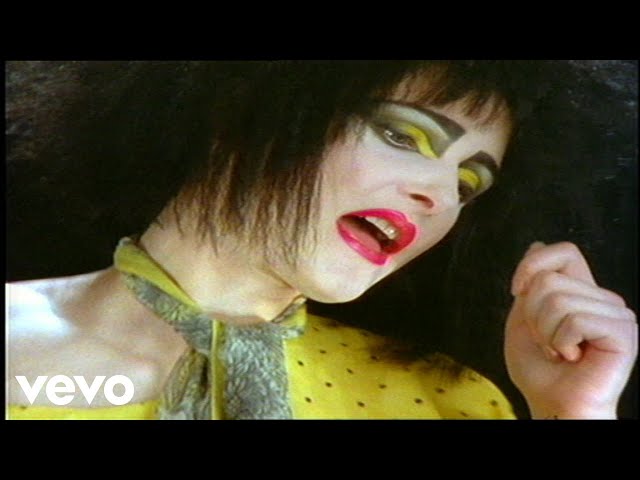
Formed in 1976—earlier than The Cure or Bauhaus, right in the thick of the UK punk movement—Siouxsie and the Banshees are invariably named as charismatic icons of gothic rock.
The band’s founding members, vocalist Siouxsie Sioux and bassist Steven Severin, were in fact part of the Sex Pistols’ inner circle—essentially fervent fans.
In the very early lineup, none other than Sid Vicious served as the drummer, and it’s fascinating that they started their own band while tagging along wherever the Pistols went.
Once the band properly got underway, they pursued their own musical identity rather than being Pistols followers, and their debut single “Hong Kong Garden” in 1978—memorable for its Oriental-tinged phrases—shot straight to No.
7 on the UK charts.
While they initially found success along a post-punk trajectory, their sound evolved into increasingly experimental territory with each release.
They earned high acclaim for crafting a distinctive musical style driven by Siouxsie’s incantatory vocals—which profoundly influenced later female artists—and the strong individualities of the band members.
In particular, during the period when the genius guitarist John McGeoch—celebrated in the post-punk to new wave era—was in the band, their so-called “mid-period” works such as Kaleidoscope, Juju, and A Kiss in the Dreamhouse transcend the confines of gothic rock; anyone interested in 1980s British rock should absolutely give them a listen.

Hanging GardenThe Cure

Formed in 1978, The Cure stand alongside Bauhaus as charismatic icons of gothic rock, later achieving major worldwide success—not only in their native UK but also in the US and beyond—with a colorful, pop-leaning sound.
Artists across genres openly cite The Cure as an influence, and in Japan, many readers have likely seen interviews where alternative rock bands—and especially visual kei acts—name-check The Cure and their frontman, Robert Smith.
In their early days, however, The Cure pursued a stripped-down, post-punk–derived minimalism, crafting an intensely introspective and dark sound centered on Robert’s singular worldview.
At the same time, considering that they had already released a pop gem as monumental as “Boys Don’t Cry” in 1979—a song many bands love to cover—it’s clear Robert’s exceptional talent as a melodist had already begun to blossom.
As noted, The Cure’s musical identity shifts from album to album: some records push pop to its limits, while others plunge deep into darkness.
Part of the enduring appeal of a band with a 40-plus-year career is hearing the contrasts in performance among the various lineups—starting with Simon Gallup, Robert’s longtime ally, whose distinctive bass playing has been a hallmark of their sound.
If you want to savor The Cure at their most gothic, start with Faith, their third album released in 1981 and arguably the pinnacle of their early approach, as well as the trio of records known as the “gloom trilogy” (for which they later performed full-album live recreations).
I Walk The LineAlien Sex Friend
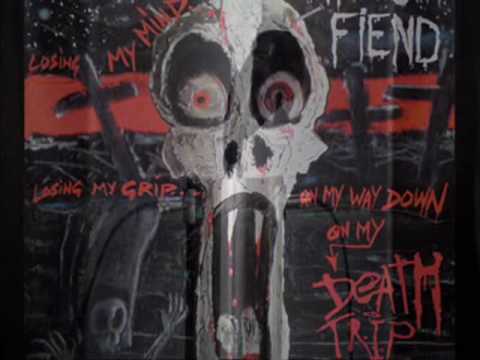
With an undeniably striking band name, London’s Alien Sex Fiend gained popularity in Japan as a standard-bearer of gothic rock and so-called “positive punk,” known as “Pogi-pan” in Japanese.
Since forming in 1982, they’ve never broken up and have kept going, releasing works sporadically even after the 2000s, and they even put out a new album in 2018—remarkably long-lived for a band of this type.
Centered on the married duo of vocalist Nik Fiend—whose white-painted look makes a huge impact—and keyboardist Mrs.
Fiend, their sound is very evocative of its era: lyrics with dark themes; vocals that veer from grandiose to hysterical; noisy guitars paired with skeletal dance beats; and eerie keyboard tones.
There are industrial rock elements as well, and an experimental streak, which might make it a tough first listen unless you’re already versed in this sort of genre.
If you’re curious, try their only charting record, the 1985 third album Maximum Security, or The Singles 1983–1995, which includes tracks not found on the albums.
If those click with you, be sure to explore their other albums and singles!
She’s In PartiesBauhaus

Formed in 1978 by art school alumni who took their band name from the German art movement that erupted in the early 20th century, Bauhaus became a legendary group whose monochrome-unified artwork, theatrical live performances, and decadent, introspective sound—embodying the dark aesthetics that followed the frenzy of punk—won them a fervent fanbase.
Peter Murphy, the vocalist and embodiment of goth with a charismatic presence and overwhelming aura; Daniel Ash, captivating with his inventive guitar work; and the brothers David J and Kevin Haskins on bass and drums, generating dynamic grooves and serving as the tense core of the ensemble—when they debuted, the term “gothic rock” didn’t even exist, yet as true originators they exerted a profound influence not only on music but on many facets of culture.
In a brief five-year career before their 1983 breakup, they released four albums.
Despite their singular presence and sound, their third album, The Sky’s Gone Out, released in 1982, reached No.
3 on the UK charts, marking them not merely as underground icons but as artists who achieved commercial success—another distinction separating them from run-of-the-mill bands.
After the breakup, Peter pursued a solo career, while the instrumental members formed Love and Rockets, each releasing excellent work.
They reunited in 1998 and, a decade later in 2008, unexpectedly released a new album, Go Away White, and have continued activity intermittently since.
It’s no exaggeration to say that the simplest and most accurate answer to the question “What is gothic rock?” is: Bauhaus.
TransmissionJoy Division

Rather than gothic rock, they’re one of the most important bands to emerge from the UK’s post-punk to new wave era—the Manchester legend Joy Division—whose entire history, from their musical style and artwork to their tragic end, has continued to exert a powerful influence on culture ever since.
The cover of their 1979 debut album Unknown Pleasures has inspired countless motifs; there are probably people wearing T-shirts printed with the design without knowing the original source.
The band formed after guitarist Bernard Sumner and bassist Peter Hook were blown away by a Sex Pistols gig in 1976.
They initially called themselves Warsaw, later changing to Joy Division, and rapidly rose to prominence with a sound that transformed punk’s raw aggression into a bleak, coolly deranged post-punk—centered on the introspective lyrics and memorable baritone vocals of their charismatic frontman, Ian Curtis.
Producer Martin Hannett famously described their music as “dance music with a gothic tinge.” Following the release of their debut album, the band’s popularity grew even further, but amid their momentum Curtis’s mental state deteriorated, and on May 18, 1980, he took his own life.
Ironically, their final album, Closer, released that July, became a hit, reaching No.
6 on the UK charts.
If you want to delve deeper into their history, check out the 2007 biopic Control.
Lucretia My ReflectionThe Sisters of Mercy

Formed in 1980, The Sisters of Mercy are one of the oldest still-active standard-bearers of gothic rock as of the 2020s.
That said, they’ve only released three records; they actually disbanded after their debut album, First and Last and Always (1985)—also known in Japan under the title “Mercy no Aikotoba.” After restarting, the group has essentially continued as a solo project for founding vocalist Andrew Eldritch.
Their sound—anchored by the mechanized rhythms of their officially credited drum machine, layered with Eldritch’s sultry, raspy baritone and guitars that channel a dark lyricism—epitomizes what “gothic rock” means, and many even hail them as “the emperors of goth.” In their early days, original member Gary Marx—who would later found Ghost Dance—was in the lineup, and later additions Wayne Hussey and Craig Adams would go on to form The Mission, another quintessential goth rock band.
Considering all this, one could say The Sisters of Mercy’s very existence is “the history of gothic rock” itself.
Their aforementioned debut, created by the “five members” including the drum machine, is a must-hear classic for anyone exploring the genre.
Be sure to check out their second album, Floodland (1987), too—a broader, more commercially successful work that expanded their musical palette.
MoyaSouthern Death Cult

The Cult, a British band that achieved global success with their dynamic hard rock infused with decadent, aesthetic elements, influenced many bands in Japan as well.
Their predecessor, Southern Death Cult, is known as a leading figure in the positive punk and gothic rock scenes.
Formed in 1981 around Ian Astbury—who would later front The Cult—they disbanded in less than two years without even releasing a studio album, yet many gothic rock fans still cherish the few recordings they left behind.
Astbury’s distinctive vocals, the dark musicality, and the spare, quintessentially post-punk band interplay are uniquely Southern Death Cult—qualities you won’t find in The Cult.
If you’ve listened to The Cult but didn’t know their precursor, you might be surprised.
The small body of work they left can be heard on the 1983 compilation Southern Death Cult, so if you want to delve deeper into gothic rock, it’s definitely worth checking out.