

[Simple Games] Recommended Indoor Recreational Activities for Adults


When a large group gathers indoors and you think, “Let’s do something fun!”, do you ever find yourselves surprisingly stuck for ideas? In this article, we introduce simple games that are perfect for getting everyone excited, including team battles and cooperative play.
From games that require almost no props to ones you can play easily with everyday items, we’ve gathered activities ideal for indoor recreation.
Games that you progress through by cooperating naturally spark conversation and deepen relationships! There are also slightly brain-teasing games that adults will especially enjoy, so be sure to give them a try together.
- A collection of simple indoor recreational games
- Team-based recreational activities for adults that are fun even with large groups
- [For Adults] Fun recreational games. Perfect for short breaks too!
- Games and activities everyone can enjoy together. A collection of fun play ideas.
- [For University Students] A Roundup of Fun Games and Recreational Activities
- [Part 2] Recommended Indoor Activities and Recreation Games for December
- Games you can play with just conversation. Classic and popular activities you can enjoy without any props!
- Recommended for upper elementary grades! Exciting indoor recreation and games
- No worries even in the rain! Fun recreational activities you can do in the gym
- Recreation Ideas That Truly Excite High School Students! A Fun Collection of Activities
- [For Adults] Exciting Bus Recreation
- Get the Fun Going! Easy Classroom Games You Can Play at School: Recreational Activities for the Whole Class
- [Children’s Club] Easy and fun indoor games. Exciting party games
Team-based/Co-op Games (31–40)
Play together! 10-Second Bomb Game!
@wakuwaku_idea Elderly Recreation: Simple and Super Fun 10-Second Bomb GameElderlyRecreationTranslationFun
♪ Original song – Idea Wakuwaku Rehabilitation – Idea Wakuwaku Rehabilitation
This is a simple, easy-to-understand recreation where you pass a ball to others within a time limit! Ten people form a circle and keep passing a ball or balloon to the person next to them.
Once you get used to it, you can also throw or pass the ball or balloon to a specific person you’re aiming for.
When the timer signaling the time limit goes off, the person holding the ball or balloon loses! It’s also fun for each person to come up with and try out their own strategy.
It’s a heart-pounding game that treats the ball or balloon like a bomb.
Eigo-dake

Let me introduce Eigodarke, a card game that gets lively as you communicate.
The questioner draws one card from the deck and explains the Japanese word on the card using only English.
Be careful of the NG (forbidden) words while you explain.
The people answering may ask questions.
Even if you’re not confident in English, the key is to string together words to get your meaning across.
When someone gets the answer right, both the questioner and the correct guesser earn 1 point.
The first person to reach 5 points wins! It’s a fun game that will make the questioner want to slip into Japanese without thinking.

YES/NO Quiz
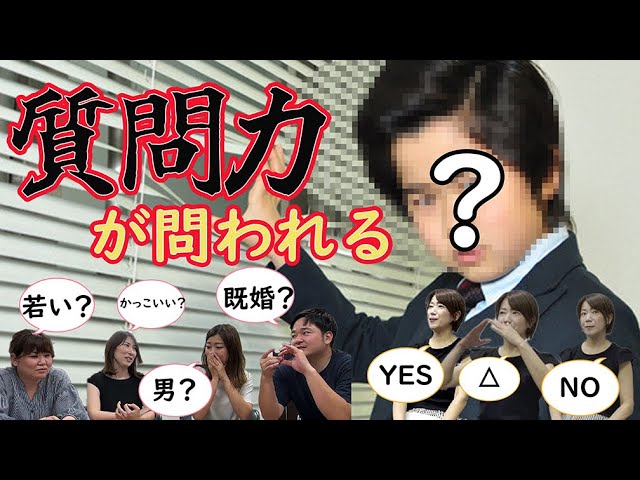
A key point of “Yes/No Quiz,” where you work toward finding the answer, is that it’s a game enjoyed by splitting into a question master and questioners.
The question master chooses a topic and answers the questioners’ questions with only “Yes” or “No.” The questioners listen to the answers and try to figure out what the topic is.
To narrow down the answer, it’s important for the questioners to think carefully as they ask their questions.
It’s also a great game for team competitions, so let’s all have fun together.
Imitation shiritori

Participants face each other and stand on one leg.
Decide the order with rock-paper-scissors or similar, and the first person starts the word chain game (shiritori).
The basic rule of linking words stays the same, but after saying a word, you have to do an impression that matches it.
For example, if you say “gorilla,” you might pound your chest with your fists.
Everyone else copies the impression, and the shiritori continues.
It might sound easy, but you must stay on one leg the entire time.
If you lose your balance or can’t continue the word chain, you lose.

Improv Acting Showdown
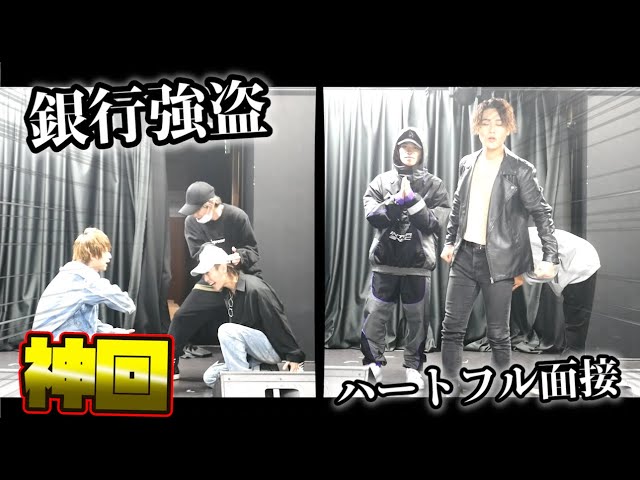
Decide on three elements—the setup, the punchline, and the constraint rules—tell the performers, and start the game! Since it’s all improvised, you can’t practice beforehand or agree on the flow with the group.
In other words, it’s a pretty challenging game where you have to reach the punchline while sticking to the setup and constraints, all without knowing how the others will play it.
Even the person who came up with the setup and punchline doesn’t know how things will unfold, so it’s a thrilling, exciting experience! Who knows—an unexpected masterpiece might be born!
Team-based and Co-op Games (41–50)
late hand in rock-paper-scissors

A normal rock-paper-scissors game is too easy! In that case, try playing “after-the-fact rock-paper-scissors.” The leader plays as usual by saying “Jan-ken-pon” and showing rock, paper, or scissors.
The participants must then respond after seeing it and beat that hand.
Because you have to instantly recognize what the leader showed and choose the winning hand, it’s trickier than it sounds.
A few people will slip up and lose or end in a tie.
Try turning it into a knockout format or speeding it up to increase the difficulty and have fun!
Lyrics Shiritori Game

A fun game where you play shiritori using song lyrics.
Sing a line from a song, then continue with lyrics from another song that start with the last character of the previous line.
It’s great for everyone from kids to adults—you’ll recall familiar tunes and discover new ones.
Not only for people who love singing, it’s also a chance to encounter songs you don’t know.
Perfect for karaoke, parties, and school activities.
Even those who aren’t confident singers will naturally smile—simple yet surprisingly deep.
Put your musical knowledge and creativity to use and have fun playing!
