

Nostalgic Children’s Songs, Folk Songs, and Nursery Rhymes: The Heart of Japan Passed Down Through Song

When we hear the gentle melodies of nostalgic children’s songs, folk songs, and nursery rhymes, memories from our early childhood come vividly rushing back, as if we’ve crossed time and space.
Perhaps you, too, have a “song of nostalgia” that has stayed with you since you were young.
In this article, we introduce iconic Japanese children’s songs (shoka), folk songs and nursery rhymes cherished and passed down across the regions, as well as beloved tunes often featured in school performances and recreational activities.
Shall we set off on a heartwarming sonic journey into the world of children’s songs that softly reflect Japan’s seasons, culture, and everyday life?
- [Warabe-uta] Beloved Classic Songs Passed Down Through Generations
- Japanese Shoka, Children's Songs, and Nursery Rhymes | Timeless masterpieces that resonate in the heart, passed down across generations
- Nursery rhymes to sing in spring: a collection of classic songs you'll want to sing with your children
- Ranking of Popular Children's Songs [2026]
- [Minna no Uta] Beloved Across Generations: Nostalgic Classics and Popular Songs
- [Hand Play] Popular with kids! A collection of trendy hand-play songs and nostalgic traditional children’s songs
- [Children’s Songs of Autumn] Autumn songs, school songs, and traditional children’s rhymes. A collection of classic pieces to sing in autumn.
- [Elementary School Music] List of Popular and Nostalgic Songs That Have Appeared in Textbooks
- Children’s Song Medley: A playlist of classic and popular hits everyone knows
- [Minna no Uta] Tear-jerking masterpiece. A moving song you want to hear again.
- Collection of winter nursery rhymes, folk songs, and children's songs. Includes fun winter hand-play songs too.
- Japanese counting songs: nostalgic temari (handball) songs and children’s folk songs
- Kyoto’s folk songs, children’s songs, and nursery rhymes: the enduring spirit of our hometown passed down through song.
[Nostalgic Children's Songs, Folk Songs, and Nursery Rhymes] The Heart of Japan Passed Down Through Song (21–30)
All mothersamerika min’yō
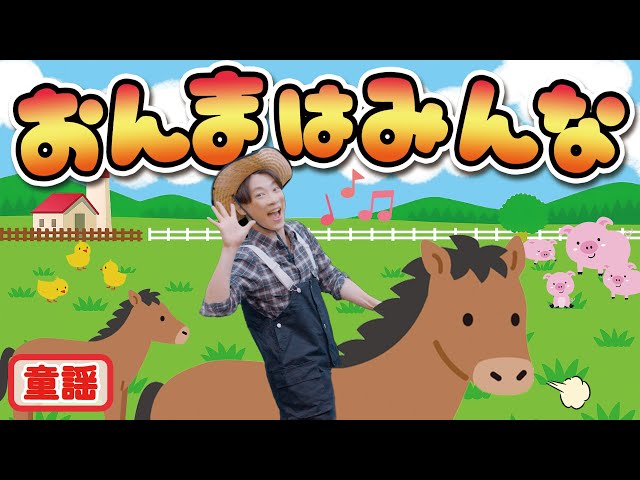
This is a song arranged for Japanese audiences from a folk tune that originated in 19th-century America.
Tomoko Nakayama’s Japanese lyrics pose questions like why a horse goes clip-clop as it runs and why a piglet’s tail curls—“no one knows why.” Easy-to-remember onomatopoeia is repeated to the rhythm, making it appealing and well-suited for creating parody verses.
Sung on NHK’s children’s programs, this piece has reached many homes and childcare settings through performances by Yuko Kanzaki and Osamu Sakata.
Combined with fingerplay or marching movements, it’s a perfect nursery song for parents and children to enjoy together.
tidying up

This is a practical, everyday children’s song often sung during clean-up time at nurseries and kindergartens.
Its simple structure repeats call-and-response phrases, making it easy and friendly for young children to memorize right away.
Many arrangements speed up partway through, adding a playful touch that naturally guides kids into tidying up.
It’s also featured on childcare-related YouTube channels and is widely used as background music at home and in schools.
A perfect pick for parents who want to make tidying a fun habit and for professionals working in early childhood education.
Mr. Elephant

In this song, Michio Mado’s poem is set to a gentle triple-meter melody by Ikuma Dan.
Through the image of a baby elephant, teased for its long trunk, proudly replying, “My mother’s is the same,” it tenderly conveys a heart that embraces differences.
In the 2003 “Favorite Children’s Songs” ranking, it placed seventh and has continued to be loved across generations.
It has been included in many collections, such as King Records’ “Zō-san — Michio Mado Children’s Song Collection [White Jubilee Commemoration]” and Nippon Columbia’s “Michio Mado Works — Zō-san.” It’s a song to hum along with someone dear to you, nurturing a spirit that cherishes your own individuality.
I accidentally broke the clarinet.Sakushi: Ishii Yoshiko / Sakkyoku: Fumei

This piece, for which Yoshiko Ishii wrote Japanese lyrics to a traditional French children’s song, comically portrays a child’s bewilderment when their clarinet suddenly stops making sound.
The mysterious chant “Opa kyamarado” derives from a French marching call meaning “In step, comrades.” It was broadcast in 1963 on NHK’s Minna no Uta, sung by Dark Ducks with animation by Yoji Kuri, and has remained beloved, being rebroadcast many times since.
Turning small instrumental mishaps into humor, this song is perfect not only for singing in kindergartens and elementary schools, but also for parents and children to hum together at home.
Zuizui Zukkorobashi

There is also a theory that it recounts events from the Tea Jar Procession, and, as expected of the era of “kirisute-gomen” (the right to cut down and ask no questions), it is a song reflecting a time when even children were shown no mercy.
The procession that presented the year’s first tea to the shogun was called the Tea Jar Procession; people would snap their doors shut and hold their breath, waiting for the line to pass—a song about a life-or-death moment.
It was also often sung when deciding who would be ‘it’ in children’s games.
Adorable foalSakushi: Satō Hachirō / Sakkyoku: Niki Takio

This song warmly portrays the life of a foal and a child, while carrying a curious, poignant sense of the times quietly creeping in.
You dry the foal’s wet mane, run together, and eventually part ways.
Such scenes unfold alongside rhythmic calls and responses.
The lyricist, Hachirō Satō, was active across a wide range from children’s songs to popular music, and the composer, Takio Niki, was a seasoned talent also known for film scores.
The work was released in December 1940 and broadcast nationwide the following January 1941 on NHK’s “National Songs.” It is closely connected to the film “Uma” (Horse), and has long been loved, later even featured in animated films.
Singing it as a family invites reflections on life in earlier times, and in early childhood settings it can be enjoyed as a play activity by imitating a foal’s movements.
Spring MeadowSakushi: Sakata Hiroo Sakkyoku: Ichikawa Toshiharu

This is a children’s song by poet-lyricist Hiroo Sakata and composer Toshiharu Ichikawa, a pioneer of educational music, depicting a foal galloping across a pasture.
It sings of a lively young horse running about in the spring breeze, with fresh grasses and flowers sprouting all around.
It has been included for many years in lower-grade music textbooks, featuring a comfortable vocal range and an easy-to-remember melody that thoughtfully draws out children’s natural singing voices.
It is featured in Educational Art Company’s elementary school music textbooks for the 2020 and 2024 school years, with accompanying teacher’s CDs and beginner piano scores available.
Expressing the vibrant feeling of spring through a bright, light rhythm, this piece is perfect for choral singing in early childhood settings as a new season begins, or for family sing-alongs at home.
If your child loves ranches or animals, try singing it together for fun!