

Pick out the challenging songs that will earn you respect if you can nail them at karaoke!

Have you ever thought, “I’d look so cool if I could get through this song at karaoke,” only to crash and burn halfway through?Songs that are hard to sing hide plenty of tough spots—wide vocal ranges, complex rhythms, and blisteringly fast phrases that barely leave room to breathe.But that’s exactly why the sense of accomplishment when you nail them is second to none.In this article, we introduce a wide variety of challenging songs that are worth taking on at karaoke.If you want to test your limits or are looking for a spark to help you level up your singing, let this guide you to your next song choice!
- [Taking on a song with a wide vocal range] An S-class challenge track
- Must-see for men: Songs that look cool if you can sing them at karaoke—numbers that women can’t help but be captivated by.
- [High-pitched warning!] Songs with high notes that are hard to sing
- [For Men] Tough Karaoke Songs: A collection of tracks that look cool if you can sing them!
- Cool If You Can Sing! Popular Karaoke Songs Recommended for Women
- Recommended for great singers! A collection of impressive songs if you can sing them
- [For Women] Sing challenging songs at karaoke and steal the spotlight!
- [For Men] Masterpiece Enka Songs with High Difficulty
- [Challenge] A compilation of Vocaloid songs that are difficult to sing
- [For Women] Masterpiece Enka Songs with a High Degree of Difficulty
- [Karaoke] Songs That Make It Easy to Score High | From Classics to the Newest Hits
- Even karaoke beginners can relax! Easy-to-sing songs for men
- Feel-Good Songs: Belt Them Out at Karaoke! A Roundup of Popular Numbers
Picked out tough songs that will earn you respect if you can nail them at karaoke! (331–340)
Depend on youHamasaki Ayumi

It was released in 1998 as Ayumi Hamasaki’s fifth single.
The song was issued as a lead single for her first album, “A Song for ××,” released in 1999.
As one of Ayumi Hamasaki’s early tracks, this song catapulted her to fame.
The melody sits very high overall, making it a difficult song to sing well.
Return To MyselfHamada Mari

Mari Hamada’s ninth single, released in April 1989.
She debuted with the catchphrase “Mari-chan is heavy metal,” produced by Munetaka Higuchi of LOUDNESS, but around the time this song became a hit, she seemed to begin gradually moving in a direction that set her apart from the so-called “Japa-Metal” scene.
That said, this track is an up-tempo, catchy pop-rock number, and it’s easy to see why it was a hit back then.
Still, Hamada’s vocals here—centered on her greatest weapon: a soaring, clear, and powerful high register—rest firmly on a solid foundation of vocal technique, making it quite difficult to reproduce in karaoke.
The long-tone vibrato is also distinctive.

countrysideTamaki Kōji

The 11th single by Koji Tamaki, the vocalist of Anzenchitai, released in July 1996.
I had the impression that Tamaki mostly sang more mellow songs with Anzenchitai, so I remember being personally very surprised at the time of its release because this song had a very pop feel.
Now, as for singing this song at karaoke, the melody doesn’t span such a wide range, so in that sense it might not be that difficult.
However, the most important thing to watch out for is not falling behind the rhythm with the rapid-fire lyrics.
It’s one of those songs where it’s crucial to study up on breath points and the like before you sing.
Cheer up.Eito

Included on Eito’s first album “Sukkarakan,” released in December 2020.
At first listen it feels laid-back and easy to hum along to, but faithfully capturing the song’s bouncy rhythmic feel while singing is actually quite challenging.
The relaxed mood can be misleading: the melody spans a fairly wide range, and if a sense of strain becomes apparent—especially in the high notes—it can ruin the song’s atmosphere.
It’s important to choose a comfortable key and practice beforehand.
Cherish the calm, easygoing mood when you sing.
And whatever you do, don’t rush the rhythm!
Picked out tough songs that’ll earn you respect if you can nail them at karaoke! (341–350)
Starry NightYuka

This is singer-songwriter Yuka’s sixth digital single, released in February 2023.
It was selected as the theme song for the TV Asahi drama “A Night When Stars Fall.” It’s a slow-tempo ballad with a very gentle, soothing vocal tone.
As a vocal melody, there aren’t many particularly tricky parts for the average person to sing at karaoke, but faithfully reproducing Yuka’s delivery—resonant across both low and high ranges while never losing softness—seems quite challenging.
Be careful not to strain your throat on the high notes, and make sure to let your chest voice resonate solidly in the low parts when you sing.
Rock ‘n’ roll won’t stop.Shinsei Kamattechan

It’s a song that feels like the vocalist’s emotions are pouring out just as they are.
It was the breakthrough work of the rock band Shinsei Kamattechan and is one of their signature songs.
Rather than aiming for a perfect copy, I recommend singing it the way you feel.
FlamingoYonezu Kenshi
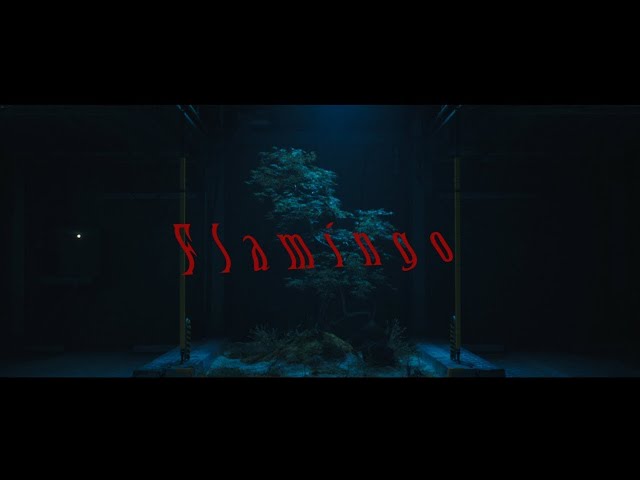
Kenshi Yonezu’s ninth single, released in March 2018, comes with the background of his past as “Hachi,” a former Vocaloid producer.
As you’d expect from an ex-Vocaloid creator, the melody is quite difficult for a human to sing, and to pull it off in karaoke, the most important thing is to thoroughly understand and memorize the song first.
His actual vocal performance isn’t particularly advanced, so the key requirement is to learn the song well and keep up with the melody and rhythm.