

[Logic Quiz] Flexible Thinking and Creativity Are Key! From Classics to Tough Challenges, All in One Go

Logic puzzles that call for flexible thinking and free imagination!
In this article, we introduce a wide range of problems—from classic ones you might see on TV or in magazines to challenging brainteasers with a twist.
Critical thinking and reading comprehension are certainly important, but surprisingly crucial is letting go of assumptions!
That “Isn’t this obviously what it means?” is often wrong to begin with.
Take this opportunity to clear your mind and tackle the problems without being bound by unconscious assumptions!
- [Battle of Wits] Stimulate your intellectual curiosity! Quiz questions that get adults excited
- [Genius if you can solve it?] Insight and intuition: a challenging IQ quiz
- A quiz that seems easy but is actually hard: trick questions that make you think flexibly
- Genius if you can solve it? Super-difficult Quiz Collection
- Take on the challenge like a puzzle! A collection of logic quizzes that also work as brain teasers.
- [Interesting] A collection of brain teaser quiz questions. Let's train your brain!
- [Interesting] Collection of Math Quiz Problems
- Riddles for college students. Questions that test thinking and creativity.
- Fun quizzes for elementary school kids: a collection of questions everyone can enjoy together
- [Brain Training] Difficult Riddles That Even Adults Struggle With
- Also great for brain training! A flash of intuition is the key to solving these insight quizzes.
- Hard to get right on the first try! A quiz you’re guaranteed to get tripped up by.
- A math quiz for adults. Can you solve it?
[Logic Quiz] Flexible Thinking and Creativity Are Key! A One-Stop Introduction from Classics to Brain-Twisters (1–10)
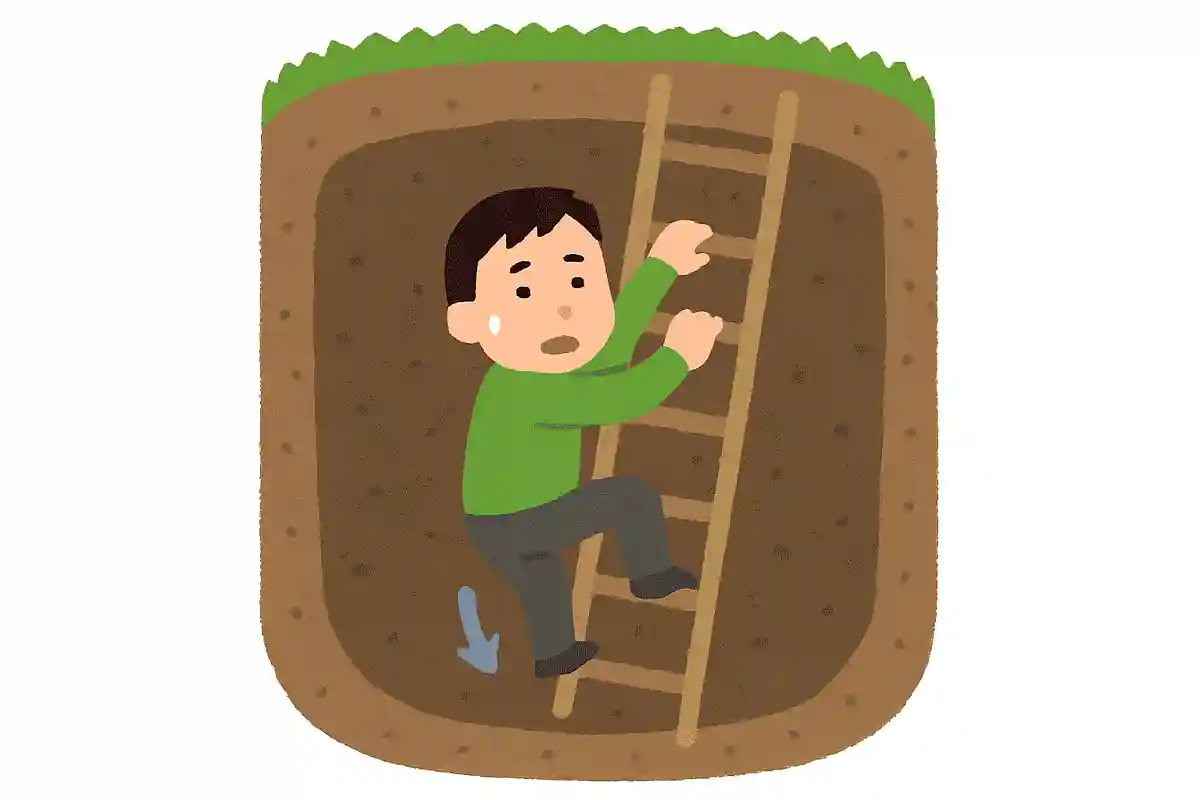
I fell into a 30-meter-deep pit. You can climb 3 meters every hour, but immediately slip down 2 meters. How many hours will it take to escape?
See the answer
28 hours
It climbs 3−2=1 meter every hour. However, at the 27th hour it will be at the 27-meter mark, so if it then climbs 3 meters, it can escape without sliding down 1 meter. Therefore, the correct answer is 27+1=28 hours, not 30 hours!

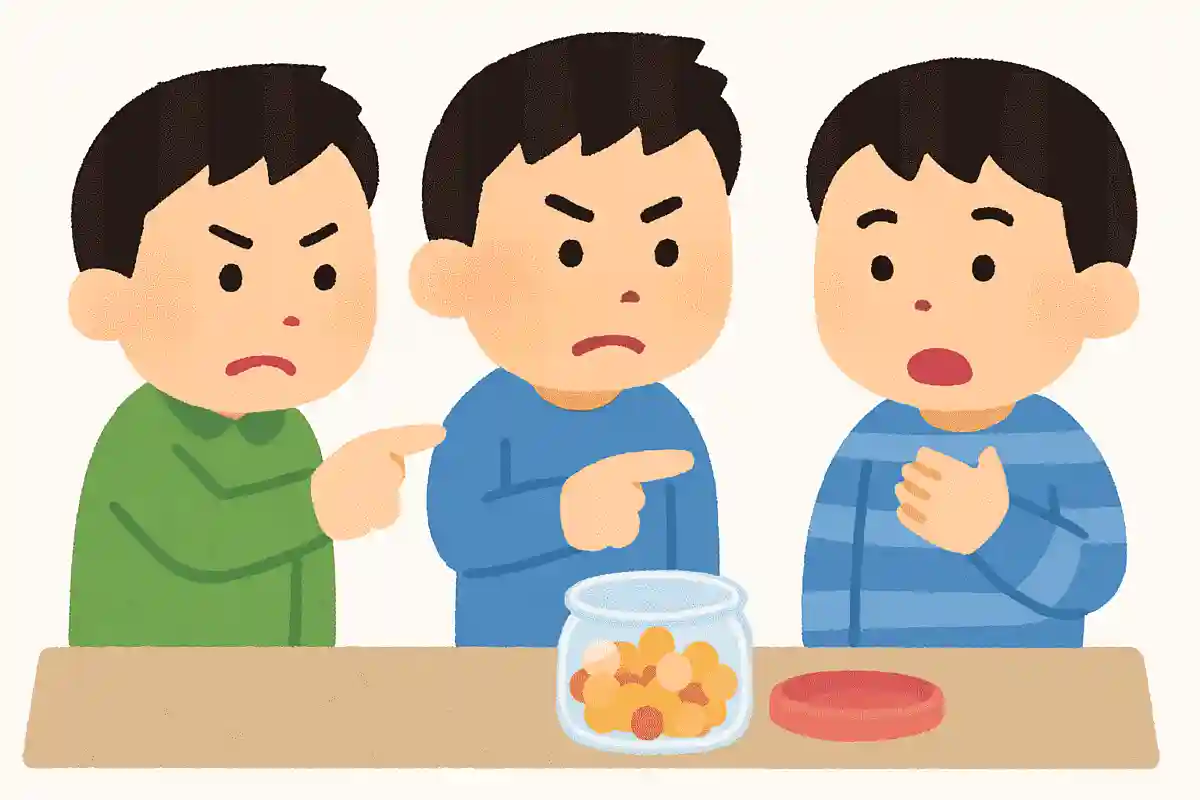
One of three brothers secretly ate some sweets. The eldest said, “The second brother is the culprit.” The second said, “The youngest is the culprit.” The youngest said, “I’m not the culprit.” Only the one who secretly ate the sweets is lying. Who is the culprit?
See the answer
second son
If the eldest son is the culprit, then the second son must be lying, and if the third son is the culprit, then the eldest son must also be lying. This breaks the assumption that only the person who secretly ate the food is lying. If the second son is the culprit, then he is the one lying while the eldest and third sons are telling the truth. Therefore, the correct answer is the second son.
A ballpoint pen and an eraser together cost 110 yen. The ballpoint pen is 100 yen more expensive than the eraser. How much does the eraser cost?

See the answer
5 yen
Given that the eraser and the ballpoint pen together cost 110 yen, we have “eraser + (eraser + 100 yen) = 110,” which leads to “eraser = 5 yen.” It’s a question where people often mistakenly answer 10 yen, but if the eraser were 10 yen, the pen would be 110 yen, totaling 120 yen, right?
[Logic Quiz] Flexible Thinking and Creativity Are the Key! A Comprehensive Showcase From Classics to Brain Busters (11–20)
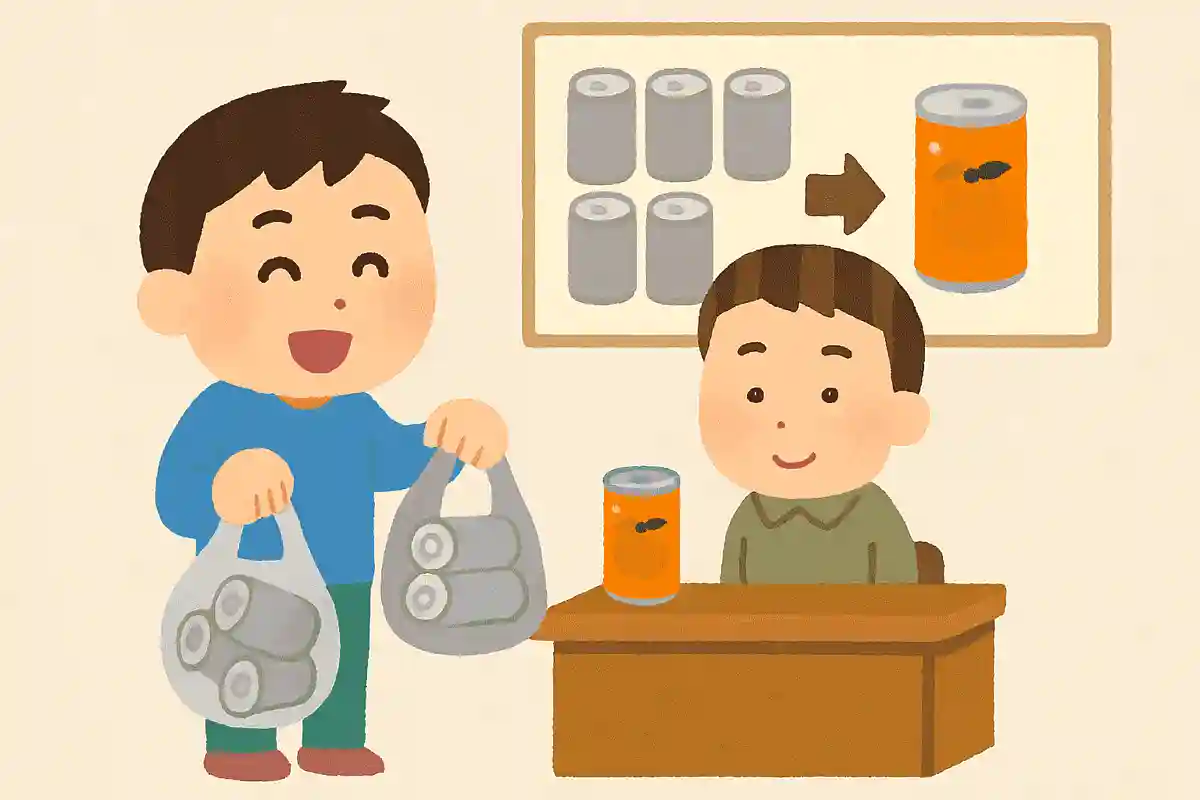
You can exchange 5 empty cans for 1 new can of juice. You currently have 200 cans of juice. How many cans of juice can you drink in total?
See the answer
249 pieces
If you open 200 cans of juice, you get 40 more. If you open those 40, you get 8 more. If you open 5 of those 8, you get 1 more, so the answer is 200 + 40 + 8 + 1 = 249 cans.
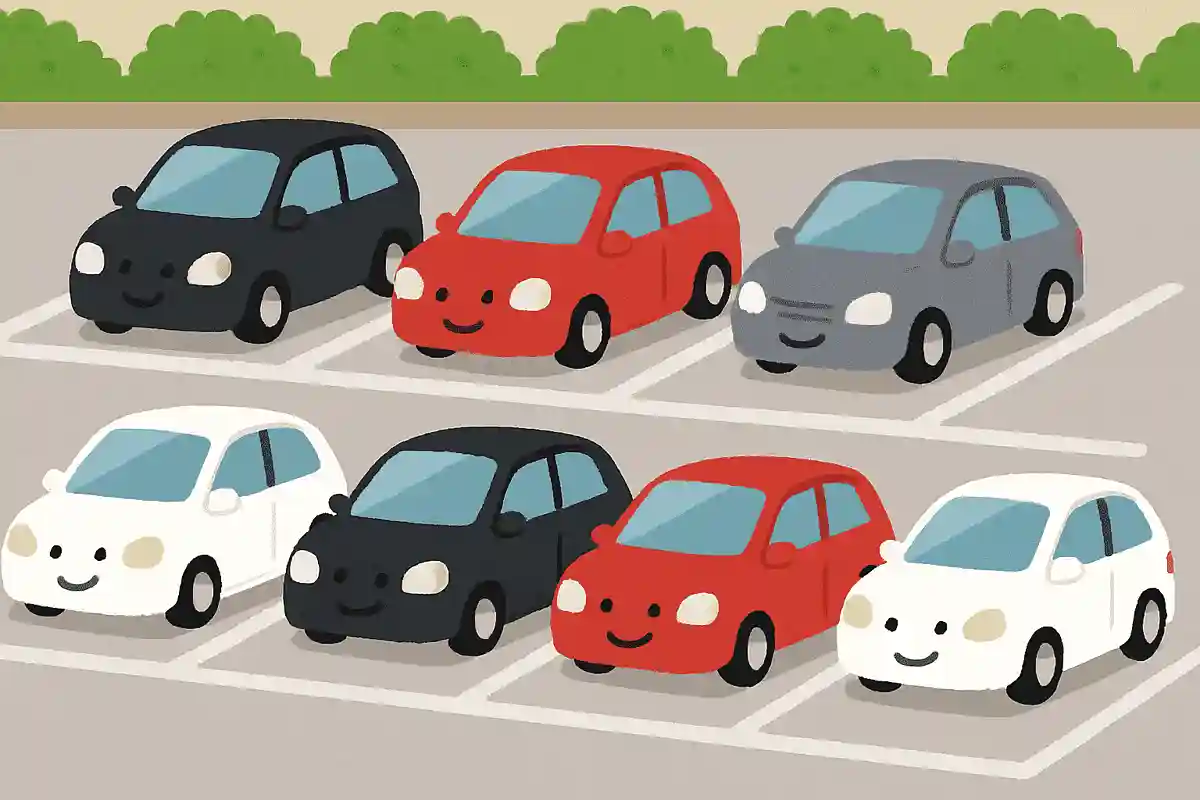
There are cars parked in a parking lot. Exactly two are not black, exactly two are not red, and exactly two are not white. How many cars are there in the parking lot? (Assume each car is painted a single color)
See the answer
Three units in black, red, and white, or two units in colors other than black, red, and white.
If there is one of each, then having only two cars be black, red, and white does not create any contradiction. Also, if only two cars are not each of those colors, the assumption that two cars of completely different colors are parked there also holds.
After three people paid for a room priced at $10 per person, the front desk realized there was a promotion and the total should have been $25. Since the $5 difference couldn’t be evenly split among the three, they refunded $3 and the staff kept $2 as pocket money. Each of the three effectively paid $9, and even if you add the $2 the staff skimmed, it only totals $29, not $30. Where did the remaining $1 go?

See the answer
One dollar has not disappeared.
The $27 paid by the three people is the sum of the $25 campaign rate plus the $2 the staff pocketed. In other words, when you add the $3 that was refunded, it comes to exactly $30, so no dollar has gone missing.
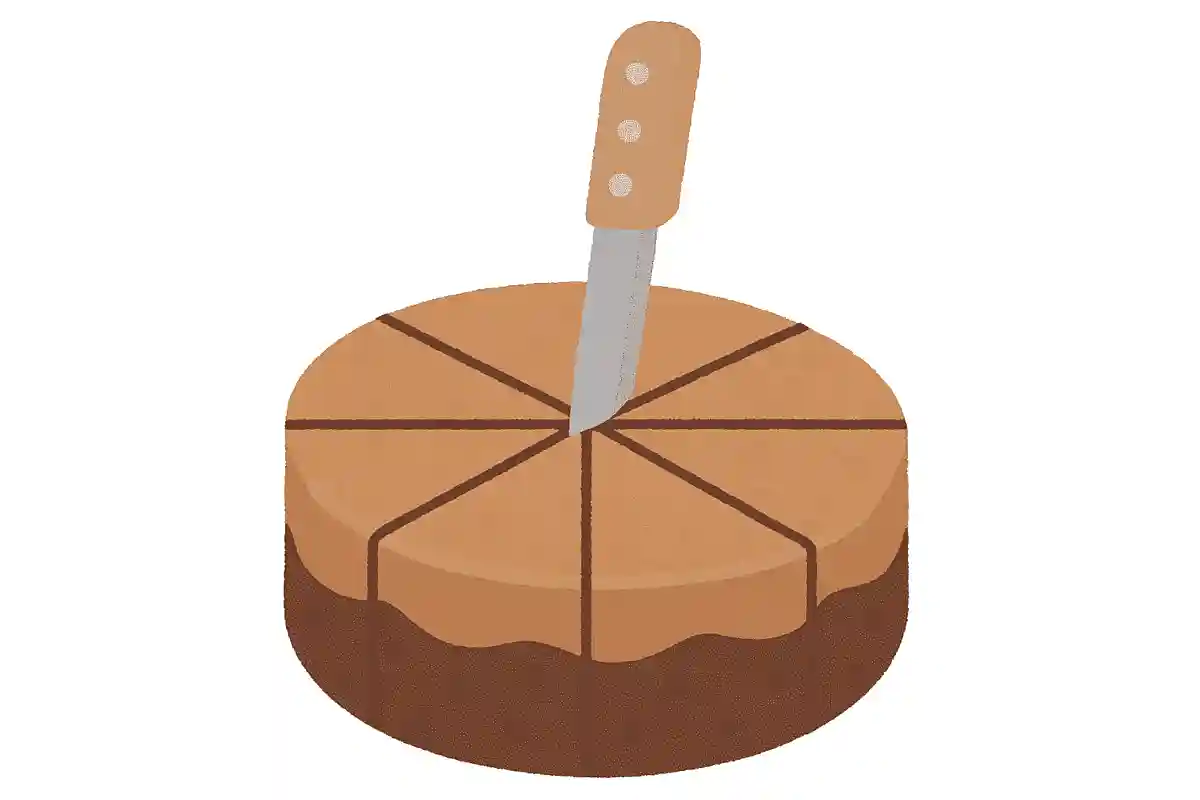
How can you divide a whole cake into 8 equal pieces using only three cuts with a knife?
See the answer
After making a cross-shaped cut, slice it in half horizontally.
The key is not to get fixated on cutting only from the top! After making a cross cut, you can also stack the four pieces and cut them in half from the top to make eight equal pieces.