


From familiar topics to niche ones! A quiz you can enjoy even if you don't like math!

Math is the subject that ranks first among students both as the most liked and the most disliked.
Even as adults, some people say they like it because it yields clear-cut, black-and-white answers, while others are so bad with it that they joke they break out in hives just from seeing numbers.
Although math has a strong image of being all about studying, did you know that in fact a lot of mathematics is hidden in our everyday lives? So this time, we’ve turned a range of math trivia—from the familiar to the more niche—into a quiz.
Give it a try!
From familiar to niche! Quizzes even math-haters can enjoy! (1–10)
Why are manhole covers round?

- Because round is more beautiful.
- To prevent the lid from falling into the hole
- Because making it round is easier.
See the answer
To prevent the lid from falling into the hole
The main reason manhole covers are round is to prevent the cover from falling into the manhole opening from any direction. With a circular shape, even if the cover tilts, it never becomes smaller than the opening, making it physically impossible for it to drop in. Additionally, because the covers are heavy, a round shape makes them easier to roll for transport, and they fit perfectly from any orientation, simplifying installation. However, the primary reason is safety.

Assuming you could fold a newspaper as many times as you like, how many folds would it take to reach the height of the Moon?

- 42 times
- 420 times
- 4,200 times
See the answer
42 times
By folding a newspaper, its thickness increases by powers of two. If we assume an initial thickness of 0.1 mm and fold it 42 times, the thickness becomes 2^42 × 0.1 mm, which is approximately 439,804 km—exceeding the average distance from the Earth to the Moon, 384,400 km. In other words, in theory, folding a newspaper 42 times would reach the height to the Moon. In practice, physical limitations prevent folding a sheet of paper that many times, but this serves as a very interesting example for intuitively understanding exponential growth.
How many meters is a mile, the unit used to measure distance overseas?
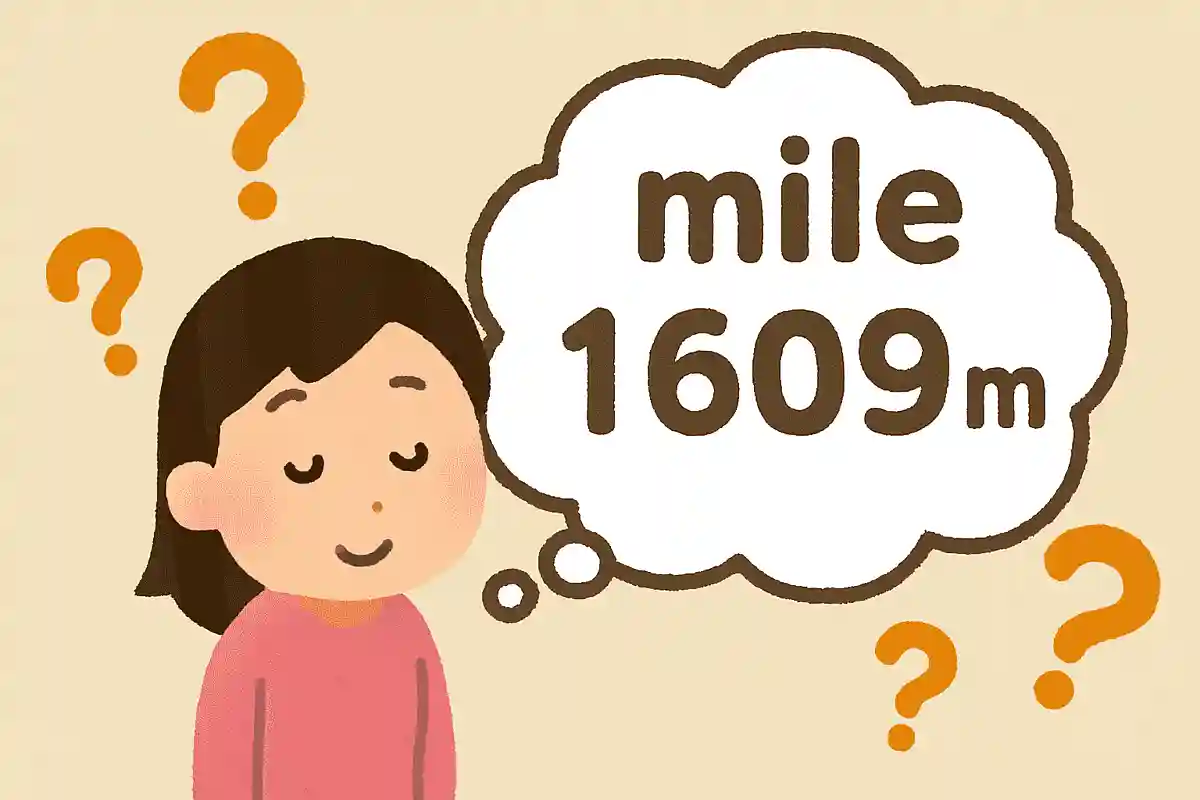
- 804.672 meters
- 1,609.34 meters
- 1000 meters
See the answer
1,609.34 meters
One mile is exactly 1,609.34 meters. This unit is used particularly in English-speaking countries, and is widely used, for example, in the United States and the United Kingdom.
In the world of mathematics, the seven “Millennium Prize Problems” are considered major challenges—what do you receive if you solve even one of them?

- Nobel Prize
- one million dollars
- lecture rights
See the answer
one million dollars
If you can solve a Millennium Prize Problem, the Clay Mathematics Institute awards a prize of one million dollars. This is part of an effort to promote major discoveries in mathematics and to demonstrate the importance of the field to the world. To date, only the Poincaré Conjecture has been solved, and the prize has been awarded.
What is the name of the greatest unsolved problem in mathematics that, though proposed in the 17th century, no one could prove until 1994?
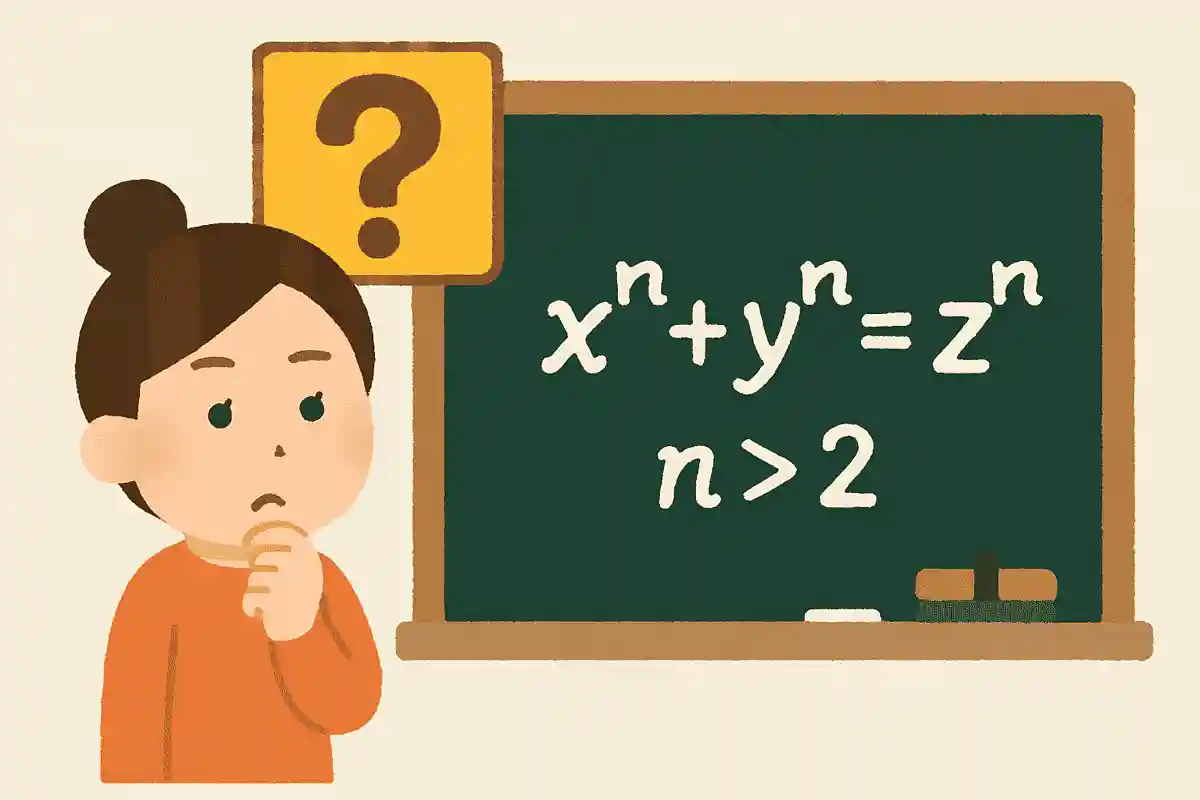
- Four color theorem
- Fermat's Last Theorem
- Banach–Tarski paradox
See the answer
Fermat's Last Theorem
Fermat’s Last Theorem became known from a note written by the French mathematician Pierre de Fermat in 1637. Fermat wrote, “I have discovered a truly marvelous proof of this proposition, which this margin is too narrow to contain.” However, his proof was never found even after his death, and mathematicians’ attempts to uncover it continued for about 357 years. Ultimately, in 1994, a complete proof was announced by the British mathematician Andrew Wiles, sending shockwaves through the mathematical community.
Which of the following options is correct for a length of 10! seconds?
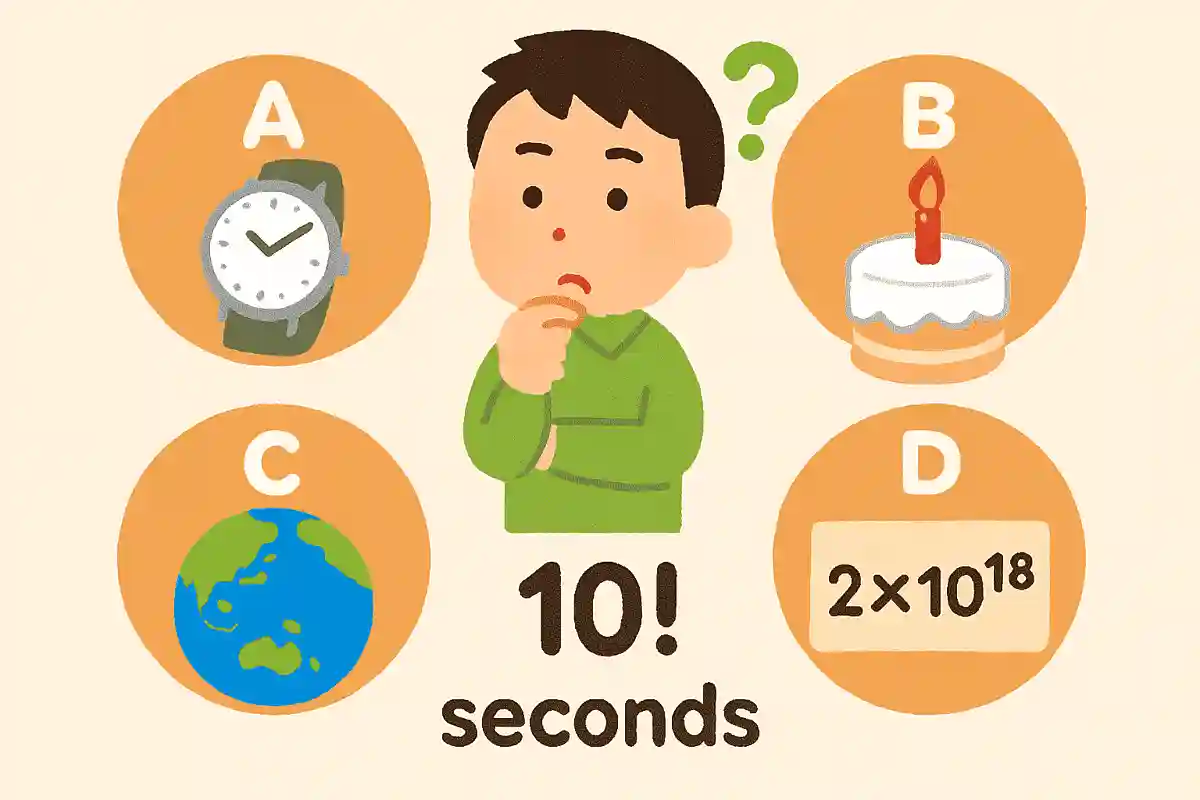
- about six weeks
- About 6 months
- about six years
See the answer
about six weeks
The factorial of 10 (10!) is 10×9×8×7×6×5×4×3×2×1, which calculates to 3,628,800 seconds. Converting this number of seconds into hours and days gives approximately 42 days, which corresponds to about 6 weeks.
Which country’s language is the origin of the symbol “%”?

- Italian
- French
- German
See the answer
Italian
The symbol %, derived from the Italian expression “per cento,” eventually evolved into the % shape we see today.