

[For school cultural festivals] Recommended maze ideas and traps


If you’re wondering what to do for your school festival exhibit, how about creating a maze?
Designing an ordinary maze can be tough, but if you want to get creative and really energize the festival, this is a must-see.
We’ve packed in ideas for traps to hide inside the maze and concepts for full-fledged maze designs—ideas that will make it an unforgettable experience for both the creators and the visitors.
From photo-worthy fun to surprising twists, this collection is full of ideas that are as enjoyable to make as they are to explore!
- I want to run an escape game at the school festival! How to create a real-life escape game and tips
- [School Festival] Ideas for gimmicks to incorporate into a haunted house
- How to Create and Tips for Mystery-Solving Games for School Cultural Festivals
- Unusual attractions you can do in a classroom for a cultural or school festival
- Attraction Ideas for School Festivals That Only High Schoolers Can Pull Off?
- Better than a theme park! Attractions perfect for school cultural festivals
- [For High School Students] A roundup of recommended attractions for the school festival
- Cultural Festival: Ranking of Popular Booth Ideas
- Eye-catching! Interior decoration ideas to brighten up your school festival
- [School Culture Festival] Handmade Planetarium Ideas
- [By Genre] Cultural Festival / School Festival Booth Catalog [2026]
- Instagram-worthy ideas for a high school cultural festival: photo spots everyone will love
- [Cute Prizes] Handmade Prize Ideas for School Culture Festivals
[For cultural festivals and school festivals] Recommended maze ideas and traps (31–40)
Sugoroku maze

How about creating a maze in a sugoroku style where you move forward by the number that comes up on a die or roulette? Thinking up instructions, penalties, and occasional rewards for each space could be part of the fun.
You can also include branches as maze elements, adding penalties for dead ends or the hassle of backtracking.
By combining sugoroku with a maze, you can broaden the possibilities for customization, such as increasing the number of traps and trials.
Another key point is that you can adjust the difficulty through the instructions on each space.

Place an omikuji (fortune slip) along the way
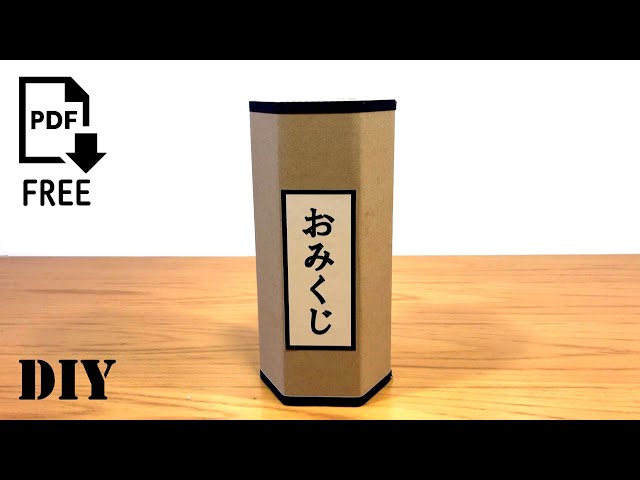
When you go for your first shrine visit of the year, you can’t help but draw an omikuji fortune slip.
Even knowing it’s a kind of fortune-telling, you still get excited or disappointed over “great blessing” or “bad luck.” How about placing such omikuji in the middle of a maze? Regular omikuji that tell your “fortune of the day” are fine, but let’s add a twist to make it more exciting! For example, when someone tries to draw an omikuji and lifts the cylinder, a siren goes off!! They’d panic while still holding the tube, right? Or when they go to pull a slip, they get targeted by a water gun.
Please prepare lots of clever tricks that “hold people up” in the maze!
You can’t proceed unless you win rock-paper-scissors.

A simple trap where someone lies in wait partway through a maze and challenges you to rock-paper-scissors, and you can’t proceed unless you win.
It’s an easy trial to set up as long as there’s a person, yet if you keep losing, there’s a real chance you’ll never move forward.
There are countless so-called foolproof strategies for rock-paper-scissors—like how people tend to throw a certain hand when they’re nervous, or how their choice becomes predictable if you stop them once before the match—so I’d like to stand in the way as a formidable opponent while taking cues from those tactics.
Time Trial Maze

For everyone thinking about attractions for the school festival, how about a giant maze made with lots of cardboard boxes and plastic bags? It has a simple structure, so you can put it together easily in about two hours.
It’s perfect for events like school festivals where prep time is limited! You can make it more game-like by adding options such as requiring participants to crawl like a baby or including a time trial.
Try discussing with your class to add your own twists, like creative decorations for the maze or fun penalty challenges!

Maze with a giant slide

A must-see for anyone planning exhibits for a cultural or school festival! This maze is a giant cardboard labyrinth with a slide, made by connecting multiple everyday cardboard boxes.
Using boxes of roughly the same size makes construction relatively easy.
Even with a simple build—just gluing cardboard together—you can create a full-fledged maze with a smart design! The slide, built by stacking cardboard boxes, is something you’ll definitely want to try at least once.
It can be fun in a classroom, but setting it up in a larger space like a gymnasium will offer a more dynamic maze experience.
[For cultural and school festivals] Recommended maze ideas and traps (41–50)
Beehive Cardboard Maze

Let’s build it by combining hexagonal cardboard! Here are some ideas for a honeycomb cardboard maze.
When you think of a cardboard maze, many people may imagine assembling flat pieces together.
This time, let’s use cute honeycomb-like hexagonal cardboard sections to create the course of the maze.
Visitors making their way through will feel as if they’ve transformed into bees.
Feel free to adapt the idea and give it a try!
Create a dead end
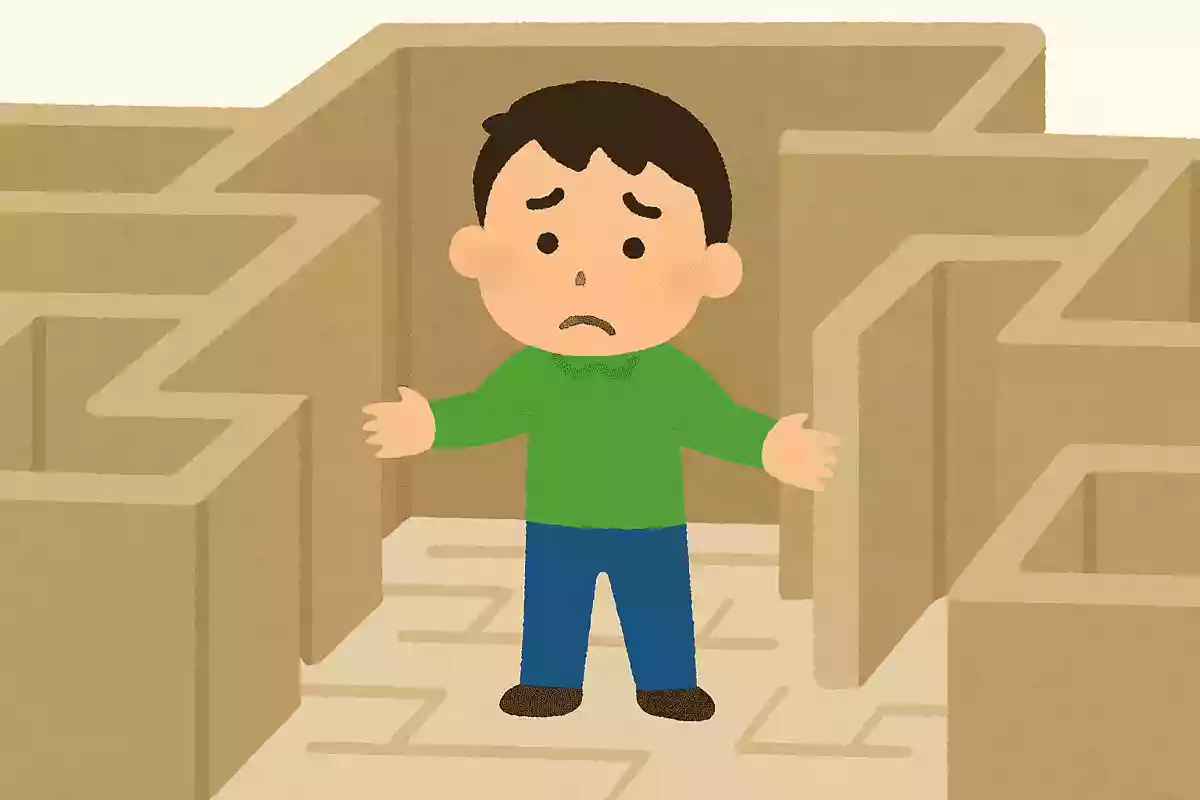
A maze classic! Here are some ideas for creating dead ends.
Dead-end paths are a staple of mazes.
People who understand the rules will quickly correct their course.
However, since small children may also take part, it might be a good idea to put up signs that say things like “Dead End.” It’s an idea so standard it’s easy to overlook, but with a bit of ingenuity, you can really entertain your visitors.
Be sure to incorporate it while adding your own twists.