



When someone asks you to name a food that starts with “mi,” it’s not easy to come up with one right away, is it?
The classic example is mikan (mandarin orange), but that would be disallowed in shiritori…
So in this article, I’d like to introduce a variety of foods that start with “mi.”
I’ve gathered foods beginning with “mi,” ranging from two to six characters—such as mizuna, Minazuki, and meatballs—so feel free to use this list whenever you need it, like for a shiritori game.
You might even discover a food you’ve never encountered before!
- Let's learn animal names! Animal names that start with 'mi'
- Food names starting with “ne,” categorized by character count
- Useful for shiritori! A list of food names that start with 'fu'
- Animal names that start with “zu.” Perfect for shiritori and word game hints!
- [For Seniors] Boost Oral Function with Tongue Twisters! Recommended Picks to Try
- [Trick Quiz] Quiz Questions That Excite Everyone from Kids to Adults
- Usable for Shiritori! A roundup of animals that start with “shi”
- [For Kids] January Trivia Quiz & Fun Facts: Learn About the New Year in a Fun Way
- [Surprisingly hard to recall?] Food names starting with 'go' by character count
- How many can you read? A quiz on difficult kanji for foods
- [Food Edition] Who Am I? Quiz Collection
- How Much Do You Know? Food Quiz for Elementary School Students
- A collection of words that start with “de”. Perfect for shiritori and word games.
2 characters (1–10)
water

It’s something indispensable for human life.
I also find it interesting that, when you explicitly name it as a food, it somehow feels a bit out of place.

Mino

It’s the first of a cow’s four stomachs.
It has a crunchy texture and is enjoyed as one of the varieties of offal.
miso (fermented soybean paste)

It’s a classic seasoning with interesting regional differences.
The name can also vary depending on the ingredients and where it’s produced, so expanding into those aspects is recommended.
3 characters (1–10)
mint

It’s a plant known for its strong fragrance, often associated with being served alongside sweets.
Thanks to the popularity of chocolate mint, it probably doesn’t feel as out of place when mentioned as a food anymore.
Mitsuba (Japanese parsley)

It’s a vegetable in the parsley family native to Japan.
It might be interesting to choose mitsuba—often thought of mainly as a garnish—as the food.
mizuna (Japanese mustard greens)
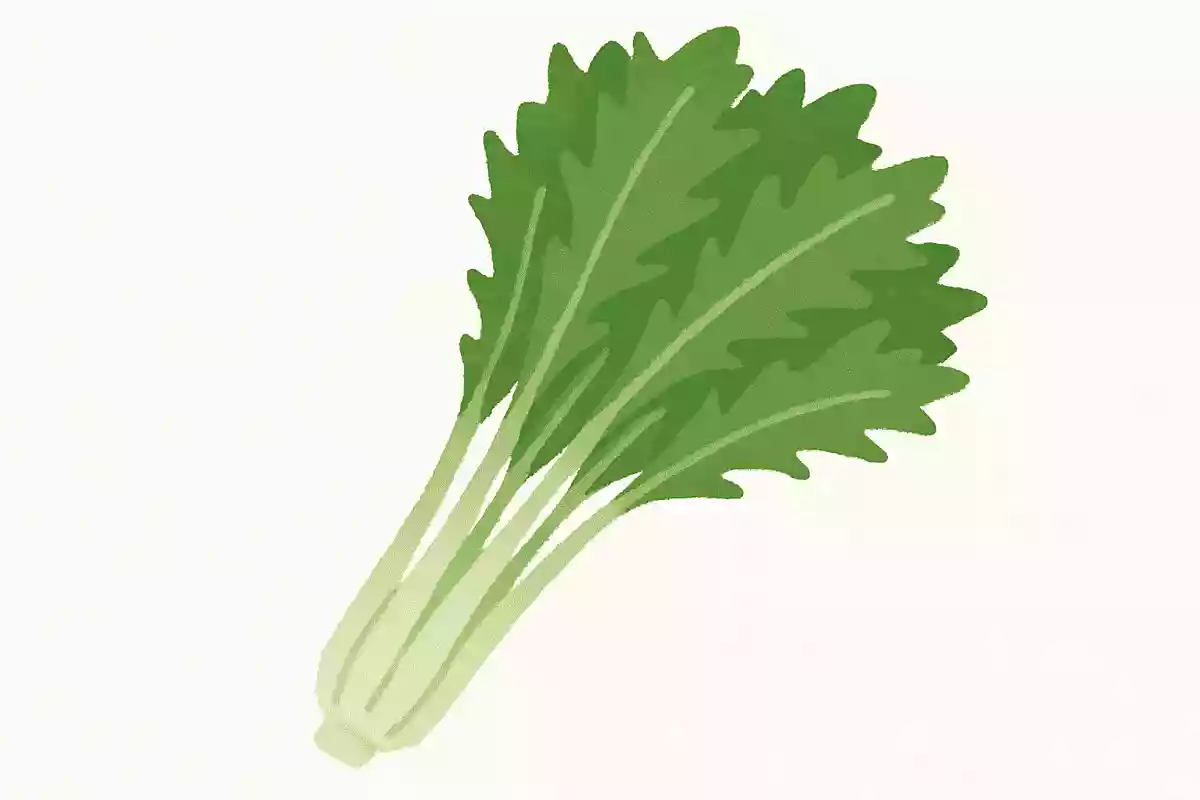
It’s a traditional vegetable said to have originated in Kyoto.
In the Kanto region, it’s also called “Kyona,” so some people might not even know the name mizuna.
4 letters (1–10)
mizuame (starch syrup)

Mizuame is a thick, sticky sweetener used as an ingredient in cooking and confectionery.
Some of you may also remember enjoying it as a penny candy in your childhood, like stretchy taffy.

Minazuki (the sixth month of the traditional Japanese calendar; literally ‘month without water’)

Minazuki is a word that refers to the month of June.
There is also a Japanese confection called minazuki, which is uirō topped with azuki beans.
myoga (Japanese ginger)

Myoga, which you start seeing more often in supermarkets in summer, has a distinctive, slightly quirky flavor that can divide opinions, but it’s a popular garnish with many devoted fans.
5 characters (1–10)
cherry tomato

It’s one of those vegetables that often appears on the table—added to salads or used as a colorful garnish.
There are many kinds of cherry tomatoes, not just red but also yellow, and not only perfectly round ones but also elongated varieties.
It’s interesting how each type has its own distinct flavor.