

![[For Seniors] Boost Oral Function with Tongue Twisters! Recommended Picks to Try](https://media.ragnet.co.jp/img/1200__png__https://www.studiorag.com/files/2025/04/f2ca293a0d381649cc0135d459623cf4.webp)
[For Seniors] Boost Oral Function with Tongue Twisters! Recommended Picks to Try


For older adults, maintaining oral functions is very important because it contributes to both physical and mental health.
Even if you’re mindful of it in daily life, those functions tend to weaken over time.
That’s when we recommend trying tongue twisters.
Moving the tongue stimulates saliva production and can improve swallowing function.
It also activates brain function and may help prevent dementia.
Tongue twisters are great not only as recreation in day-service and other senior facilities, but also as oral exercises before meals.
Please use this article as a reference and have fun giving it a try!
[For Older Adults] Improve Oral Function with Tongue Twisters! Recommended Ones to Try (1–10)
A monk skillfully painted a picture of a monk on a folding screen.

This is one of the classic tongue twisters in Japan, and the phrase evokes scenes like those in rakugo or old folktales.
Because words with similar sounds—like bouzu, byoubu, and jouzu—appear in succession, be mindful of the subtle differences in pronunciation and your mouth movements.
If you find it hard to connect smoothly from one word to the next, it helps to understand the meaning of the tongue twister or to visualize the scene.
Also, if the sounds get blurred into something like “boozu” or “byoobu,” your mouth won’t get a proper workout, so make sure to clearly articulate the “u” sounds as well.

red paper roll, blue paper roll, yellow paper roll

Tongue twisters often consist of strings of hard-to-pronounce words.
“Aka-makigami ao-makigami ki-makigami” (red scroll paper, blue scroll paper, yellow scroll paper) is also a sequence of tricky words.
By the way, makigami refers to paper made by joining together sheets of hansetsu paper (a tall, narrow paper) side by side to make a long roll.
It’s sold in scroll form.
This tongue twister lines up red, blue, and yellow scroll paper.
It looks easy at first glance, but when you try to say it repeatedly, it becomes hard to pronounce.
As a tip, if you pause slightly between the color names—like red or blue—and the word “makigami,” it should be a bit easier to say.
Try it together with older adults.

Hard-to-pull nails, nails that are difficult to remove, nails pulled out with a nail puller
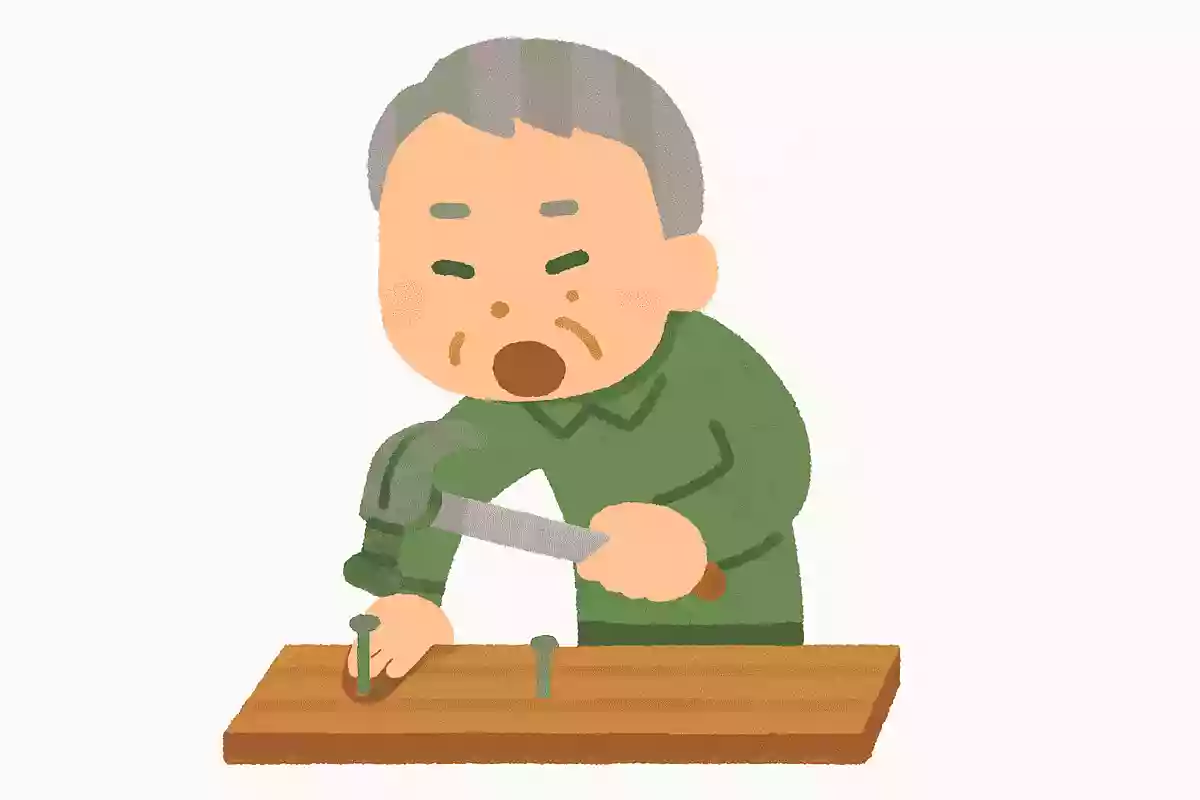
“A nail that’s hard to pull out, a nail that’s difficult to draw out, a nail pulled with a nail puller”—this tongue-twister also brings to mind scenes of carpenters or families doing DIY at home.
You can really picture someone struggling to pull out a stubborn nail.
Because of that, it repeats the same or similar words quite a lot.
It might be easier to say if you consciously break it into words like: hard-to-pull, nail; hard-to-draw-out, nail.
It’s a tongue-twister that may even help older adults recall their own DIY experiences.
Parent turtle, child turtle, grandchild turtle
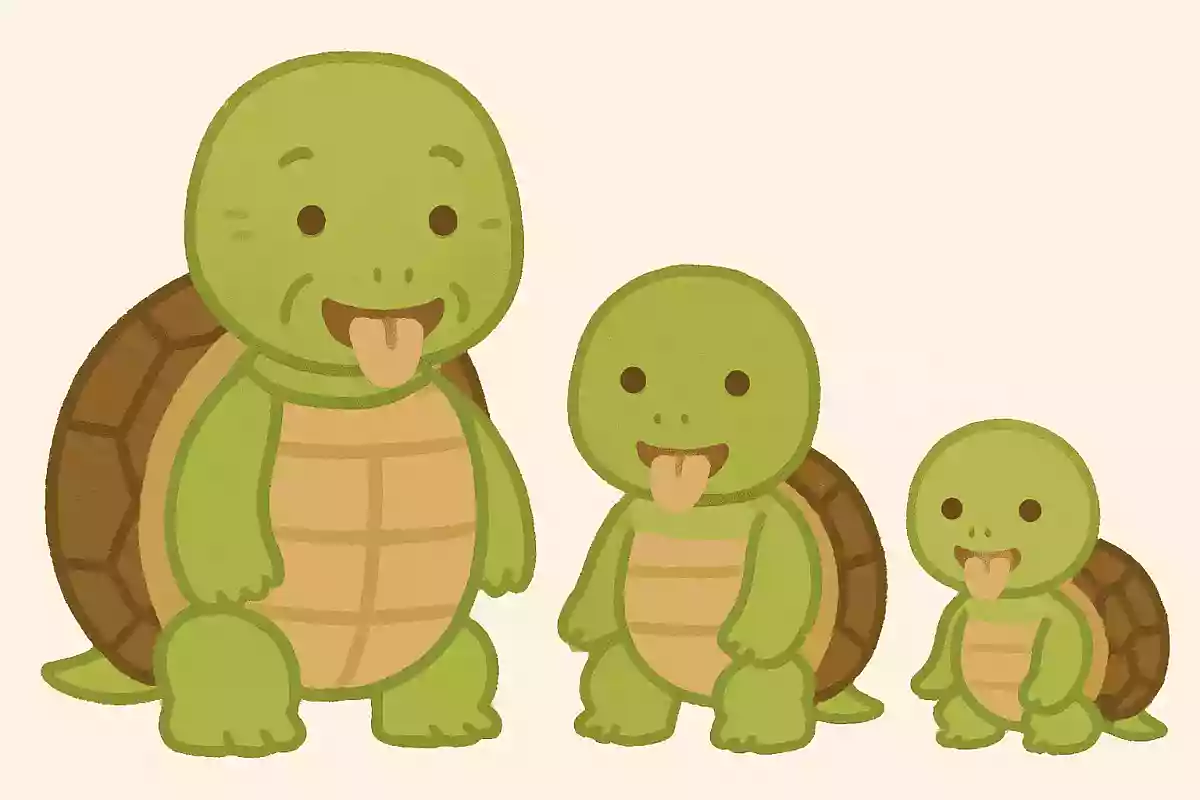
One of the classic tongue twisters that add “parent,” “child,” and “grandchild” to animals helps you consciously focus on differences in mouth shapes.
The phrase is relatively easy to pronounce, so be mindful of your mouth shape and movements as you gradually increase speed.
There’s also a version that adds “parent duck, duckling, grand-duck,” which draws attention to the difference in mouth shape between the sounds ‘me’ and ‘mo.’ Precisely because the phrase is simple, not only mouth movements but also the rhythm of pronunciation is important.
Papa Panda, Mama Panda, Grandpa Panda, Grandma Panda

Tongue twisters with animal themes are a classic.
Through the words, you can picture a cute scene with animals lined up.
Sounds like “pa” and “ma” are hard to pronounce unless you close your lips first, so when they come in succession, the key is that your mouth really has to move.
Because you need to take the time to close your lips, being mindful of your mouth movements is important if you want to speak clearly while increasing speed.
Aim for clear pronunciation first, then gradually pick up the pace to train the muscles around your mouth.
This kid had a hard time writing katakana, didn’t they? I wonder if they didn’t cry?
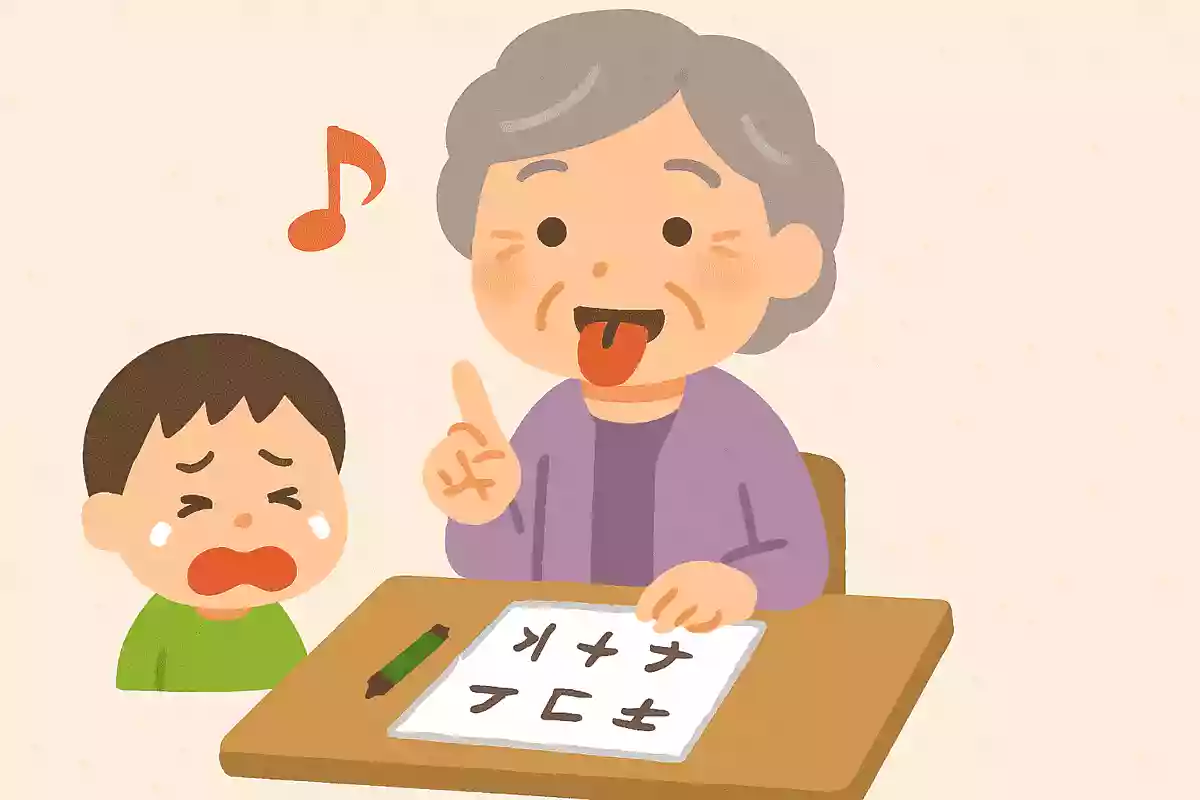
“Kono ko nakanaka katakana kakenakatta na, nakakanakatta kana?” is quite a long tongue twister.
Are they worried that the child who couldn’t write katakana didn’t end up crying? Words with similar sounds like nakanaka and katakana run together almost like a reverse reading.
Plus, the repeated ka sounds create a string of identical syllables, which adds to the difficulty of reading.
Tongue twisters can make you rush, but the key is to stay calm and read through without hurrying.
Ultimate luxury aircraft at a deserted Kyushu airport

The tongue twister “kuukyo na Kyushu kuukou no kyuukyoku koukyuu koukuuki” (empty Kyushu airport’s ultimate luxury aircraft) feels difficult just by looking at it written down.
The sentence is also on the longer side for a tongue twister, and it’s characterized by a mix of hard k sounds and kya-kyu-kyo clusters.
Because of that, it’s said to be hard to say without tripping up.
To be able to say tongue twisters, the key is to be conscious of each word and pronounce every one clearly and distinctly.
By the way, there is no actual airport called “Kyushu Airport.” If you were to use a real airport in a tongue twister, it would be one of the airports in the Kyushu region, such as Kitakyushu Airport.