

For elementary school kids! Fun riddles recommended for the middle grades

Children in the middle grades of elementary school are growing rapidly.
It’s also a time when friendships deepen and play with friends becomes very active.
At this age, their thinking and expressive abilities develop, and their curiosity grows stronger.
They learn many things and absorb new knowledge.
Here, we introduce riddles perfect for middle-grade elementary school children to enjoy with their friends.
Riddles help nurture thinking skills while having fun, making them great for communication with friends and family, too.
By all means, let both kids and adults give them a try together!
- Recommended for upper elementary grades! A fun quiz for elementary school students where you can learn while enjoying yourself
- Riddles for Upper Elementary Kids: A Fun Collection That Adults Can Enjoy Too
- For elementary school kids! Fun riddles recommended for lower grades
- Recommended riddles for elementary school students. A collection of kid-friendly riddles.
- Riddles for middle school students
- For elementary school kids! Fun and amusing riddles everyone can enjoy together
- [For Elementary School Students] Recommended Riddle Collection
- Recommended for upper grades! A fun, educational quiz for elementary school students
- Recommended for upper elementary school students! True-or-false quizzes that make you think
- Fun quizzes for elementary school kids: a collection of questions everyone can enjoy together
- Fun trick riddles you can enjoy in elementary school!
- [Hard] Riddles for junior high school students
- Fun Quiz Collection Guaranteed to Stump and Delight Elementary School Kids
For Elementary Students! Fun Riddles Recommended for Middle Grades (21–30)
What is something you use but cannot own?
Scissors, pencils, erasers, rulers… most tools you’re familiar with are basically things you hold in your hand to use, right? So let’s try a riddle: “What can be used but cannot be held?” You might think of various tools, but you won’t easily get the right answer if you only think in terms of “objects.” First, try considering things you can use that aren’t objects.
By the way, the answer is “your name.” You use it when introducing yourself or when you want friends to know about you, but you certainly can’t “hold” it.

What time is it now?
See the answer
two characters
When someone asks, “What time is it now?” you’d normally answer with a time like three o’clock or six o’clock, right? But this riddle is different. If you focus on the phrase “What time is it now?” itself, it contains two words—“now” and “what time”—so together it makes ‘two characters’ (ni-moji).

For Elementary School Kids! Fun Riddles Recommended for Middle Grades (31–40)
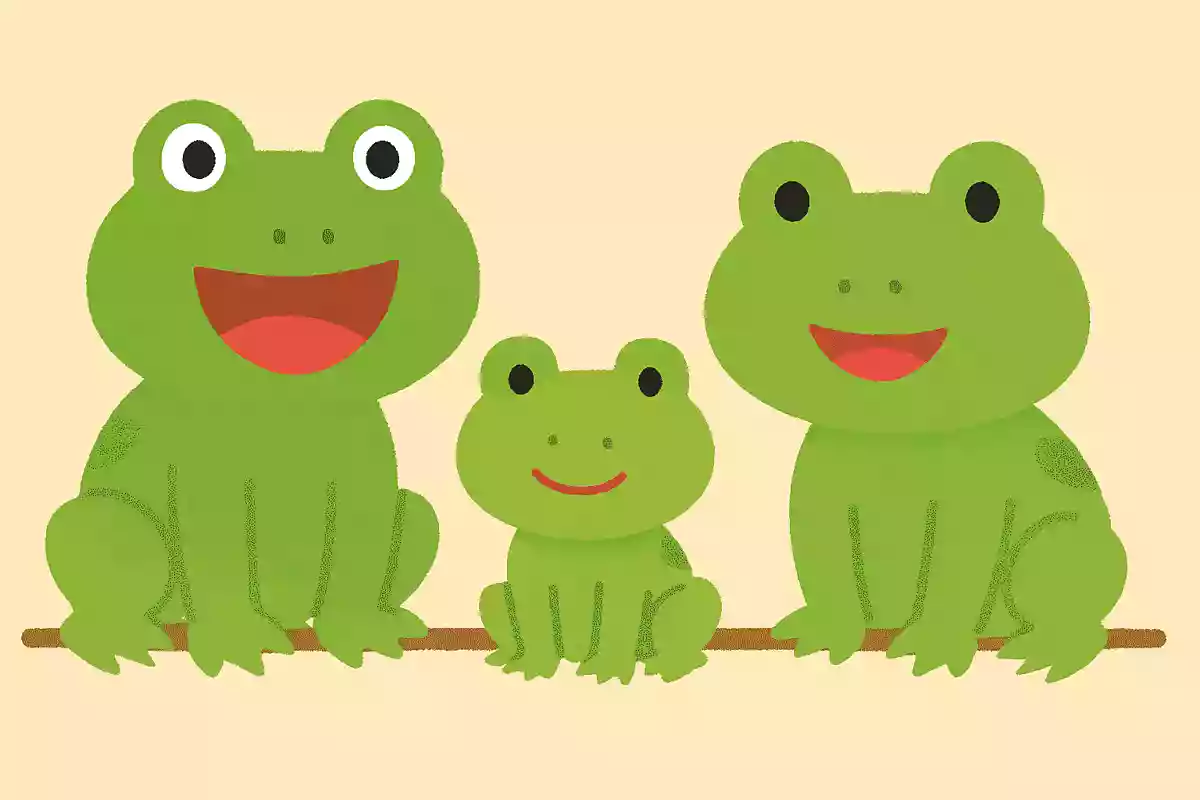
Daddy frog goes ribbit-ribbit-ribbit, Mommy frog goes ribbit-ribbit, so what sound does the baby frog make?
See the answer
I won’t cry.
Young frogs are still in the tadpole stage, so they can’t croak like adult frogs. That’s why the answer is “they don’t cry/make sounds.” Comparing them to the calls of their father and mother helps you notice the differences in development. Not only appearance but also whether they can make sounds is a point of growth.
What can go anywhere but doesn’t move?
Do many kids love traveling? Just going somewhere different from usual makes you feel excited, doesn’t it? So let’s try this riddle: “What can go anywhere but doesn’t move?” When you think of going anywhere, vehicles like cars, bicycles, and trains come to mind, but they all move, right? So those aren’t the answer.
If you think about something that makes you feel like you’ve gone somewhere without actually going, you might reach the answer.
The correct answer is “a map.” On a map, you can go to various countries, but the map itself doesn’t move.
There are 5 candies. If you lick one, how many are there?
@igosso.youtube♪ Original Song – Igossou [YouTube] – Igossou [YouTube]
It seems like a question that would trip up adults more than children.
When you read the problem statement, you instinctively want to treat it like an arithmetic problem and think, “5 – 1 = 4, so the answer is 4!” But remember, it’s a trick question.
The hint to solving it is that the candy wasn’t given to someone else, nor did it disappear.
If you think about how many candies you have after you lick one, you should arrive at the correct answer.
An elementary school student with a flexible mind might solve it right away!
A turtle, a camel, and a rhinoceros are shopping. What will they buy?
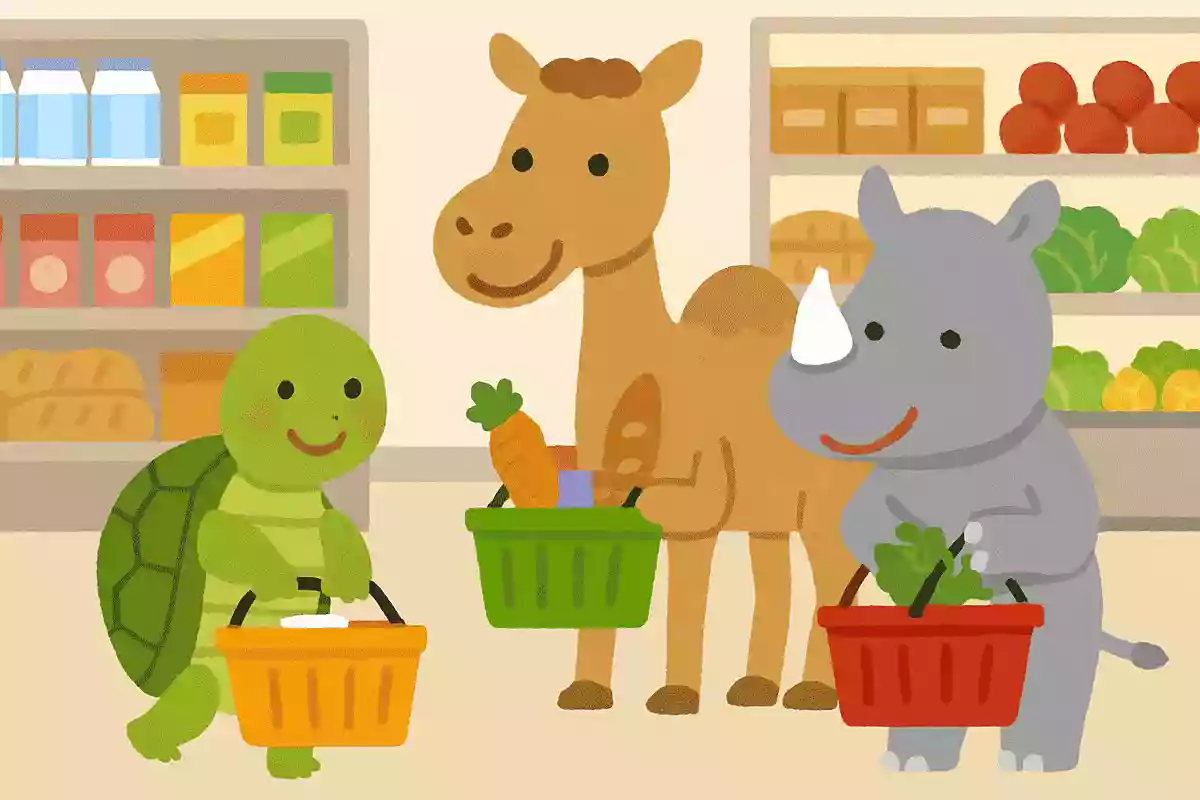
A turtle, a camel, and a rhino go shopping…
When you imagine it, you can’t help but wonder what on earth is going on—sounds like a riddle, right? But let’s set that aside for now! Since they’re shopping, they must each have something they want to buy.
Still, thinking about items related to each animal won’t solve this puzzle.
You need to approach it from a completely different angle.
The key is to read the question repeatedly.
If you connect ‘kame’ (turtle), ‘rakuda’ (camel), and ‘sai’ (rhino), you get ‘kamera kudasai’ (which means ‘a camera, please’ in Japanese).
So the answer is ‘camera’!
What animal is bigger than a whale but smaller than a killifish?
See the answer
dolphin
To say that there’s no animal bigger than a whale and smaller than a killifish, we use a pun: we say “iruka” (which means dolphin) as a play on words with “inai” (there isn’t). The trick is to change the intonation when you say the comeback line, like “Sonna no iruka!” (which can sound like “Is that a dolphin?” or “Who would buy that?” depending on intonation). The correct answer is “iruka” (dolphin).
