

[Japanese Military Songs and Marches] A collection of famous Japanese pieces deeply etched in the hearts of the Showa and wartime generations

The rousing “Warship March” by Fujiyoshi Setoguchi, Koji Tsuruta’s “Sakura of the Same Class” echoing in the spring as cherry blossoms fall, and Aya Shimazu’s “Comrade” that pierces the heart with thoughts of fallen friends.
In Japan’s military songs and marches reside pride in the homeland, the resolve of soldiers heading to the front, and deep prayers in remembrance of comrades who never returned.
These melodies, at times powerful and at times sorrowful, pass down the memory of war and ask us to reflect on the preciousness of peace.
Here, we introduce gem-like masterpieces that remain etched in many hearts even today, alongside Japan’s history.
- [March] Carefully selected popular songs recommended for entrance and exit at sports days and athletic festivals!
- “Song of War”: A classic that sings of the tragedy and folly of war
- Anti-war songs that pierce the heart: Japan’s masterpieces conveying prayers for peace
- [March] A curated selection of classic marches and dazzling crowd-pleasers for concerts!
- Old songs from the Showa to Heisei eras: a collection of timeless classics loved across generations
- [Hometown Songs] A curated selection of popular Japanese tracks that fill your heart with nostalgia
- A roundup of classic Showa-era kayō songs: a comprehensive introduction to timeless tracks loved across generations.
- Fight songs from the good old days! Showa-era classics you should listen to when starting school
- Showa-era masterpieces roundup: A must-listen collection of nostalgic oldies and hit songs
- The Spirit of Japan: A Collection of Famous and Popular Shamisen Pieces
- [Showa-Era Classics] A carefully selected collection of uplifting anthems that empower people across generations
- Famous songs celebrating heroes. Recommended popular tracks.
- Introducing famous songs about Shizuoka: Local anthems and popular tracks [2026]
[Japanese Military Songs and Marches] A collection of famous Japanese pieces deeply etched in the hearts of the Showa and wartime generations (1–10)
March of Advance and PursuitYoshimoto Kōzō

A dignified and powerful march is brought back to life by the Navy band’s performance.
From the very beginning, a tense introduction resounds with brass and percussion, and in the middle section the brilliant melody and finely calibrated tempo changes make you lean in with excitement.
The solemn development that builds toward the finale stirs the listener’s heart, conveying the spirit of the military bands of the time.
Composed by Kozo Yoshimoto, this monumental work was released in November 1927 as an SP record commemorating the Grand Fleet Review and Military Parade.
In 1998, it was included on the acclaimed album “The Resurrected German Polydor Military Band: A Golden Age March Collection,” once again moving many listeners.
The children’s song “Musunde Hiraite” (Join the Hands, Open Them) is incorporated into the trio, making it a valuable study in the art of arrangement.
Highly recommended for wind band enthusiasts.
March “Patriotism”Saitō Ushimatsu

This march, with a powerful wind band melody ringing out, was composed by Ushimatsu Saito in December 1937 for the Navy Band.
Its dignified, weighty atmosphere and the solemn lyrical melody of the middle section are beautifully balanced, and its high level of craftsmanship led to its selection as an official piece jointly adopted by the Navy and Army.
An SP record was released at the time by Polydor, featuring a performance by the Imperial Japanese Navy Band under the baton of Seigo Naitō.
From the wartime period through the postwar years, it was widely performed at ceremonies and events throughout the Asia-Pacific region and became familiar to local audiences in places like Indonesia and Palau.
The trio section incorporates Tokichi Setoguchi’s nationally beloved song “Aikoku Koshinkyoku” (Patriotic March), the composer also known for “Gunkan March.” This is a must-hear for those who wish to savor the rich sonorities and solemn melodic beauty of wind band music, as well as for anyone interested in the history of Japanese military music.
March “Warship Flag”Saitō Ushimatsu
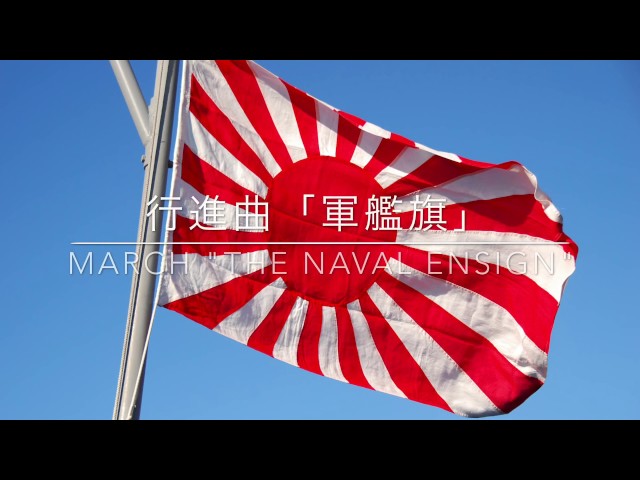
This celebrated piece, emblematic of the naval band tradition, opens with a stately and imposing brass fanfare before unfolding into a valiant march.
Composed in October 1938 by Uimatsu Saito, a leading composer for the Imperial Japanese Navy Band, it was crafted to align with the disciplined performance style of military bands.
The trio section skillfully weaves in a song written to commemorate the 50th anniversary of the naval ensign.
Included on the album “Walking with the Military Band… Japanese Wind Music 3: Works of Uimatsu Saito,” the piece has a track record of performances at numerous official events, such as fleet reviews and navy-related ceremonies.
With its powerful wind ensemble sonorities and solemn character, it evokes the history of prewar military music and remains enduringly popular among today’s wind band enthusiasts.
[Japanese Military Songs and Marches] A Collection of Beloved Japanese Classics Deeply Etched in the Hearts of the Showa and Wartime Generations (11–20)
Hinomaru MarchOrii Shigeko

As a classic national song, Hinomaru March, with lyrics by Kenji Arimoto and music by Takeo Hosokawa, is indispensable.
While it is also a military song, it was widely sung as a national song of the time that roused people to prosper and not be beaten by any country, and if you walked through town you would hear it playing from records in department stores.
Although it is called a march, rather than having the brash spirit of a military band, it was intended to be familiar and singable by children and adults alike, fitting the image of a piece used in popular songs and even Bon Odori.
As a prize song solicited by the Osaka Mainichi Shimbun and the Tokyo Nichinichi Shimbun, it drew 23,805 submissions, reflecting strong public interest, and reportedly sold 150,000 records.
Patriotic MarchFujiyama Ichirō

Composed by Tokichi Setoguchi, who also wrote the Naval March (Gunkan March), this Aikoku Koshinkyoku (Patriotic March) became a nationally beloved song and was effectively called Japan’s second national anthem.
Accompanied by a valiant fanfare, its powerful lyrics and beautiful vocals resound.
The lyrics of Aikoku Koshinkyoku were solicited by public contest as a “national song that the people should love and sing forever” under the first Konoe cabinet.
They were written by Yukio Morikawa, who worked at a printing shop in Tottori.
The composition was also chosen by contest, with Tokichi Setoguchi—composer of the Naval March—selected.
There is a similar piece titled March ‘Aikoku’ (Patriotism), but that is a different work intended for performance by military bands.
The trio section of March ‘Aikoku’ incorporates the melody of this piece, and both were widely cherished.
It’s such a bright and vigorous song that hearing it really lifts your spirits!
Grand Naval March (Big March)kaigun gungakutai

A certain rousing march by the Naval Band brims with a power that stirs the listener’s heart.
Its allure lies in its vigorous rhythm and inspiring melody, and within a brief 2 minutes and 36 seconds it unfolds with superb craftsmanship—from the prelude to the main section and on to a brilliant trio.
First released as an SP record in October 1933, the piece transcended its era and drew renewed attention when it was included in albums such as “Masterpieces of Prewar Japanese Marches: Naval Band Edition” in 1995.
It has also been performed at official occasions such as the Japan Maritime Self-Defense Force Fleet Review, attesting to its dignified character.
This is a work I recommend to anyone interested in the history of Japanese wind music or in stirring, heroic compositions.
Funeral MarchSetoguchi Fujikichi

A dignified and ceremonious masterpiece of wind band music takes on a splendid form at the hands of Tokichi Setoguchi, a leading military musician of Japan’s Meiji era.
Elevating the familiar melody of “Auld Lang Syne” into a solemn march, this work was included on an SP record introduced as a new release at the main Tenshodo store in 1897.
Performed by the German Polydor Military Band, it unfolds in a powerful Western-style three-part structure tinged with melancholy, fully drawing out the virtues of the graded wind band instrumentation—from 12 to 45 players—that Setoguchi valued.
To this day, it retains an undimmed allure as a piece that resonates in the heart during ceremonies and formal occasions where an atmosphere of gravitas is desired.