

[Japanese Military Songs and Marches] A collection of famous Japanese pieces deeply etched in the hearts of the Showa and wartime generations

The rousing “Warship March” by Fujiyoshi Setoguchi, Koji Tsuruta’s “Sakura of the Same Class” echoing in the spring as cherry blossoms fall, and Aya Shimazu’s “Comrade” that pierces the heart with thoughts of fallen friends.
In Japan’s military songs and marches reside pride in the homeland, the resolve of soldiers heading to the front, and deep prayers in remembrance of comrades who never returned.
These melodies, at times powerful and at times sorrowful, pass down the memory of war and ask us to reflect on the preciousness of peace.
Here, we introduce gem-like masterpieces that remain etched in many hearts even today, alongside Japan’s history.
- [March] Carefully selected popular songs recommended for entrance and exit at sports days and athletic festivals!
- “Song of War”: A classic that sings of the tragedy and folly of war
- Anti-war songs that pierce the heart: Japan’s masterpieces conveying prayers for peace
- [March] A curated selection of classic marches and dazzling crowd-pleasers for concerts!
- Old songs from the Showa to Heisei eras: a collection of timeless classics loved across generations
- [Hometown Songs] A curated selection of popular Japanese tracks that fill your heart with nostalgia
- A roundup of classic Showa-era kayō songs: a comprehensive introduction to timeless tracks loved across generations.
- Fight songs from the good old days! Showa-era classics you should listen to when starting school
- Showa-era masterpieces roundup: A must-listen collection of nostalgic oldies and hit songs
- The Spirit of Japan: A Collection of Famous and Popular Shamisen Pieces
- [Showa-Era Classics] A carefully selected collection of uplifting anthems that empower people across generations
- Famous songs celebrating heroes. Recommended popular tracks.
- Introducing famous songs about Shizuoka: Local anthems and popular tracks [2026]
[Japanese Military Songs and Marches] A Collection of Beloved Japanese Classics Deeply Etched in the Hearts of the Showa and Wartime Generations (11–20)
March in the SnowNagai Tateko

Born of the harsh experiences he endured on campaign during the First Sino-Japanese War, this song was composed with heartfelt sincerity by Takeko Nagai, a Japanese Army officer and composer.
Unlike the bold and heroic military songs of the time, it offers something different: it sets the soldiers’ unvarnished feelings—hunger and cold as they trudge through snow, and a crushing sense of despair—to a somewhat plaintive yet sprightly melody built on the yo (pentatonic) scale.
Believed to have been composed around February 1895, its melody can be heard on albums such as Immortal Masterpieces of Japanese Marches, Vol.
2.
It is memorably featured in the film Mount Hakkoda and the anime Girls und Panzer, where it serves as a theme that reflects both harsh circumstances and the hearts of those who endure them—lingering in the memories of many.
When you wish to reflect deeply on the power of music born of history and the stories behind it, you might quietly lend it your ear.
Trois morceaux pour soldats (1944)Ifukube Akira

Composed by Akira Ifukube in 1944 at the age of 30, this piece is a valiant march that opens with a powerful fanfare.
Although it was created at the request of the military, the distinctly Ifukube-esque Eastern melodies and dynamic orchestral sonorities are sure to stir the listener’s spirit.
Long regarded as a “phantom work,” it gained wider recognition when it was included on the 1995 album The Art of Akira Ifukube 3: Dance.
This work is recommended for those interested in Japanese music history, or for anyone who wants to experience the origins of the Ifukube sound that would later inform his film scores.
You’ll surely be moved by the strength born in a time of hardship.
the spirit of the peopleSaitō Ushimatsu
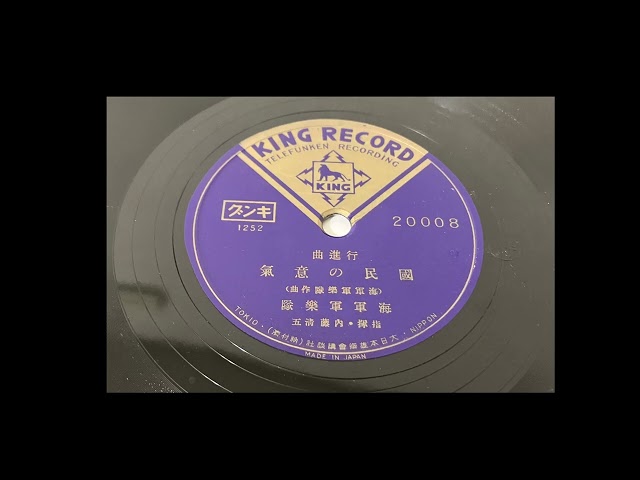
A masterpiece by Ushimatsu Saito that brilliantly captures the spirit of early Showa-era Japan through music.
Completed in May 1935, this work is recorded as Saito’s second march.
The magnificent sonorities woven by brass and percussion—so characteristic of a naval band—stir the listener’s soul, while the vivid contrast with the gentle melody in the middle section highlights the hallmarks of Saito’s style, later praised as the “Shikakura-bushi.” The sophisticated structure, which adds a third march to the traditional march form, is also not to be missed.
Shortly after its composition, it was widely performed at naval ceremonies and the like, surely inspiring people of the time.
Its heroic performance is included in the album “Reissue! Master Marches of Prewar Japan: Naval Band Edition,” and it continues to be loved by many across generations.
This is a piece I highly recommend to anyone who wants to experience a valiant strain etched in the history of Japanese wind music, or who is seeking music that conveys the spirit of the era.
Its powerful melody will surely leave a deep impression on your heart.
The Essence of the InfantryNagai Tateko

A gem of a piece by Kenkichi Nagai that conveys the romance and spirit of the Meiji era.
Premiered in 1911 at an event of the Army Central Cadet School, this song marries the youthful lyrics of Akikatsu Kato with Nagai’s rousing, valiant touch.
Its melody—powerful yet tinged with melancholy—strikes the listener’s heart, vividly evoking the resolve of soldiers of the time and their feelings for their homeland.
It has been included on releases such as the album “Military Songs: ‘Ah, the Army’” and the CD “Military Songs and Wartime Ballads (Limited Edition Special Price).” Some may also recall a scene in the film “Oba: The Last Samurai” where this melody was used to great effect.
Recommended for those who wish to experience a chapter of Japanese history through music or who seek a stirring, powerful tune that moves the soul.
Imperial Japanese ArmyFukasawa Toyokichi

This is a piece that evokes the spirit of the Meiji era, portraying the Japanese Army in a heroic light.
Composed by Toyokichi Fukazawa with lyrics by Kenshū Ōwada, it expresses soldiers’ sense of mission and pride through a solemn melody.
Consisting of ten verses, the lyrics dramatically depict the roles of various branches, unfolding a story from deployment to triumphal return that is sure to move listeners.
Said to have first appeared in July 1904, its dignified performance by the Army Toyama School Band was preserved on SP records.
The song continued to be cherished and passed down, appearing on compilations such as the 1988 album “Authentic Military Songs: Army Edition” and the 1998 album “Military Song Memorial: 130 Years Since the Meiji Restoration,” giving new audiences a chance to experience its melody.
Historically, it was widely performed at military ceremonies and during departures and homecomings, inspiring many people.
For those who wish to connect with Japan’s historical path and the feelings of those who lived in that era, this work may well leave a lasting impression.
Song of the Greater East Asia Decisive Battlekaigun gungakutai

This is a passionate brass band piece reminiscent of a wartime national anime.
The powerful performance by the Navy Band is arranged in a march style that combines dignity and grandeur.
The work was released simultaneously by Nippon Columbia and Victor Records in March 1942, and a promotional film was also produced.
The film features top-tier actors, including kabuki performers Ennosuke Ichikawa, Yaōzō Ichikawa, and Danshirō Ichikawa, and even includes choreographed dance scenes.
Numerous wind band arrangements exist, making it well-suited for performances by choirs and brass bands.
It’s a must-listen for those who want to experience a commanding wind ensemble sound that evokes a sense of national history.
[Japanese Military Songs and Marches] A collection of renowned Japanese pieces deeply etched in the hearts of the Showa and wartime generations (21–30)
Song of the Young EaglesSaigō Teruhiko

It is said to have been a recruitment song for Navy Aviation Preparatory Trainees.
The Navy must have been the star attraction at the time.
I wonder how the lyrics, which encouraged a zeal that did not spare even one’s life, stirred the youth of that era.
It is a robust song, one that you would sing with a clenched fist.