

[Minna no Uta] Beloved Across Generations: Nostalgic Classics and Popular Songs

We’re introducing some nostalgic songs from Minna no Uta, a program that has continued to produce countless classics.
I’m sure each of you has that one song that makes you think, “When it comes to Minna no Uta, it has to be this one!”
The pieces that stick in your memory may vary by generation, but in this article we’ve focused on songs that everyone knows.
They’re all tunes that feel nostalgic to anyone—just seeing the title will have you humming along before you know it.
If you’re thinking, “I want to listen to the classics from Minna no Uta,” be sure to check these out.
Let’s listen to these timeless favorites, loved across generations, with family and friends, and keep passing them down through song.
- [Minna no Uta] Tear-jerking masterpiece. A moving song you want to hear again.
- Get pumped with kids’ favorite songs! A memorable collection of classics that will make you want to sing along
- [Elementary School Music] List of Popular and Nostalgic Songs That Have Appeared in Textbooks
- Ranking of Popular Children's Songs [2026]
- Old songs from the Showa to Heisei eras: a collection of timeless classics loved across generations
- Nursery rhymes you’ll want to sing at karaoke: classic and popular songs everyone can enjoy together.
- Popular Songs Ranking for Toddlers
- [Warabe-uta] Beloved Classic Songs Passed Down Through Generations
- Evokes the charm of the good old days. Showa-era inspirational songs that are still loved today.
- Get pumped with popular songs from “Okaasan to Issho”! A collection of timeless tunes everyone will want to sing together
- Nostalgic Children’s Songs, Folk Songs, and Nursery Rhymes: The Heart of Japan Passed Down Through Song
- Timeless classics only! Showa-era hit songs perfect for acoustic sing-alongs
- Songs from Ponkickies: A roundup of nostalgic classics and popular tracks
[Minna no Uta] Beloved Through the Ages: Nostalgic Classics and Popular Songs (21–30)
To the Sun in the Palm of Your HandSakushi: Yanase Takashi / Sakkyoku: Izumi Taku

Created by the duo of Takashi Yanase and Taku Izumi, this children’s song was first broadcast on NHK’s “Minna no Uta” in 1962.
Its warm lyrics, which sing about how small creatures like earthworms and water striders are our fellow living beings, leave a lasting impression.
Yanase’s experience of holding his hand up to the sun, feeling the flow of blood, and thus reflecting anew on the preciousness of life is woven into the words.
In 1965, a single by the Boys Jacks was released, and the song was also performed on the Kōhaku Uta Gassen.
When sung at school functions or community events, it brings a comforting sense that everyone’s hearts naturally come together.
Let’s go to the zoo.

This is a song that celebrates the charm of the zoo that everyone loves.
I’m sure there were kids who begged their parents to actually take them to the zoo after hearing it.
Even listening to it again now, it’s the kind of song that makes you think, “Maybe I’ll go to the zoo this weekend.” How about heading to the zoo while listening to this nostalgic tune?
[Minna no Uta] Timeless, Beloved Classics and Popular Songs (31–40)
King Kamehameha of the Southern Islands

This song features a distinctive tropical-sounding melody.
We don’t often listen through all the lyrics, but in fact, the song says that not only the great king but every resident of this southern island was named Hamehameha! It’s one of those songs that, when you revisit the lyrics of something you casually sang as a child, you discover all sorts of new things.

I found a little sign of autumn.

This song is a classic representative of autumn.
Although it’s a children’s song, it’s sung with a wistful melody that captures the season’s melancholy atmosphere.
As the weather turns a bit cooler in autumn, it’s nice to sing this song while searching around your home for small signs of the season.
It’s a piece that lets you keenly feel Japan’s unique four seasons.
All mothersamerika min’yō
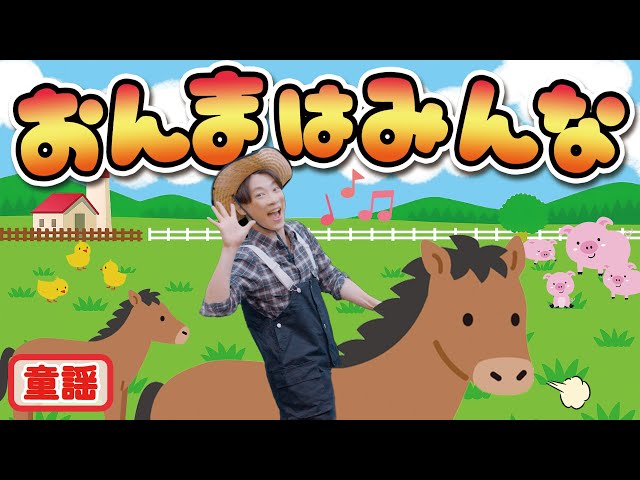
This is a song arranged for Japanese audiences from a folk tune that originated in 19th-century America.
Tomoko Nakayama’s Japanese lyrics pose questions like why a horse goes clip-clop as it runs and why a piglet’s tail curls—“no one knows why.” Easy-to-remember onomatopoeia is repeated to the rhythm, making it appealing and well-suited for creating parody verses.
Sung on NHK’s children’s programs, this piece has reached many homes and childcare settings through performances by Yuko Kanzaki and Osamu Sakata.
Combined with fingerplay or marching movements, it’s a perfect nursery song for parents and children to enjoy together.
Mountain MusiciansDoitsu min’yō

An endearing, picture book-like piece in which the animals of the forest become musicians and hold a concert.
In this song, mountain friends like squirrels and little birds appear one after another, each showing off their favorite instrument.
With a structure that layers on words imitating the timbre of the instruments, it carries a lively joy that makes your body start moving all on its own.
It became widely known in Japan after being featured in April 1964 on NHK’s “Minna no Uta,” sung by Dark Ducks.
Since then, it has been sung for many years on educational programs and the like.
Part of its charm is that you can enjoy it with gestures and hand motions, too.
Horse’s tail, pig’s tail.Sakushi: Abe Hitomi / Sakkyoku: Yamamoto Naozumi

Broadcast on NHK’s Minna no Uta in August 1983, this song is a humorous children’s tune themed around the tails of a horse and a pig.
Written by Hitomi Abe and composed by Naosumi Yamamoto, it was selected as an outstanding piece in NHK’s Children’s Song Lyrics and Composition Contest.
The story charmingly likens a boy’s puppy-love—teasing the girl he likes—to animal tails, sweetly capturing that childish urge to tug on her pigtails.
Sung by Kyu Sakamoto and the NHK Tokyo Children’s Choir, it became well-loved and was rebroadcast in 2010 and 2015.
There are also covers by various artists, including Seiji Tanaka, and it is widely sung in kindergarten and nursery school choirs.
Its lively melody and catchy refrain make it perfect for parents and children to sing together.