

Beautiful Folk Songs Passed Down in Miyagi Prefecture: A Collection of Masterpieces that Play the Heart of the Hometown

The many folk songs that live on in Miyagi Prefecture are sonic treasures that vividly reflect Tohoku’s culture and the lives of its people.
From mountain songs set against majestic peaks to fishermen’s songs praising the bounty of the sea, the rich voices born from the land and people’s way of life can still be heard across the region.
This article brings together folk songs from Miyagi, centered around Sendai.
Why not lend an ear to the gentle melodies imbued with the feelings of our forebears—melodies that evoke the changing seasons, the bustle of festivals, and the joys of farm work?
- Miyagi Songs: Popular tracks that celebrate famous sights and specialties, and timeless pieces filled with love for home
- Beautiful Folk Songs Passed Down in Miyagi Prefecture: A Collection of Masterpieces that Play the Heart of the Hometown
- Folk songs, children's songs, and nursery rhymes of Iwate: the heart of the hometown passed down through song
- [Folk Songs and Children's Songs of Akita] A curated selection of local masterpieces that evoke love for one’s hometown
- Folk songs, children’s songs, and nursery rhymes of Kumamoto: the enduring spirit of our hometown passed down through song.
- Folk Songs, Children's Songs, and Nursery Rhymes of Aomori: Japanese Songs from Tsugaru and Hachinohe that Resonate with the Heart
- Tokushima’s Folk Songs, Children’s Songs, and Nursery Rhymes | Traditional Songs Rooted in the Region, Including Awa Odori
- Folksongs, children's songs, and nursery rhymes of Fukushima: the heart of our hometown passed down in song
- [Folk and Children's Songs of Hokkaido] Songs of Hokkaido that continue to be loved across generations
- [Sky-Themed Nursery Rhymes and Songs] Children’s Songs Loved Across Generations
- [Folk Songs of Yamagata] The Heart of Our Hometown Passed Down in Song: Feelings Woven into Nostalgic Melodies
- Songs of Iwate: The Heart of Our Hometown Passed Down in Song | A Collection of Classics to Enjoy While Thinking of Iwate
- Niigata’s folk songs, children’s songs, and nursery rhymes: the heart of our hometown passed down in song
Beautiful Folk Songs Passed Down in Miyagi Prefecture | A Collection of Masterpieces That Play the Heart of the Hometown (21–30)
Moji JinkuSatō Kanichi

“Moji Jinku” is a folk song handed down in the Moji hamlet of Kurikoma Village, Kurihara District, Miyagi Prefecture (present-day Numakura and Matsukura in Kurikoma, Kurihara City).
Together with “Tōshima Jinku” and “Shiogama Jinku,” it is known as one of the three great jinku of Miyagi Prefecture.
There was a time when it seemed likely to disappear due to a lack of singers, but the local Sugawara Shinichi family began singing and dancing it, leading to the revival of Moji Jinku.
Autumn Mountain SongKumagai Kazuo

Autumn Mountain Song was sung during the comings and goings of work in which people, from before dawn on summer mornings, would cut grass in the nearby mountains and return with the cut grass loaded on a horse’s back.
It originally derived from Kikari-uta, a song sung while cutting mixed hardwoods in autumn, and it was widely sung in northern Sendai, including Miyagi, Kurokawa District, and Monou District.
Miyagi Daikokumai

A celebratory song from Miyagi Prefecture that sets the heart dancing with a bright, lively melody said to invite good fortune.
The brisk rhythm of taiko drums and shamisen is layered with the soaring tones of the shakuhachi, leaving listeners with a clear, uplifting feeling.
This work, imbued with gratitude to Daikoku-sama and wishes for people’s prosperity, is perfectly suited to auspicious occasions.
It’s also a lovely anecdote that it has been carefully passed down as a Miyagi tradition, performed by children at local elementary schools.
Heard at New Year’s or at send-offs marking new beginnings, it’s sure to make the occasion all the more festive.
Water-Drawing Song

This is a beautiful work song from the Kurihara region of Miyagi Prefecture, evoking scenes of life-giving water flowing through the countryside.
The earnest hearts of people living in harmony with nature, praying for a bountiful harvest, are wonderfully woven into a melody that is both powerful and warm.
The piece was created by local residents in the late 1950s to 1960s and has been lovingly passed down in the community.
Even today, it is still performed at local events.
Its tune, which carries a certain nostalgia that transcends generations, feels truly comforting.
Listening while picturing your hometown scenery, the sound of the shamisen and the soaring vocals can sink into your heart, leaving you with a gentle feeling as if wrapped in Japan’s primal landscape.
Rice Harvesting Songsatou mieko

One of the work songs for rice cultivation is the “Ina-age Song.” It is also called “Zaranto-sho,” a name that comes from the swishing zaranzaran sound of the rice ears swaying as people returned with bundles of rice stacked on a horse’s back.
Based on the melody of the “Mountain Song,” which people hummed while traveling to and from mowing in the suburbs of Sendai, it was composed around 1939 (Showa 14).
Saitaro-bushiFukuda Kouhei

This is a rock-style rendition of Miyagi Prefecture’s representative folk song, “Saitaro-bushi.” It lets you feel how folk music changes over time.
There is also a song called “Kodomo Saitaro Rock” with lyrics by Akio Oka, and it’s said that children sometimes dance to it at recitals and school performances.
Yuriage Great Catch Song
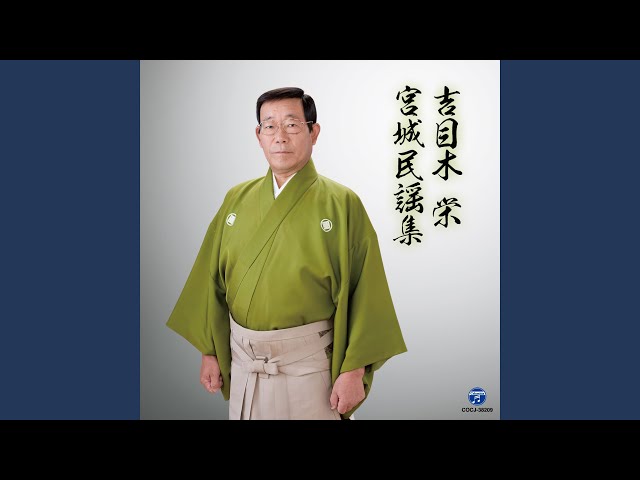
This is the celebratory song “Yuriage Tairyō-bushi,” handed down in Yuriage, Natori City—an estuary town at the mouth of the Natori River, east of Sendai in Miyagi Prefecture, where the river flows into Sendai Bay.
It is a folk song sung to celebrate bountiful bonito catches at the homes of fishing bosses and boat owners, performed lively with handclaps.
Songs of this ‘tairyō-bushi’ type were sung along the coastal regions over a wide area, from Iwate Prefecture down to Fukushima Prefecture.