
Enthralling mood kayō: A collection of classic Showa-era songs

Suddenly, but what kind of image do you all have of “mood kayō” (mood ballads)?
If you’re from a younger generation, you may not have even heard of the genre “mood kayō” in the first place.
Born in the postwar era, mood kayō is, as the name suggests, a form of kayōkyoku (Japanese popular song), but its definition is actually quite ambiguous.
You could say it’s a genre that values sentiment—indeed, the very “mood”—more than strictly musical elements.
This time, we’re focusing on this uniquely alluring, adult music born of the Shōwa era—mood kayō—and have gathered some representative classics.
Whether you’re a young music fan curious about Shōwa-era kayōkyoku or someone who lived through those times, please enjoy!
- Cool songs from the Showa era. Masterpieces from Showa that shine with sensuality, passion, and rugged charm.
- [2026] A Collection of Masterpieces of Enka and Mood Kayō
- [Recommended for people in their 70s] Songs that really move you. Beloved classic Japanese hits of the past.
- [Classic Showa Kayō Hits] The captivating Showa-era pop songs beloved even by younger generations
- Showa-era nostalgic songs: Popular ranking
- A roundup of classic Showa-era kayō songs: a comprehensive introduction to timeless tracks loved across generations.
- Just listening to it purifies the heart... A healing song born in the Showa era.
- Heart-touching, tear-jerking masterpieces from the Showa era
- Recommended love songs for people in their 80s: A collection of classic love songs that colored the Showa era
- Tear-jerking songs recommended for men in their 60s: classic and popular Japanese hits
- So nostalgic it feels new? Showa retro classics that colored Japan’s period of rapid economic growth
- The nostalgic atmosphere tugs at your heartstrings. Tear-jerker songs from the Showa era.
- [Tearjerker] Songs that make your heart tremble with tears & moving tracks with lyrics that touch the soul
Enthralling mood kayō: A collection of Showa-era masterpieces (51–60)
Yokohama TwilightItsuki Hiroshi

It was Hiroshi Itsuki’s 11th single overall, released in 1971.
Itsuki has a deep attachment to this song, calling it “my starting point, the song that launched everything.” Thanks to its success, he received numerous awards, including the Vocalist Award at the 13th Japan Record Awards, and made his first appearance at the 22nd NHK Kōhaku Uta Gassen.
Fortune-telling for womenMinami Yuji to Furuseiruzu

This song, with the unique gimmick of lyrics that read like a fortune-telling for women, is a kind of secret weapon packed with various episodes that could instantly liven up the mood if played when conversation stalls at a night bar, showcasing the wide expressive range of mood kayō (Japanese mood-pop).
I’m praying for you.Satoi Ito to Happī & Burū

It was released in 1974 as the fourth single by Satoshi Itō and Happy & Blue.
It reached a peak position of No.
4 on the Oricon Singles Chart.
The original version of the song is “Shiawase ni Nattene,” released as a new single in September 1970 by Naoki Matsudaira and Blue Roman, and it has become one of Satoshi Itō and Happy & Blue’s signature songs.
dream womanKatsura Ginshuku

It was released in 1988 as Ginshi Katsura’s fourth single.
It became her first song to rank within the top ten on the Oricon Singles Chart and won numerous awards, including the Grand Prix at the 21st Japan Cable Awards and the 21st All-Japan Cable Broadcasting Awards.
It became Katsura’s biggest hit, leading to her first appearance on that year’s Kōhaku Uta Gassen.
This song itself was not performed; instead, she sang “Suzume no Namida,” which had been a hit the previous year.
Enchanting mood kayō: A collection of Showa-era masterpieces (61–70)
burden; hindrance; deadweightMori Yuji to Sazan Kurosu
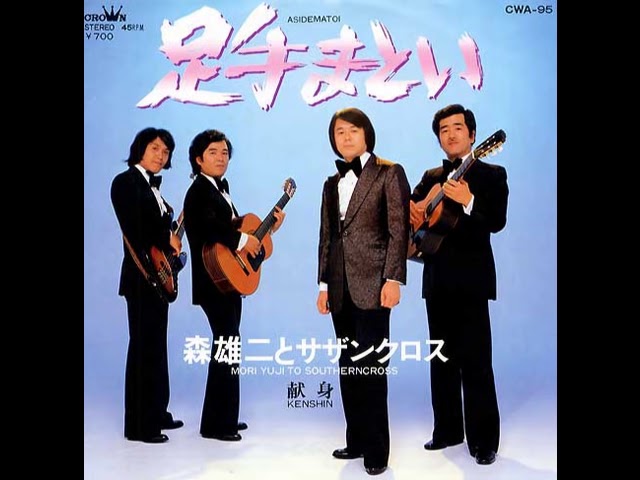
Filled with a spirit of self-sacrifice, this song—born from love for the other, grieving a relationship with no future and resolving to step back—overflows with deep compassion that would likely be misunderstood in today’s Japan, where American-style romance centered on asserting one’s own rights has become the norm.
I like Sapporo.Mori Yuji to Sazan Kurosu

Released in 1981, it was used as the theme song for the Sapporo Snow Festival and became a hit.
Although it’s relatively new for a mood kayō (mood ballad), it’s also a local song, so it has been used as a support chant for Hokkaido Consadole Sapporo and, for some reason, even as a Bon Odori dance tune.
It’s a song that has maintained quite a strong following.
Gardenia blossomWatanabe Tetsuya

A sincere singing voice with no technique or tricks whatsoever has a unique charm that’s perfect for expressing the clumsy feelings of a man in love, and it has a flavor well-suited to singing about pure love.
The fact that it became a major hit while he was hospitalized for a long period undergoing treatment also speaks to how popular it was at the time.