

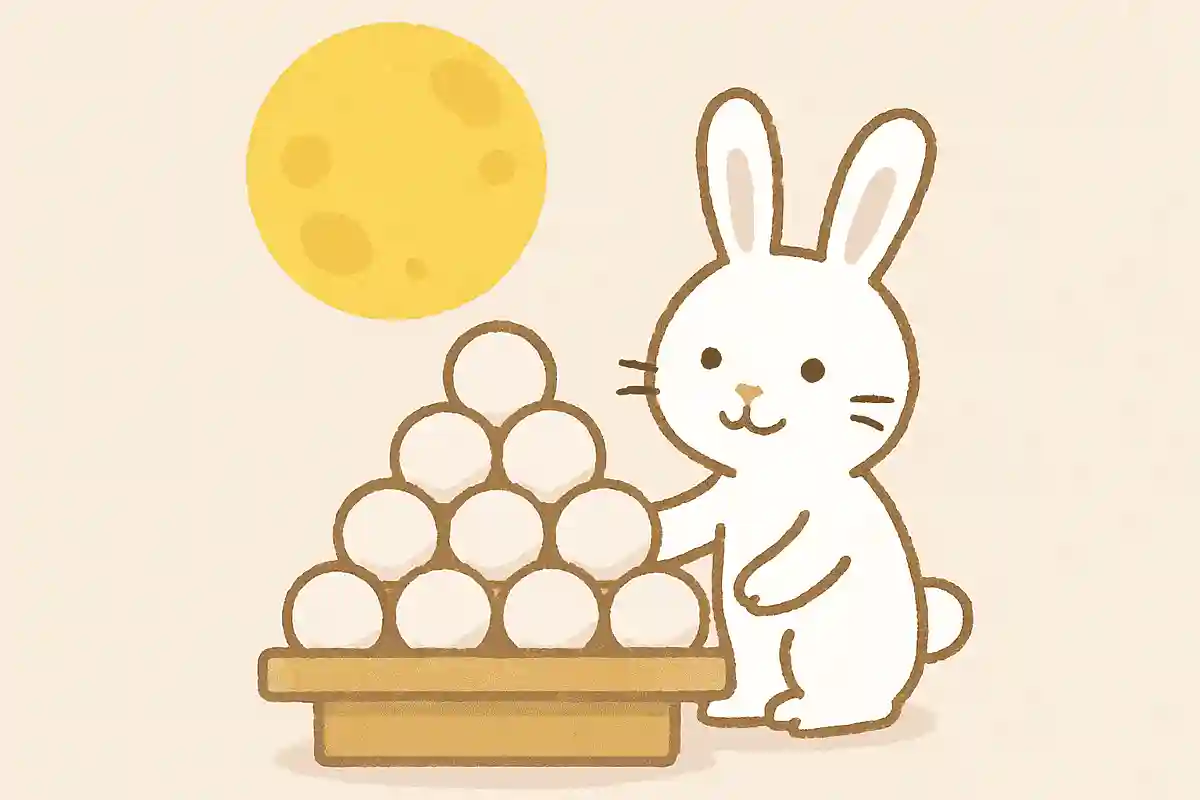

Why do we feel the full moon is especially beautiful in autumn? In fact, the moon’s appearance and the position where it’s seen each season have their own distinct characteristics.
The Harvest Moon in particular has been cherished by the Japanese since ancient times and has been celebrated in countless waka poems and haiku.
In this article, we present a trivia quiz about moon viewing! You’ll enjoy learning general fun facts, such as the origins of the tradition and how full moons differ by season.
On the next moon-viewing night, why not gaze at the moon and make some new discoveries?
- Fun facts about the Moon. A rapid-fire quiz!
- September Trivia Quiz & Fun Facts! A Fun Autumn Quiz for Kids
- How many can you solve? A surprising trivia and fun facts quiz about total lunar eclipses
- Get the party started at your autumn food gathering! A collection of surprising trivia quizzes and fun facts you might not know
- Get kids excited at the autumn food party! Trivia quiz and fun facts
- A collection of trivia and fun facts about September as we await autumn
- Fun October Trivia Quiz & Facts! Exciting Questions for Kids
- How many can you solve? Test your spring knowledge with a trivia quiz about March!
- [For Kids] December Trivia Quiz & Fun Facts! Learn about seasonal events and traditions!
- Trivia you think you know but surprisingly don’t? August trivia and fun facts quiz!
- Fun facts you’ll want to share! A roundup of October trivia and tidbits
- [For Kids] January Trivia Quiz & Fun Facts: Learn About the New Year in a Fun Way
- [Tanabata Quiz] Three-choice questions to enjoy trivia and fun facts
How many can you answer? A Moon-Viewing Trivia Quiz from General Knowledge to Surprising Facts (1–10)
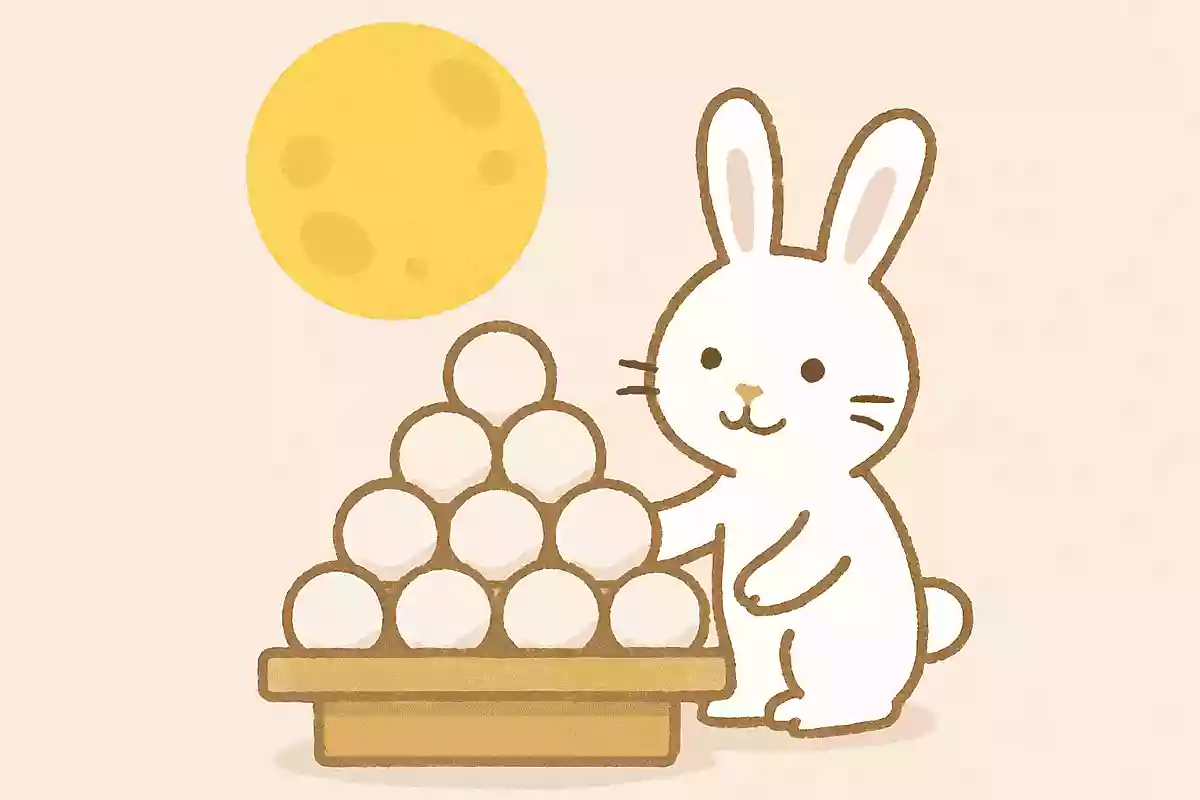
What is the auspicious size for tsukimi dango?
- approximately 1.5 centimeters in diameter
- approximately 2.5 centimeters in diameter
- approximately 4.5 cm in diameter
See the answer
approximately 4.5 cm in diameter
The traditional size of tsukimi dango is said to be about 4.5 centimeters in diameter, which equals one sun and five bu. This “one sun, five bu” is a play on words with “Jugoya” (the fifteenth night) and is considered auspicious. If you want to honor the origins and traditions of the festival, it’s recommended to make them in this size.

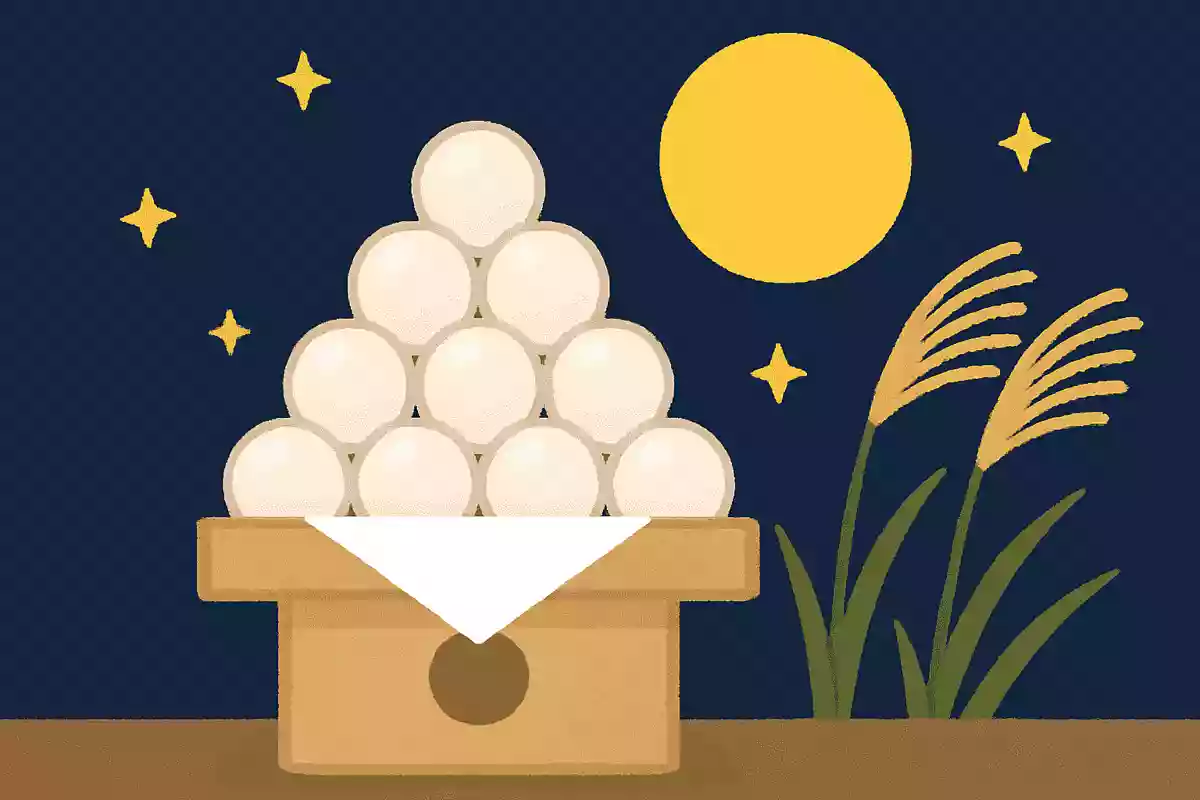
In what shape are the moon-viewing dumplings arranged during the night of the full harvest moon?
- triangle
- circular
- pyramidal
See the answer
pyramidal
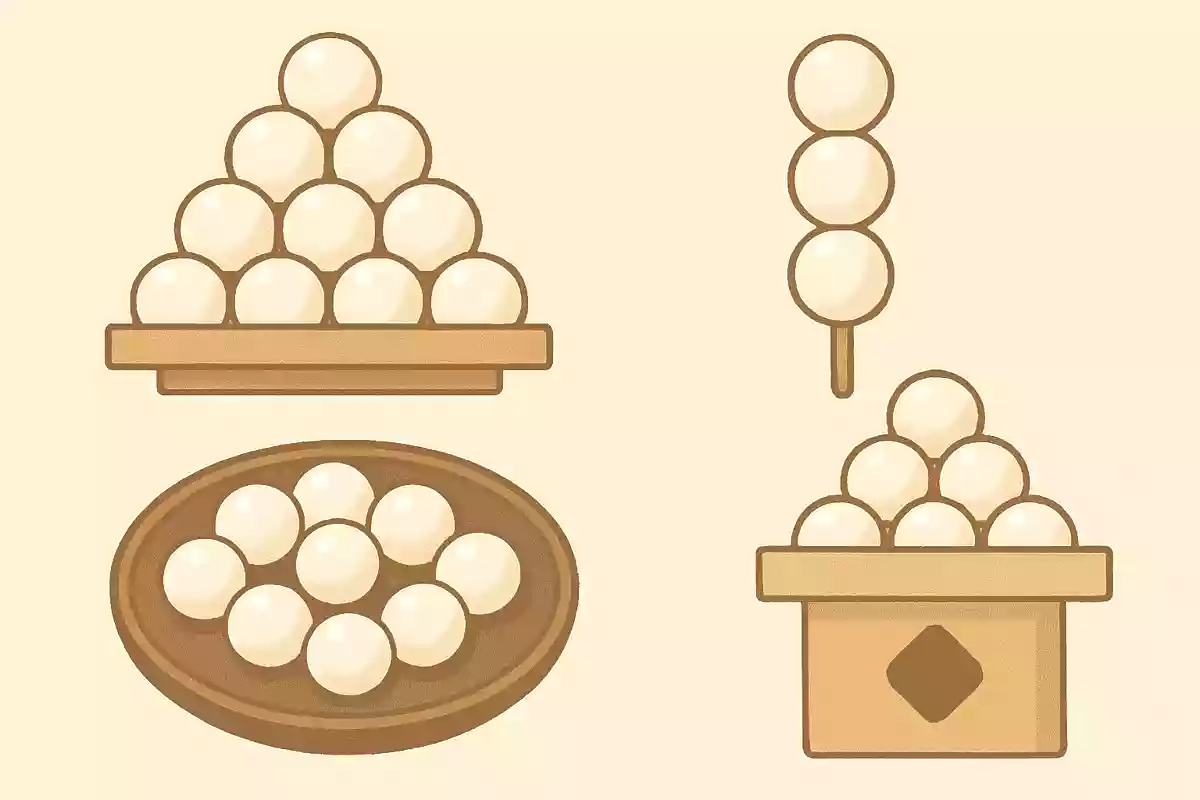
It is common to offer tsukimi dango stacked high, typically in a pyramid shape. This is said to symbolize the full moon by piling up the rice cakes, and to arrange them prominently as a prayer for a good harvest and as an expression of gratitude. Since 15 dumplings are stacked for the night of the full moon (Jūgoya), ease of stacking might also be a reason.
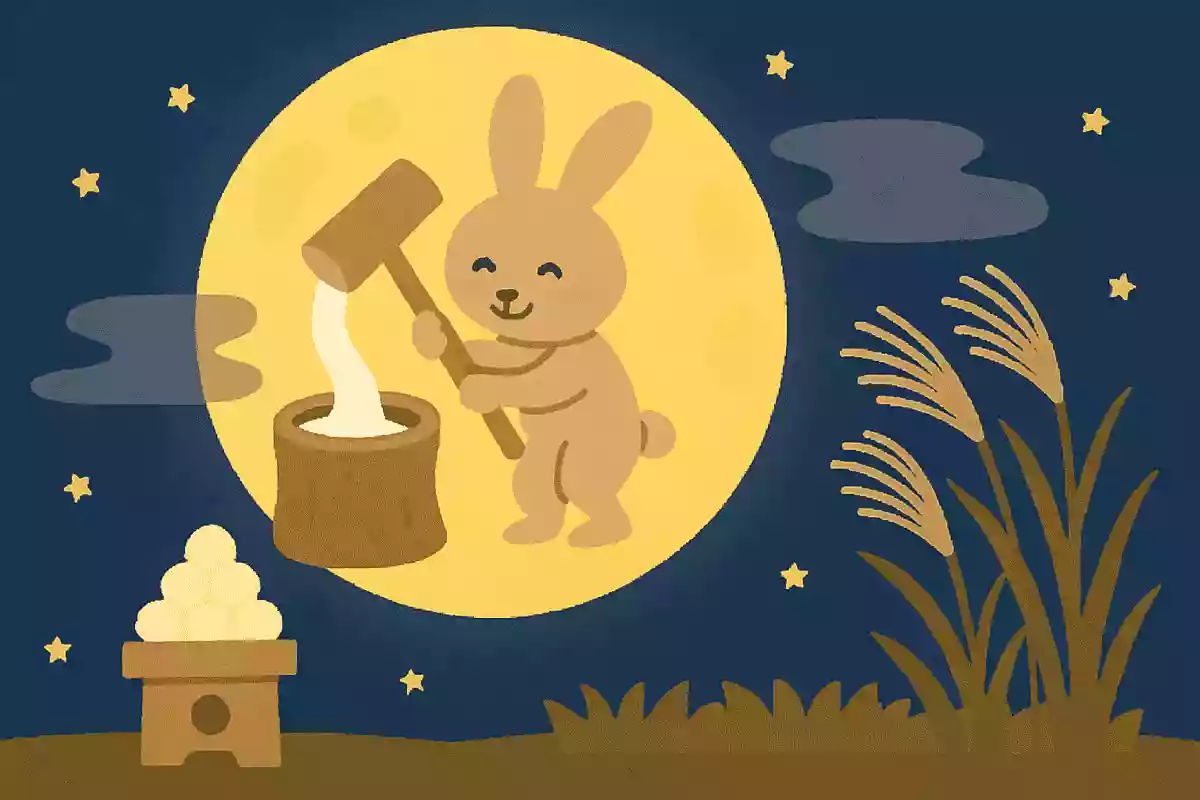
In moon-viewing folklore, what is the animal in the moon said to be doing?
- pounding mochi
- Eating mochi.
- Rolling mochi into balls
See the answer
pounding mochi
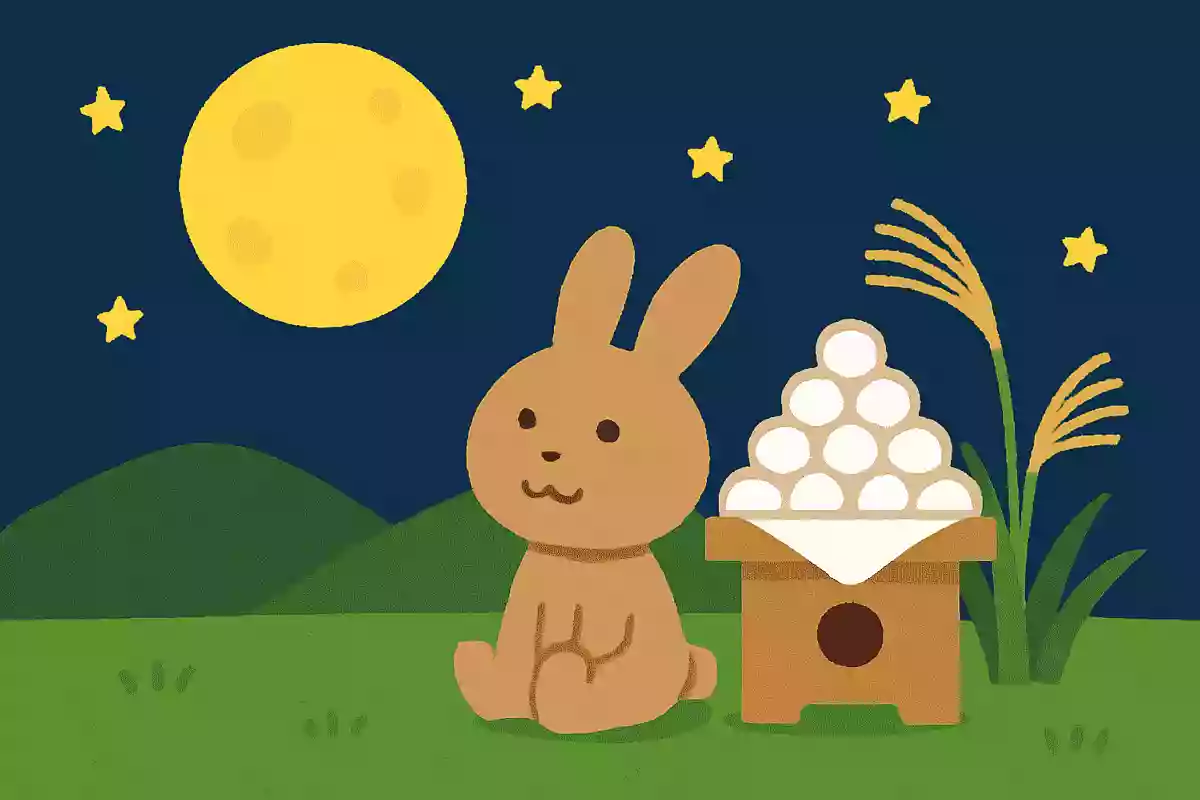
In Japanese moon-viewing folklore, it is said that a rabbit lives in the moon, and that rabbit is pounding mochi. This legend arose because the full moon’s patterns look like a rabbit pounding rice cakes. One fun aspect of the moon is that other countries have different animals and stories associated with it.
What is another name for the moon-viewing event “Jūsan-ya” (the night of the thirteenth)?
- Chestnut Moon
- Imo-meigetsu (Potato Harvest Moon / Full Moon Festival for tubers)
- Plum Moon
See the answer
Chestnut Moon
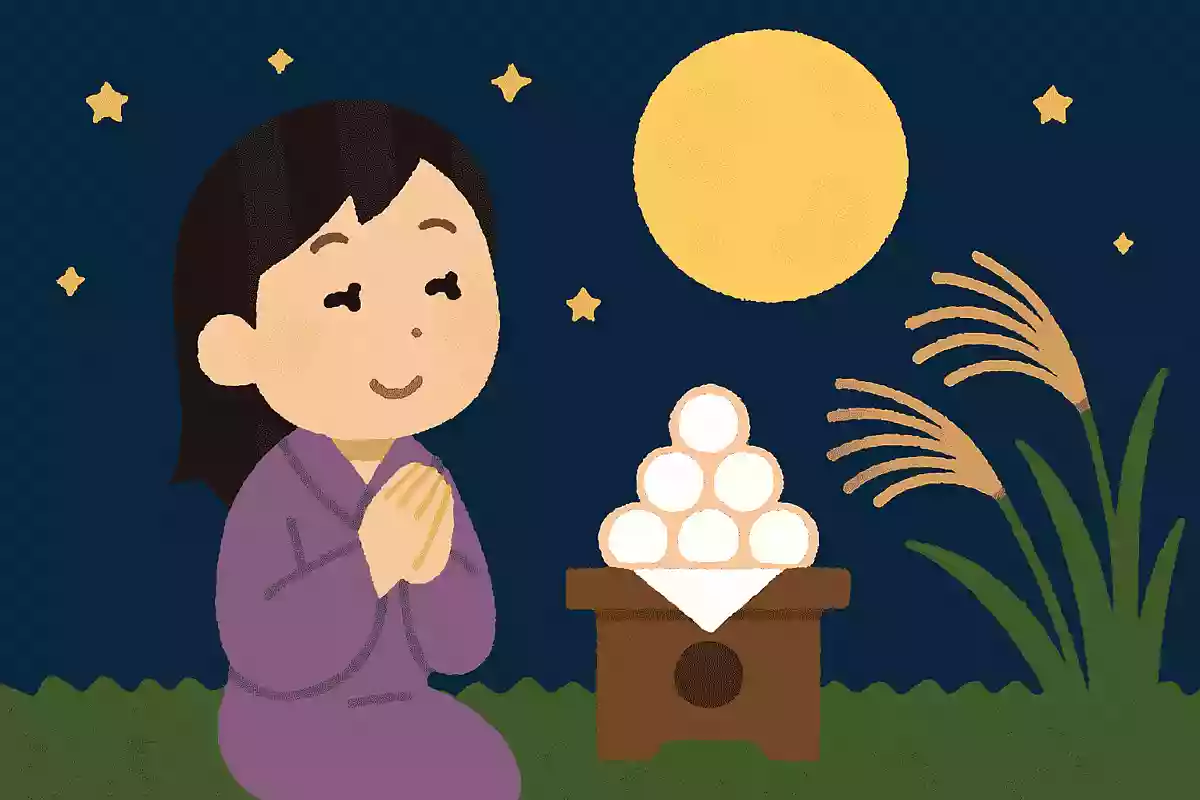
Jūsan-ya is a traditional Japanese moon-viewing event held on the night of the 13th day of the 9th month in the old lunar calendar. Considered the second most beautiful moon after the Mid-Autumn full moon (Jūgo-ya), this night is also called “Chestnut Moon” or “Bean Moon” because of the custom of offering chestnuts and beans. In contrast, Jūgo-ya is also known as “Taro Moon,” when taro and other foods are offered.
Which country did the custom of the Thirteenth Night originate from?
- China
- America
- Japan
See the answer
Japan
The Jusan-ya is a uniquely Japanese traditional event held on the 13th night of the ninth month in the old lunar calendar to admire the moon. Alongside the Mid-Autumn Moon Festival (the fifteenth night), it is beloved, but unlike the fifteenth night, which came from China, there is no Jusan-ya in China; it began in Japan. It is customary to offer items such as chestnuts and beans and to gaze at the moon.
Which of the shapes is the typical form of tsukimi-dango in the Kanto region?
- round shape
- flat shape
- Droplet shape
See the answer
round shape
In the Kanto region, tsukimi dango are typically simple white dumplings shaped into plain spheres. For the harvest moon viewing on the night of the fifteenth moon, it is traditional to stack these dumplings in a pyramid as decoration. Meanwhile, in the Kansai region, the shapes differ from round ones and vary by area, which is one of the intriguing aspects of Japanese culture.
What animal comes to mind when you think of the Moon Viewing (Otsukimi)?
- turtle
- rabbit
- fox
See the answer
rabbit
Speaking of moon-viewing, the legend that a rabbit lives on the moon is well known. In Japan, the pattern on the full moon looks like a rabbit pounding rice cakes, so rabbits often appear as an image of moon-viewing. The vague patterns that float on the moon are likened to different things depending on the country, so it’s fun to look into those differences, too.