

A collection of trivia and fun facts about September as we await autumn

September marks the time when, despite the lingering late-summer heat, a hint of autumn slowly begins to drift in.
With school events like sports festivals and cultural festivals, moon-viewing, and Respect for the Aged Day, there’s plenty to look forward to—every bit as fun as summer was not long ago!
In this article, we’ll introduce trivia and fun facts about September.
We’ve gathered a variety of topics, from seasonal events and foods to commemorative days in September.
Once you know these, you’re sure to enjoy September even more!
Through these bits of trivia and fun facts, take a moment to savor what’s in season this September.
Trivia and fun facts about September as we await autumn (1–10)
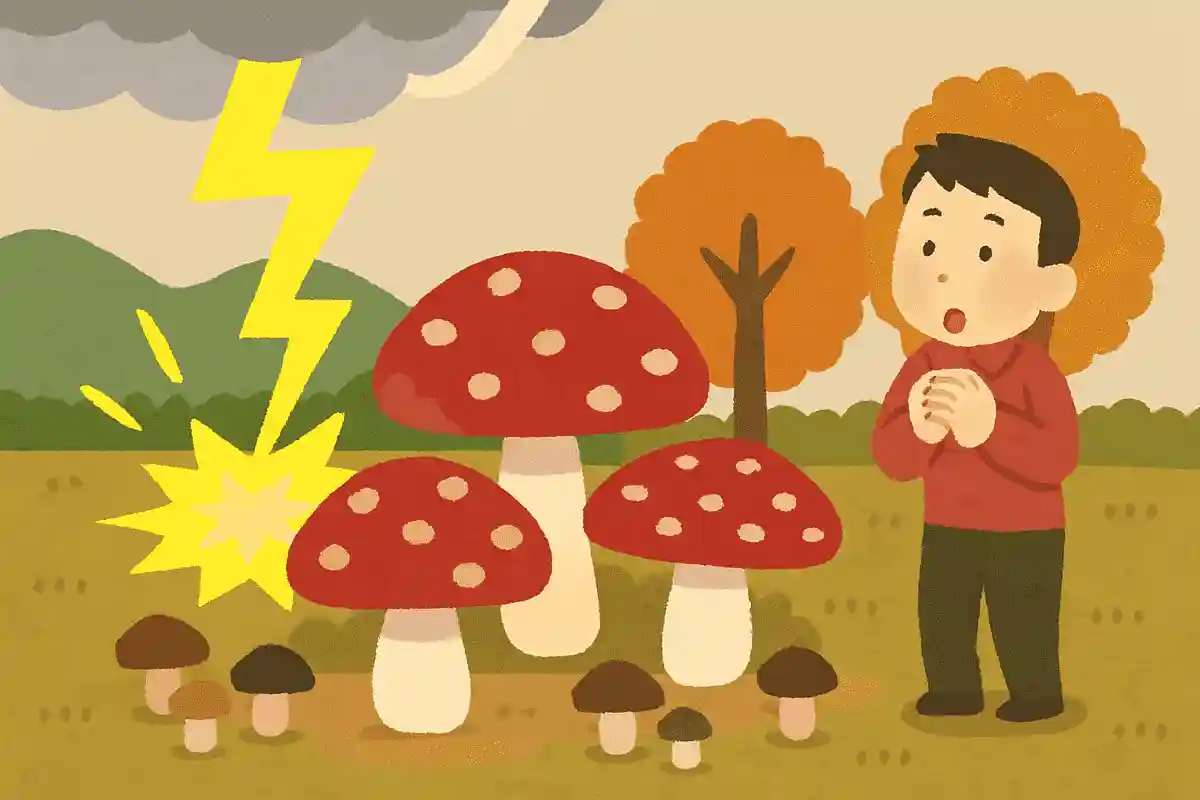
Mushroom yields increase in places where lightning has struck.

Many of you have probably heard the old saying, “Mushrooms grow when lightning strikes.” In fact, this saying isn’t just a superstition—it’s a phenomenon that has actually been demonstrated in verification experiments by universities and research institutions.
In one study, when artificially generated lightning was applied to mushrooms grown at an agricultural test farm, the harvest doubled compared to conventional cultivation methods.
The idea is that the shock makes the mushrooms sense a threat to their survival, triggering an automatic acceleration of growth—“We must regenerate quickly and leave offspring before we die”—which leads to increased yields.

The pampas grass displayed during the moon-viewing festival is believed to ward off evil.

Tsukimi dumplings and pampas grass—such a beautiful scene that symbolizes autumn, isn’t it? The pampas grass displayed during moon-viewing is said to serve not only as a yorishiro, an object that invites deities, but also as a charm to ward off evil.
Because pampas grass has sharp-edged leaves, it has long been believed to have the power to drive away malevolent spirits, and it came to be offered on altars with wishes for protection from misfortune and for good health.
There is also a theory that, since Tsukimi coincides with the time before rice ears fully ripen, pampas grass came to be offered as a substitute for rice.
There is no difference between ohagi and botamochi.
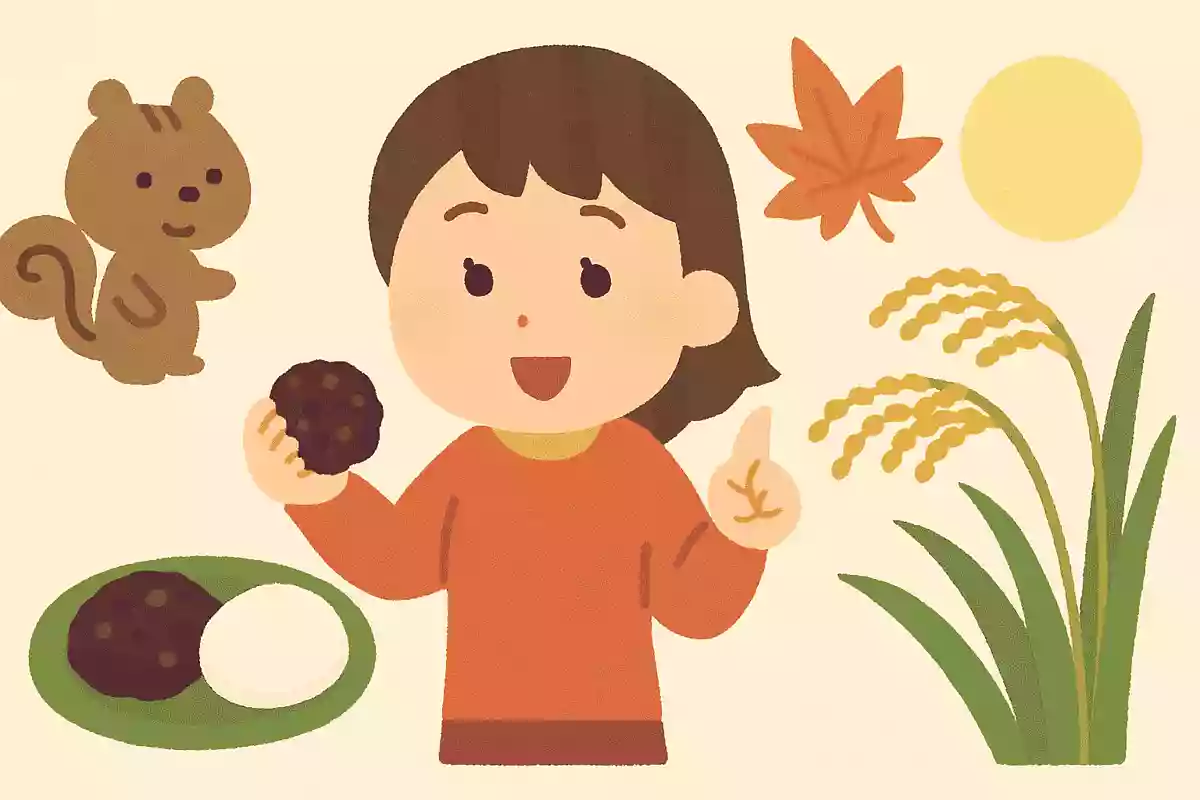
The difference between ohagi and botamochi is a topic almost everyone has wondered about at least once, but in fact, the ingredients and preparation are exactly the same—in other words, as foods they’re identical! The name changes depending on the season: botamochi is eaten during the spring equinoctial week when peonies (botan) bloom, and ohagi is eaten during the autumn equinoctial week, the season of bush clover (hagi).
However, this is just one of many theories.
There are various views—such as regional differences or distinctions based on the type of sweet bean paste used—so if you’re interested, be sure to look into it!
Tsukimi dango are offered to pray for a bountiful harvest in the coming year.
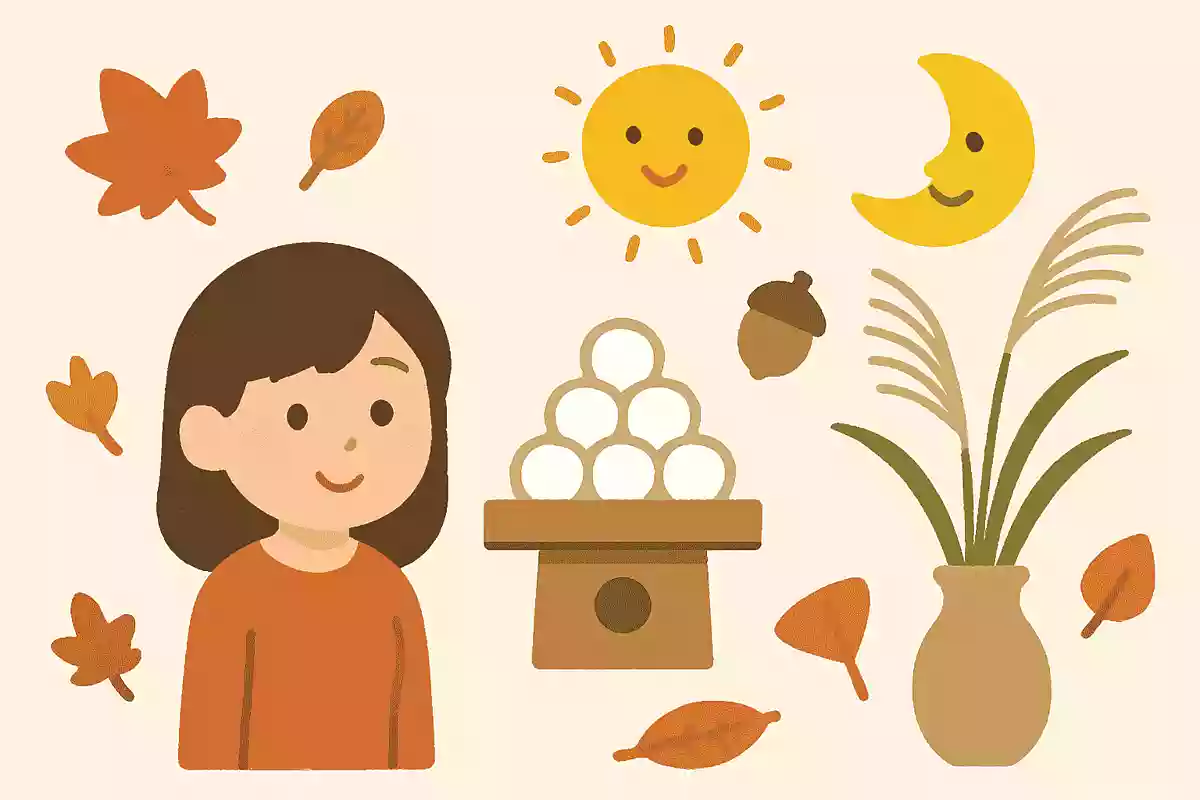
Tsukimi dango embody wishes for a bountiful harvest in the coming year.
Offering dango on the night of the Harvest Moon (Jugoya) began in the Edo period.
Before that, taro—whose harvest season coincides with the festival—was offered.
As wet-rice cultivation became more widespread, people began offering dumplings made from rice flour milled from freshly harvested rice, whose season is close to the festival, as a way to pray for a good harvest.
Incidentally, it’s said that eating the dango after they’ve been offered allows you to share in the deity’s power.
Knowing that it’s fine to eat them without hesitation, even though they were offerings, makes it all the more enjoyable, doesn’t it?
In many countries abroad, entrance ceremonies are held in September.
Most schools in Japan hold their entrance ceremonies in April, in the spring.
However, in many countries around the world—such as the United States, France, and China—entrance ceremonies are held in September.
In Japan during the Edo period, students could enroll in school at any time of year.
Later, there was a period when September enrollment was adopted in line with Western practices, but it eventually shifted to the current April enrollment to align with the national fiscal year, which runs from April to March.
Around the world, besides September, some countries hold entrance ceremonies in January, February, June, and other months.

September 4 is the opening day of Tokyo DisneySea.
On September 4, 2001, Tokyo DisneySea was born as the world’s first Disney park themed around the sea.
The concept for Japan’s second Disney park was announced in 1988.
Overcoming various challenges—including clashes with the U.S.
headquarters—construction began in 1998, ten years later, and the long-awaited grand opening came 13 years after the announcement.
Even now, with new areas debuting one after another, DisneySea continues to evolve beyond our expectations.
We can’t take our eyes off what’s next.
The sports day started in the Meiji era.
Sports festivals are often held in September and October.
Nowadays, considering the lingering heat, they are also frequently held in May and June.
These sports festivals actually began in the Meiji era.
The event considered Japan’s first sports festival is said to be the “Kyōtō Yūgikai,” held in 1874 (Meiji 7) at an institution that trained naval officers.
At the time, the navy reportedly had very few classes involving physical activity.
Seeing this, the head of the British Naval Advisory Mission organized the event to help relieve stress—marking Japan’s first sports festival.
Afterwards, it spread to schools nationwide, and the tradition continues to this day.