

[Kakizome] Four-character idioms fit for the New Year: Introducing words that resonate with the heart and their meanings

Are you thinking about what words to write for your first calligraphy of the year? Four-character idioms, which are popular every year, pack deep meaning into just a few characters and are perfect for expressing New Year’s resolutions.
Still, many people may wonder, “Which idiom should I choose?” In this article, we’ll introduce four-character idioms that are well-suited for the first calligraphy of the year.
From bold, striking phrases to words that fit your New Year’s determination, find the expression that’s just right for you.
- Four-character idioms for New Year’s resolutions! A collection of motivational phrase ideas
- Become positive with four-character idioms that resonate with the heart! Common yet deeply meaningful words.
- [Elementary School Students] Perfect for Kakizome! A Collection of Four-Character Idiom Ideas
- General: Four-character idioms that encourage determination—powerful, heart-stirring words
- For Elementary School Students: Four-Character Idioms You Can Use for New Year’s Resolutions — How to Set Cool Goals!
- [Four-Character Idioms] Impressive and Cool Sound! A Collection of Famous Quotes Worth Knowing as General Knowledge
- Learn the meanings too! Cool four-character idioms that elementary school students will want to remember
- Four-character idioms that help you achieve goals! Phrases you can use in everyday situations
- Four-character idioms that pioneer the future: powerful words that express challenge and effort, perfect as personal mottos.
- Easy-to-remember, positive four-character idioms for elementary school kids! Words that brighten the heart
- Recommended for elementary school class goals! A collection of impactful ideas using four-character idioms
- Strive toward your goals! Four-character idiom ideas that resonate with elementary school students
- Four-character idiom slogans for groups! Words that convey a powerful message
[First Calligraphy of the Year] Four-character idioms perfect for the New Year: Introducing words that resonate with the heart and their meanings (71–80)
in the same boat; share a common fate (lit. “live and die together as one lotus”)
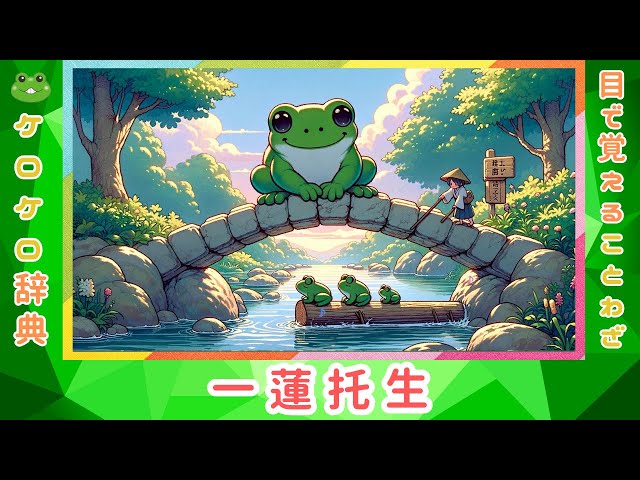
It is a phrase that means accepting fate and events together with your companions.
It expresses an attitude of sharing both joy and hardship, strongly conveying bonds and solidarity.
It emphasizes the importance of acting not alone but with your companions and of helping one another.
Within its short, powerful sound lies the value of mutual support and cooperation, giving a bracing impression just by hearing it.
It can be considered a four-character idiom that even elementary school students can easily understand as walking together with friends and peers, making them aware of strong bonds.

a match for a thousand
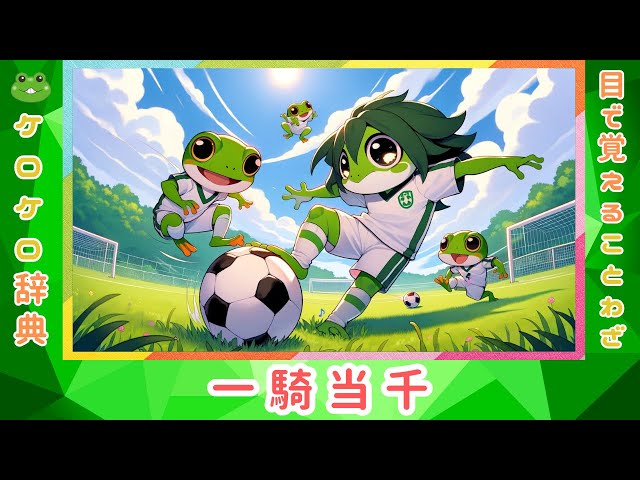
A four-character idiom that denotes great strength.
It’s read as “ikkitōsen,” and it seems to mean being so strong that a single mounted warrior could stand against a thousand enemies.
Some children are worriers or tend to feel anxious when facing something new.
At such times, it’s nice to convey a warm message that their family is watching over them.
Moreover, encouraging them by saying they are strong enough to face a thousand enemies can help rouse their spirits.
It’s one of the four-character idioms that can broaden a child’s potential.
firm and decisive
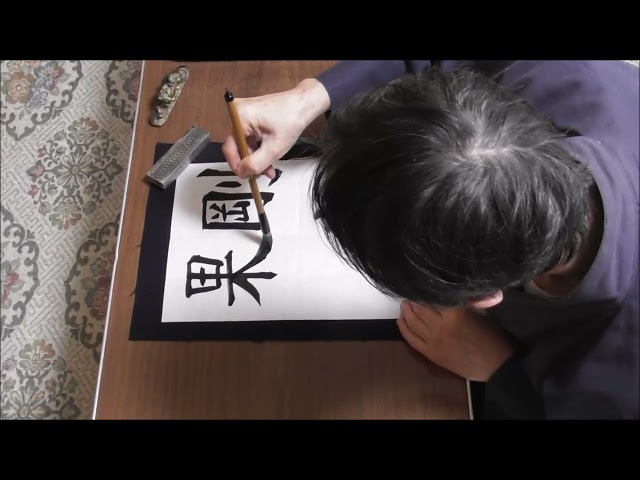
Pronounced “gōkikadan,” this four-character idiom refers to having a strong, firm will, abundant spirit, and the decisiveness to take bold action.
Some children may hesitate and struggle to take the first step.
This idiom carries a message you might want to share with a child at such times.
If you send the message together with words that remind them they have supportive friends and family by their side, the sentiment may come across more clearly.
It’s one of those four-character idioms that helps nurture a strong heart as you watch over a child’s efforts and daily growth.
brave and diligent

It is a phrase that means acting without fear and boldly making clear decisions for yourself.
It expresses the courage to face difficulties without flinching and the strength to take proactive action.
In soccer, it fits moments like dribbling past a defender to take a shot; in basketball, it could be taking the game-winning shot in the final second.
For elementary school students, it’s a phrase that teaches the mindset of actively taking on challenges in practice and games, conveying the importance of acting without fear.
It’s a powerful phrase that gives you the courage to take that first step forward.
strenuous effort; diligent endeavor

It is a phrase that means to spur yourself on and always strive.
“奮励” (funrei) means to rouse or stir up your spirit, and “努力” (doryoku) means to exert effort to achieve a goal.
It expresses a single-minded commitment to new goals without using age as an excuse; challenges like starting a new hobby or working to make new friends can also be called 奮励努力, and the earnest, steady dedication involved gives courage and hope to those around you and positively inspires many people.
The key is to use this four-character idiom while engaging with others’ efforts and ideas respectfully.

Dripping water wears through stone.
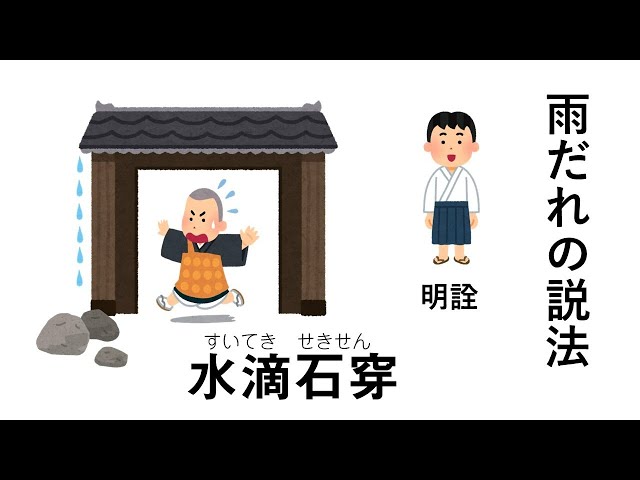
This is a four-character idiom that means even small efforts, if continued, lead to great results.
Like a single drop of water that bores a hole in stone over a long time, it symbolizes steady effort and the power of perseverance.
It carries the message that by repeating something many times, we can overcome difficulties, and though brief, it holds deep meaning.
Just hearing it reminds us of the importance of not giving up and continuing, and helps us feel how small accumulations will eventually lead to big outcomes.
It is a positive and empowering phrase that teaches us to value daily effort and challenges.
calm and composed
Pronounced “taizen jijaku,” “taizen” refers to being calm and unshaken by things, while “jijaku” describes remaining composed without panic no matter what happens.
Combined, these two similar compounds express a state of composure that is unmoved by anything.
When you face tasks that require careful thought, you might find yourself flustered.
That’s exactly when you should recall this four-character idiom—and share it with your children, too.