

Lively songs recommended for people in their 90s—fun songs for everyone to listen to and sing together.


When you want to enjoy music with people in their 90s around you—such as family members or residents at a care facility—it can be hard to decide which songs to choose.
You might think, “Songs from the Showa era could work,” but it’s still difficult to imagine exactly which songs people in their 90s would like.
So in this article, I’ll introduce plenty of songs recommended for people in their 90s!
This time, we’re focusing on lively, crowd-pleasing tunes—songs that are widely known among people in their 90s and that make listeners feel happy and uplifted.
They’re perfect not only for listening together, but also for singing along as a group.
I hope you find this helpful!
- For seniors: Recommended youthful songs for people in their 90s. A collection of classic Showa-era hits.
- Easy-to-sing songs recommended for women in their 90s: A roundup of tracks to try at karaoke
- Songs to Enjoy with Women in Their 90s: A Collection of Karaoke Crowd-Pleasers
- Lively songs recommended for people in their 80s: A collection of nostalgic enka and kayōkyoku
- Recommended cheer songs for people in their 90s: a collection of timeless tracks that support life
- Recommended love songs for people in their 90s: A collection of classic Shōwa-era romance songs
- For People in Their 90s: Dance Tracks and Exercise Songs That Make Moving Your Body Fun!
- Easy-to-sing songs recommended for men in their 90s: A roundup of tracks to sing at karaoke
- Songs that get men in their 90s excited: A roundup of classic karaoke recommendations
- [For people in their 90s] Recommended Christmas songs: from nostalgic school songs and hymns to timeless classics
- Ranking of popular songs for senior citizens
- A collection of moving, tear-jerking songs recommended for women in their 90s—heartfelt tunes that resonate with the soul.
- A collection of cheerful, uplifting songs recommended for women in their 80s—fun, bright tunes to sing along to
Lively songs recommended for people in their 90s: fun songs for everyone to listen to and sing together (21–30)
12th graderFunaki Kazuo

This lyrical song is filled with memories of youth, and Kazuo Funaki’s fresh vocals in a student uniform make a striking impression.
Set to a march-like, approachable melody, it gently recounts the joys and loneliness of school life and the partings with friends.
After its release in June 1963, the work achieved astonishing sales and won the New Artist Award at that year’s Japan Record Awards.
It was also adapted into a film, starring Kazuo Funaki himself, with scenes shot in his hometown of Ichinomiya City, Aichi Prefecture.
It’s a song meant to be hummed together as you reminisce about nostalgic youthful days.
Let’s sing along with cheerful handclaps.
Tankō-bushi (Coal Miner’s Song)min’yō

It is a folk song from the Chikuho region, cherished as a hallmark of summer in Japan.
Born in the Meiji era from songs sung by women during coal sorting at mines, it spread nationwide in the early Showa period through radio broadcasts.
Its familiar melody, depicting coal mine labor and everyday life, remains a staple for Bon Odori dances.
In August 2024, BEGIN released a new arrangement incorporating Brazilian samba rhythms, but the traditional choreography—characterized by movements that mimic mining work—makes it easy to dance together with older adults.
Since 2006, Tagawa City in Fukuoka Prefecture has hosted the Tanko-bushi Festival every summer, and the song continues to be passed down across generations.
Let’s get married.yoshida takurou
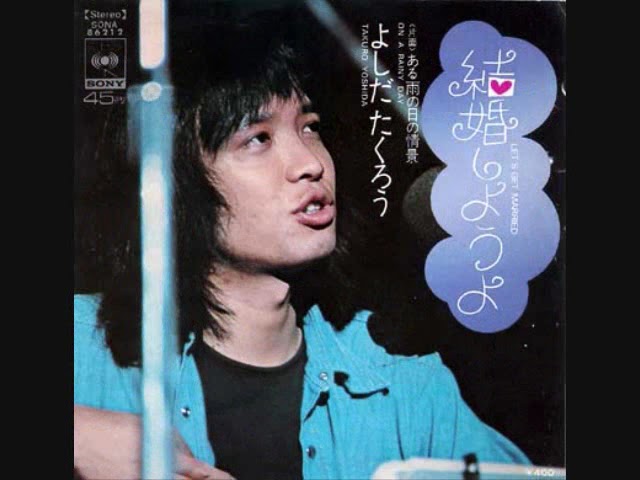
This work is memorable for its translucent, beautiful melody and sweet, poignant vocals.
Released in 1972, the song marked a major turning point in the history of folk music.
Centered on acoustic guitar, its warm sound creates an atmosphere that gently envelops feelings of love.
While poetically depicting springtime scenes, Takuro Yoshida expresses sincerity and pure affection.
Simple yet profound in its message, this classic reached a peak of No.
3 on the Oricon weekly chart.
Its heartwarming, gentle tone and tender vocal timbre enrich everyday moments.
It’s a song to savor slowly on a blossoming spring day, reminiscing with those of the same generation as memories come into full bloom.
The Highland Train GoesOkamoto Atsurō

“The Highland Train Goes” is a classic song that invites listeners into the landscapes of the Showa era.
Released in 1954, it is one of Atsuro Okamoto’s signature songs.
It was performed as the opening number for the White Team at the 5th NHK Kouhaku Uta Gassen, and, in commemoration of Yuji Koseki’s 100th birthday, it was adopted as the departure melody at JR East’s Fukushima Station.
The lyrics vividly evoke beautiful highland scenery, making it a particularly memorable piece.
In Inawashiro Town, Fukushima Prefecture, a monument has been erected to commemorate the song.
How about singing it with your family and friends and savoring the nostalgic charm of a Showa-era journey?
Look up at the stars in the nightSakamoto Kyu

Beloved as a song for gazing up at the night sky, this piece resonates as a warm cheer for those facing hardships.
With lyrics by Rokusuke Ei and music by Taku Izumi, it has long been cherished in the enveloping voice of Kyu Sakamoto.
Released as a single in May 1963, it was originally written as the theme song for a musical.
It is also a celebrated masterpiece that won the Japan Record Award for Composition.
Though born as a message of encouragement for young people studying at night school, it is a song that transcends generations to bring hope and courage.
It’s perfect for everyone to sing together during recreation time at the facility.
Otomi-sanKasuga Hachirō

A quintessential enka classic of the Showa era, this song poignantly depicts the bittersweet fate of a man and a woman.
Based on a Kabuki play, the story artfully portrays vivid Edo-period scenery and the complex emotions of the two lovers.
Incorporating elements of Okinawan music and kachāshī, its lively rhythm paired with Hachiro Kasuga’s clear, soaring vocals creates a pleasing resonance.
Released in August 1954, it sold 400,000 copies in just four months and was later covered by many artists, including Mina Aoe and Harumi Miyako.
Evoking warm nostalgia, it’s a perfect piece for recreation—easy to sing together with cheerful handclaps.
March of 365 StepsSuizenji Kiyoko

This song has long been loved as an anthem of encouragement in life, carrying the message that taking one step at a time is important.
Since its release in November 1968, it has continued to resonate with many people.
Born during Japan’s period of rapid economic growth, the song is characterized by its cheerful melody and positive lyrics.
It has been used in films, TV commercials, anime, and many other contexts, and has been cherished by people of all ages.
How about humming along with older adults while being enveloped by Ms.
Suizenji’s warm singing voice? It will surely bring back fond memories and give you a boost of energy.