

Children’s Song Medley: A playlist of classic and popular hits everyone knows

Nursery songs that have been sung for generations.
Many of you may have had your grandmother or mother sing them to you when you were little, or sung them yourselves with gestures at kindergarten, daycare, or school.
In this article, we’ve picked out classic nursery songs, focusing on those that children still love today.
From timeless favorites that evoke nostalgia to relatively new songs that have recently become popular in early childhood settings, we’ll introduce a wide range.
Please enjoy this playlist of nursery songs that will bring back memories of your early years.
- Ranking of Popular Children's Songs [2026]
- Nostalgic Children’s Songs, Folk Songs, and Nursery Rhymes: The Heart of Japan Passed Down Through Song
- [Children's Songs] Cute songs recommended for childcare. List of popular nursery rhymes.
- Japanese Shoka, Children's Songs, and Nursery Rhymes | Timeless masterpieces that resonate in the heart, passed down across generations
- Let's sing together! A collection of nursery rhymes everyone knows
- [Elementary School Music] List of Popular and Nostalgic Songs That Have Appeared in Textbooks
- A children's song from a popular fairy tale
- Get pumped with kids’ favorite songs! A memorable collection of classics that will make you want to sing along
- Lullabies: children's songs, folk songs, and nursery rhymes. Nostalgic songs for putting children to sleep.
- [Japanese Children's Songs] Carefully selected timeless masterpieces loved across generations!
- Nursery rhymes you’ll want to sing at karaoke: classic and popular songs everyone can enjoy together.
- [Minna no Uta] Tear-jerking masterpiece. A moving song you want to hear again.
- Childcare: Today's recommended fun songs
Children’s Song Medley: A Playlist of Classic and Popular Favorites Everyone Knows (61–70)
A large grandfather clockSakushi: Sakkyoku: Henri Kurei Wāku

Originally an American song that was translated into Japanese.
The lyrics tell the story of an old man’s life, and I even feel moved by the time the old man and the clock spent together.
It’s sad that the clock has stopped working, but I’m sure both the clock and the old man lived good lives.
Cradle SongSakushi: Kitahara Hakushū / Sakkyoku: Kusakawa Nobusaku

This is a song released in 1921 (Taisho 10).
It’s not very well known, but the lyrics were written by the famous poet Hakushu Kitahara.
It’s a mother’s song, gently sung to her baby.
It’s a piece that has more charm when sung by a mother rather than by children.
Among Japanese children’s songs, it ranks near the top of my favorites.
New Year (Japanese New Year)Sakushi: Azuma Kume / Sakkyoku: Taki Rentaro

Among songs themed around the New Year, this is the most famous children’s song.
The composer is Rentaro Taki, known for pieces like “Moon Over the Ruined Castle,” and featured in music textbooks.
The lyrics were written by Kume Azuma.
The musical composition is already in the public domain, while the lyrics remained under copyright until 2019.
As it is soon to be a fully public-domain children’s song, there is anticipation that a new version—with fresh lyrics and arrangements using popular tools like Vocaloid—will be released.
Seagull SailorSakushi: Takeuchi Toshiko / Sakkyoku: Kawamura Mitsuyo

Released in 1937 (Showa 12), this song is a children’s tune that became a major hit amid Japan’s hectic prewar and wartime years.
In the recording, the composer Koyo Kawamura’s daughter, Junko, provides the vocals.
With its buoyant tempo and triad-based harmony, it’s very easy for children to sing, and it remains a beloved Japanese nursery rhyme that is frequently used in commercials and other media.
Ogre Pantssakushi: tanaka seiji (uta no oniisan)
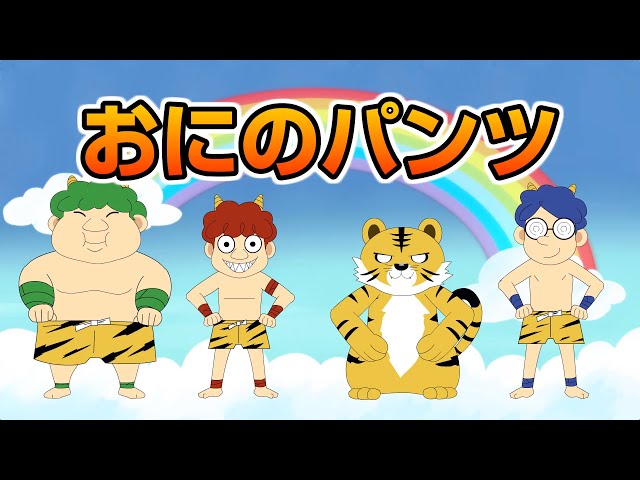
It’s a funny song that became popular after being sung by the NHK “Uta no Onii-san” (the male singer on a children’s music program).
The tune is based on an Italian opera, so it has an Italian-style melody.
It’s a song that makes you laugh just by listening to it.
I do wonder, though, why we’re supposed to wear the strong ogre’s pants.
aye-ayeSakushi: Aida Hiromi / Sakkyoku: Uno Seiichirou

This is a song about the aye-aye, a lemur from a southern country.
It describes the aye-aye’s features, like its big round eyes, long tail, and long fingers.
Even very young children who find singing difficult can join in on just the “Aye-aye” part, making it a good song to sing together with their mothers.
carp streamerSakushi: Kondō Miyako

This song is indispensable for the Boys’ Festival in May.
It is a renowned piece that Japan is proud of, and it was selected for the 1988 International Children’s Singing Competition in Italy.
The lyrics for the first verse were written by Miyako Kondo, but it is said that she only wrote that verse.
Over time, additional verses were added, and it is now considered to have three verses in total, though the authors of the later verses are unknown.