

Children’s Song Medley: A playlist of classic and popular hits everyone knows

Nursery songs that have been sung for generations.
Many of you may have had your grandmother or mother sing them to you when you were little, or sung them yourselves with gestures at kindergarten, daycare, or school.
In this article, we’ve picked out classic nursery songs, focusing on those that children still love today.
From timeless favorites that evoke nostalgia to relatively new songs that have recently become popular in early childhood settings, we’ll introduce a wide range.
Please enjoy this playlist of nursery songs that will bring back memories of your early years.
- Ranking of Popular Children's Songs [2026]
- Nostalgic Children’s Songs, Folk Songs, and Nursery Rhymes: The Heart of Japan Passed Down Through Song
- [Children's Songs] Cute songs recommended for childcare. List of popular nursery rhymes.
- Japanese Shoka, Children's Songs, and Nursery Rhymes | Timeless masterpieces that resonate in the heart, passed down across generations
- Let's sing together! A collection of nursery rhymes everyone knows
- [Elementary School Music] List of Popular and Nostalgic Songs That Have Appeared in Textbooks
- A children's song from a popular fairy tale
- Get pumped with kids’ favorite songs! A memorable collection of classics that will make you want to sing along
- Lullabies: children's songs, folk songs, and nursery rhymes. Nostalgic songs for putting children to sleep.
- [Japanese Children's Songs] Carefully selected timeless masterpieces loved across generations!
- Nursery rhymes you’ll want to sing at karaoke: classic and popular songs everyone can enjoy together.
- [Minna no Uta] Tear-jerking masterpiece. A moving song you want to hear again.
- Childcare: Today's recommended fun songs
Children’s Song Medley: A Classic and Popular Hit Playlist Everyone Knows (41–50)
Yaki-imo Goo-Chii-Paasakushi: sakata hiroo / sakkyoku: yamamoto naozumi

It’s a popular hand-play song for children’s shows and for kindergartens and nursery schools.
As you can imagine from the title, it’s a song that incorporates rock-paper-scissors (gu, choki, pa).
It’s a perfect children’s song for getting familiar with rock-paper-scissors, combining the game with a sweet-potato theme for autumn.
After singing, you can have a fun rock-paper-scissors tournament, making it an ideal song for learning the rules.
[Children’s Song Medley] A playlist of classic and popular timeless hits everyone knows (51–60)
Story FingerSakushi: Kayama Yoshiko / Sakkyoku: Yuyama Akira
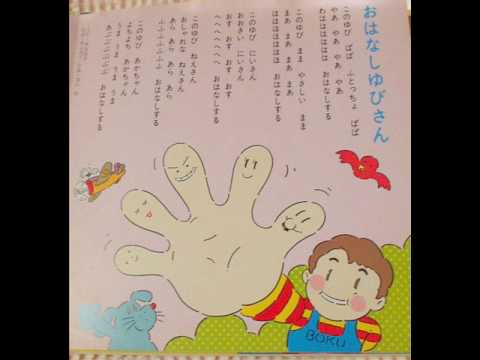
It’s a fun song that helps you learn the names of the five fingers while singing.
The fingers are imagined as a family, set to a bright rhythm.
Nursery rhymes really contribute a lot to children’s language development, don’t they? It makes sense that the little finger is the baby and the thumb is the father.
Kagome KagomeSō Gyōchi (1751-nen goro)

I think many of us played while singing this song when we were children.
The “oni” (it) closes their eyes, and the other children form a circle and spin around the oni while singing.
Since the song was created long ago, the lyrics are in classical Japanese.
It’s a song that has been loved by children for a very long time.
The Metropolitan Museum of ArtOhnuki Taeko

It is said that this song was inspired by the American children’s author E.
L.
Konigsburg’s From the Mixed-up Files of Mrs.
Basil E.
Frankweiler.
It was broadcast on NHK’s Minna no Uta, and because of its nostalgic tone and the clay animation, some children reportedly found it scary.
The singer is Taeko Onuki, well known for the theme song of the film Shall We Dance?
village festivalMonbushō shōka
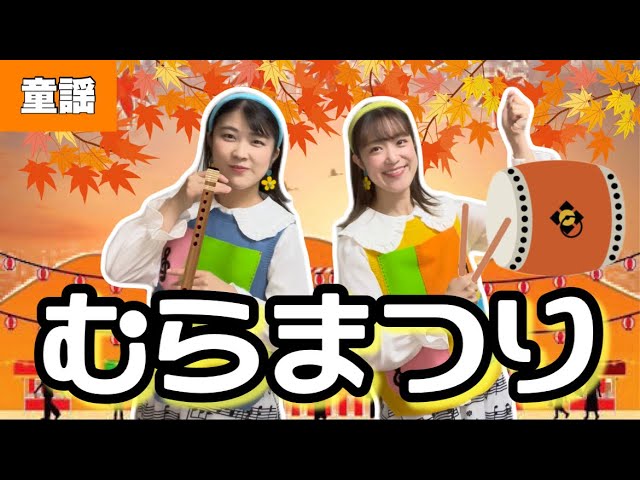
“Village Festival” is characterized by its lively, cheerful festival music.
First published in an elementary school music textbook in 1912, it has long been beloved and sung across many regions.
I used to feel a thrill every time I heard it, but in recent years, due to factors like municipal mergers making villages feel less familiar, it has unfortunately been disappearing from textbooks.
campfireSakushi: Tatsumi Seika / Sakkyoku: Watanabe Shigeru

These days, you don’t see bonfires as often.
But children in any era love the bright red, flickering flames they watch at campsites or beacon fires.
Still, this is also a song that faced various challenges over time: during the war, people said it was wasteful to burn fallen leaves as fuel; after the war, bonfires on street corners were discouraged for fire safety; and although it never actually happened since it’s a song found in textbooks, there was even a request to use the “chilblains” lyrics in a hand cream commercial.
Seven-year-old childSakushi: Noguchi Ujo / Sakkyoku: Motoori Nagayo

It’s a song overflowing with a mother crow’s love for her child.
It was also nominated for the top 10 Japanese children’s songs.
It was released in the Taisho era.
With its relaxed tempo and easy-to-imagine lyrics, it truly represents Japanese nursery rhymes.