

[For General Audience] Trivia & Fun Facts Quiz on the Olympics and Paralympics

How much do you know about the Olympics and Paralympics? Hidden behind this once-every-four-years festival are countless surprising stories you won’t find in textbooks.
We’ve gathered general-interest trivia and fun facts you’ll want to share—about the materials used for medals, the meaning of the Olympic rings, and unexpected events that were once official sports.
From tidbits that make watching more enjoyable to behind-the-scenes stories that will make you say “Wow!”, we cover a wide range.
Be sure to check it out before you watch the next Games!
- [For Elementary School Students] Sports Quiz
- A quiz of fun trivia: bite-sized knowledge that leads to new insights.
- A collection of quiz questions related to sports
- Trivia you think you know but surprisingly don’t? August trivia and fun facts quiz!
- [New Songs & All-Time] Olympic Cheer Songs and Olympic Theme Songs
- Trivia quiz with useful tips to know: fun facts that come in handy at school or at home [for kids]
- Surprisingly unknown? A fun health trivia quiz that will make you want to try it
- [Study] Fun to Know! A Collection of World History Trivia Quizzes
- [2026] FIFA World Cup | Historic Theme Songs That Colored the Tournament
- So interesting you’ll want to tell someone! December Trivia & Fun Facts Special
- [Exercise] Recreational Ideas for Olympic Sports
- A collection of trivia and fun facts about August that will warm your heart
- English will become more fun! A collection of trivia and fun facts about the English language.
[For General Audience] Olympic and Paralympic Trivia & Fun Facts Quiz (21–30)
At the 1900 Paris Games rowing event, a nearby child once competed as a substitute.

Truth is stranger than fiction…
It sounds like an unbelievable story that brings that phrase to mind, doesn’t it? But it’s said to have actually happened.
One of the Dutch athletes who was scheduled to compete at the 1900 Paris Games couldn’t participate because he was over the weight limit.
Rowing was a three-person team event, and since competitors’ names weren’t registered at the time, the remaining teammates supposedly asked a 10-year-old boy who happened to be passing by to take his place.
As a result, the team went on to win the championship.

There was an event at the 1972 Winter Olympics in Sapporo where one country swept the gold, silver, and bronze medals.
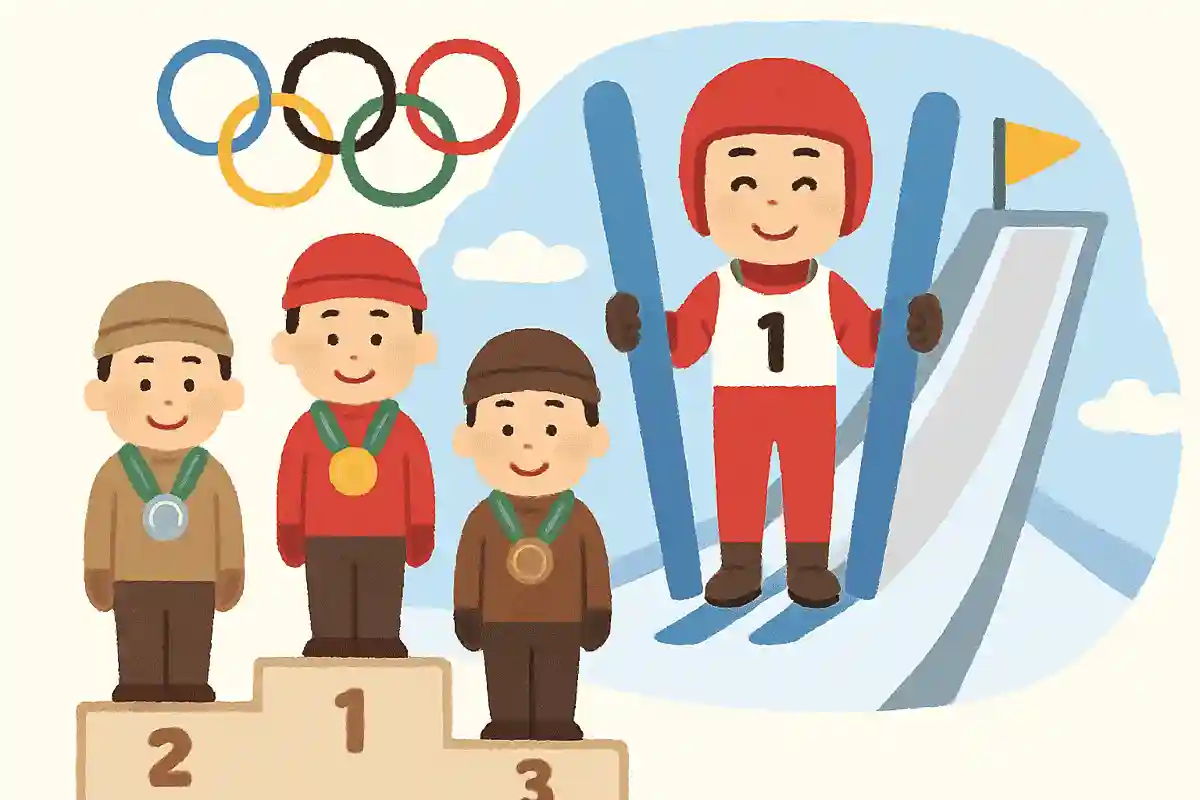
The event that many remember as a glorious moment—where Japan swept the medals at the Winter Olympics—was the 70-meter ski jump.
Yukio Kasaya took first place, Akitsugu Konno came in second, and Seiji Aochi finished third, giving Japan a clean sweep of the gold, silver, and bronze medals.
At the time, Japanese athletes had won very few medals at the Winter Olympics, so this was truly a remarkable achievement.
It is said that this was when Japanese ski jumpers began to be called the “Hinomaru Flying Squad.”
In the swimming events at the 2000 Sydney Games, there was an athlete who recorded the slowest time in history.
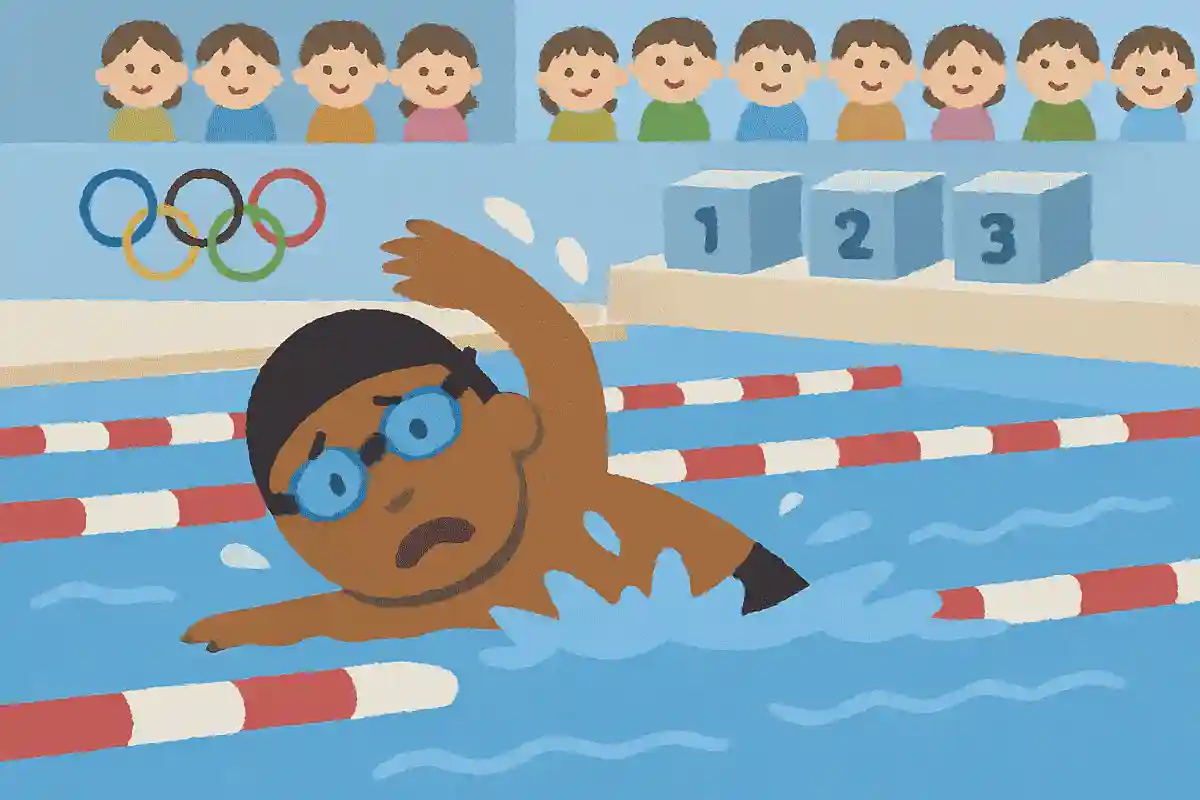
The slowest record in history was set by Eric Moussambani of Equatorial Guinea, with a time of 1:52.72.
Why such a time, despite being an Olympic athlete? In fact, he competed via a wildcard, which allows participation even without meeting the qualifying standard.
His training venues were the sea and rivers, plus a few hours in a pool when available.
He learned how to dive and turn only after arriving on site, during the U.S.
team’s practice sessions.
No wonder the time was slow.
Even so, he proudly swam to the finish as his country’s representative and received thunderous cheers from the crowd.
The first Winter Olympics were held in France.
The first Winter Olympic Games were held in 1924 in Chamonix-Mont-Blanc, France.
Chamonix-Mont-Blanc is known as a resort town at the foot of Mont Blanc, the highest peak in Europe.
Did you know that this first event was originally called the “International Winter Sports Week”? This was because Pierre de Coubertin, the founder of the modern Olympics, was initially opposed to including winter sports in the Olympic Games.
However, in 1925, the following year, the International Olympic Committee retroactively recognized it as the “First Winter Olympics.”

Winners of the ancient Olympic Games were awarded olive wreaths.
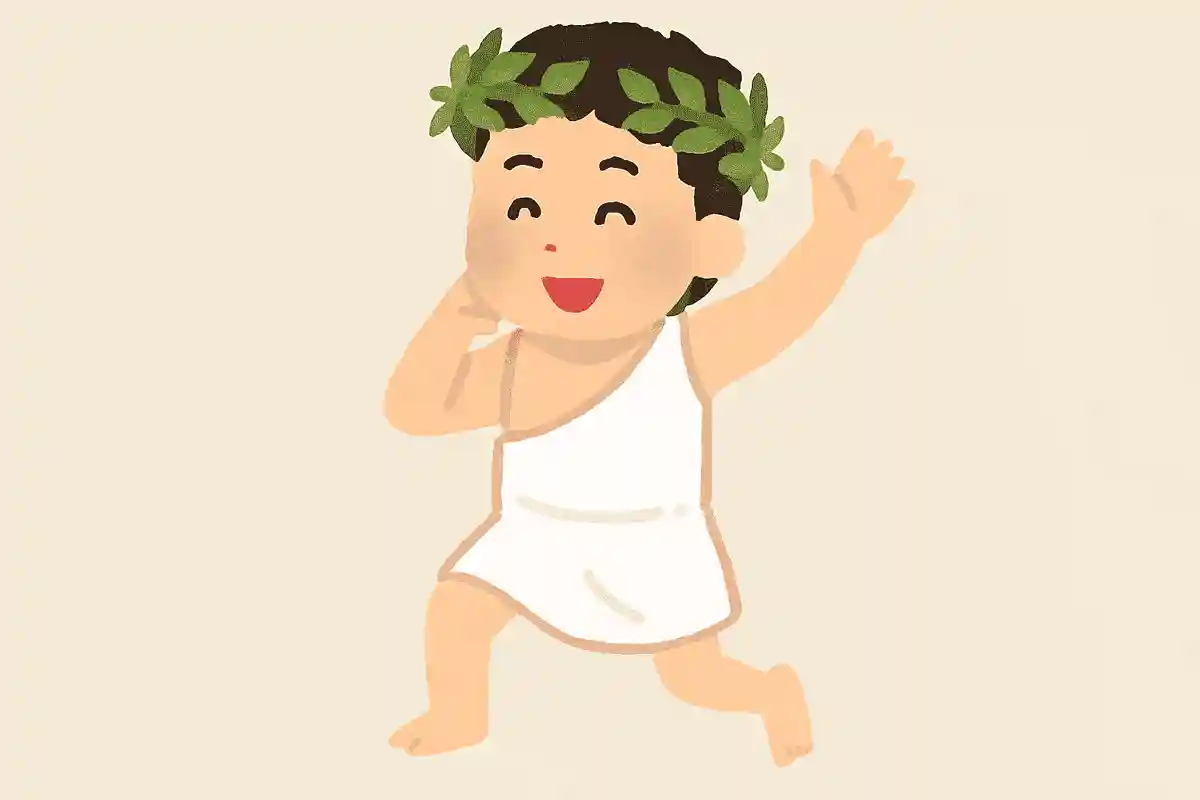
Also known as the Olympic Festival at Olympia, the ancient Olympic Games were held once every four years in the region of Elis in ancient Greece.
The deity honored was Zeus.
The Olympic Festival was one of the four major Panhellenic games and, being classified as a sacred contest, awarded its victors wreaths of olive leaves.
By contrast, at festivals classified as prize contests, winners received money or valuable goods.
At the Pythian Games, one of the four major festivals, it seems that laurel wreaths were awarded.
There is a Japanese competitive swimmer who swallowed a good-luck charm before a final.
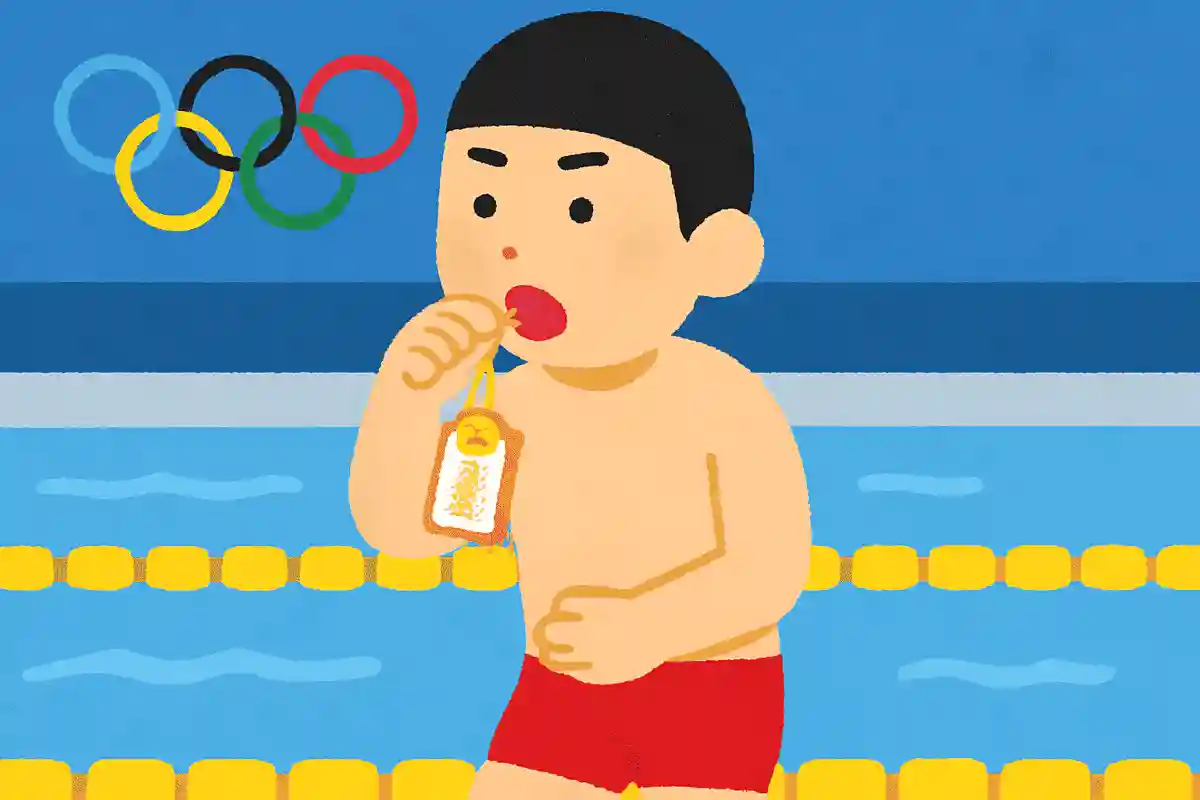
Hideko Maehata, who won a gold medal at the 1936 Berlin Olympics, swallowed a good-luck charm before the final race.
In fact, she had won a silver medal at the Los Angeles Olympics four years earlier, but because she lost by a narrow margin to the top competitor, she was criticized by the public with comments like, “If only you had pushed a little harder.” Because of that, it’s said that she approached the Berlin Olympics with the resolve that if she lost, she couldn’t return to Japan—she would have to throw herself into the sea.
That strong determination may have led her to swallow the charm.
Judo was included as an Olympic event starting with the 1964 Tokyo Games.
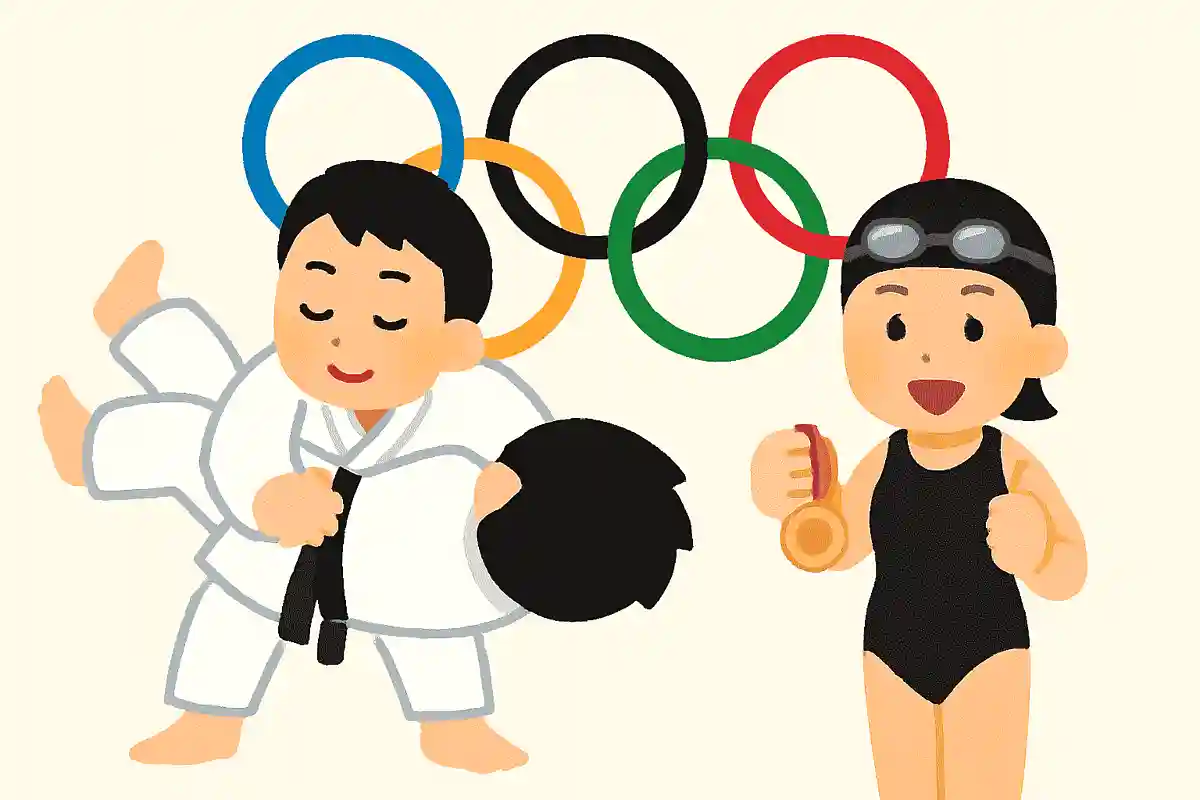
Judo, known for having Jigoro Kano as its founder, was adopted as an Olympic sport at the Tokyo Games in 1964.
Although judo is often called a traditional Japanese specialty, it has now spread worldwide, and many international tournaments are held beyond the Olympics.
When first introduced, it was contested in only four weight classes, but starting in 1988 it has been held in seven classes, and at the Tokyo Olympics in 2021, a mixed-gender team event was also introduced!