

Poignant and beautiful! A collection of recommended piano pieces

Among the many musical instruments, the piano is one of the most familiar, and it’s a quintessential instrument that makes you admire anyone who can play it.
Melancholic melodies can draw you into their world before you know it.
In this article, we’ll introduce popular piano pieces themed around “sadness.” In addition to classic standards, we’ve gathered a rich variety of poignantly beautiful, piano-centered works featured in soundtracks for films, anime, and video games.
If you love wistful piano music, this is a must-check!
- Piano × Dark Pieces: Classic Masterworks to Sink Deep into Sorrow
- Masterpieces of classical piano that are too beautiful for words. A gathering of delicate tones that cleanse the soul.
- [Piano × J-POP] Tearjerker! A Selection of Moving/Touching Songs
- [Classical Piano Masterpieces] A carefully selected collection of moving pieces that will bring you to tears
- [For Adults] Recommended for Piano Recitals! A Curated Selection of Impressively Sounding Masterpieces
- [Beginner] Recommended for adult piano beginners! Beautiful & stylish piano pieces
- Beautiful Melodies: A Collection of Masterpieces and Moving Piano Songs
- Today's Piano: Masterpieces and Popular Pieces Woven with Delicate Tones
- [J-POP] I want to listen to songs with impressive, beautiful piano tones! Recommended piano cover tracks
- [Masterpiece Classics] A special showcase of gem-like masterpieces so beautiful they’ll move you to tears
- It’s so cool if you can play these on the piano! A selection of irresistibly charming masterpieces.
- [For when you want to cry or feel sad] Tear-jerking masterpieces that make you cry when you listen
- [Intermediate Level] Cool Piano Pieces You Can Play [Great for Recitals Too]
Bittersweet and Beautiful! A Curated List of Recommended Piano Pieces (1–10)
OpusNEW!Sakamoto Ryuichi

A beautiful piano piece in which tension resides within stillness and the resonance of silence seeps into the heart.
Included as the first track on the acclaimed 1998 album “BTTB,” it gently guides listeners toward a poised, back-to-basics sound world.
The intimacy created by the repetition of short phrases and the shifting harmonies maintains an exquisite balance that never becomes overly romantic.
This piece was also performed in the final concert film produced in 2023, moving audiences around the world.
It is the perfect track for those who wish to quietly step away from the clamor of everyday life and savor the flow of sound and silence itself.
Why not listen with a calm mind and let the beautiful piano tones wash over you?
The Name You Call — The Continuation of the DreamYoshimori Shin

Natsume’s Book of Friends, which portrays the relationships between humans and otherworldly yokai and has been beloved for many years in both its original manga and anime adaptations, is also highly praised for its soundtrack composed by Makoto Yoshimori, whose nostalgic melodies are beautifully evocative.
All of the anime soundtracks for Natsume’s Book of Friends were handled by Yoshimori, and his music is so harmoniously integrated with the work that they feel inseparable.
Among them, the theme song “Kimi ga Yobu Namae ~Yume no Tsuzuki~” isn’t a purely piano piece, but as you’d expect from pianist Yoshimori, it features a piano-centered, cleansingly beautiful and bittersweet melody.
Even those unfamiliar with the series should give it a listen!

Rondo in A minor, K. 511Vorufuganggu Amadeusu Mōtsaruto

The great composer Wolfgang Amadeus Mozart—who gave the world an endless list of masterpieces that have left their mark on music history, from operas like The Abduction from the Seraglio and The Marriage of Figaro to orchestral works like the “Jupiter” Symphony, the Requiem, and the Clarinet Quintet in A major, K.
581—also created many celebrated works in the realm of piano music.
In this article, however, we focus on the Rondo in A minor, K.
511, composed in March 1787—a pivotal year in which, a few months later, he would complete the famed Don Giovanni.
It may not be as widely known as his most famous works, but its melodies and sonorities, more melancholic than merely beautiful, seem to reflect the composer’s emotions directly, leaving the listener with a gripping ache in the chest.
Poignant and Beautiful! A Collection of Recommended Piano Pieces (11–20)
Merry Christmas Mr. LawrenceSakamoto Ryuichi
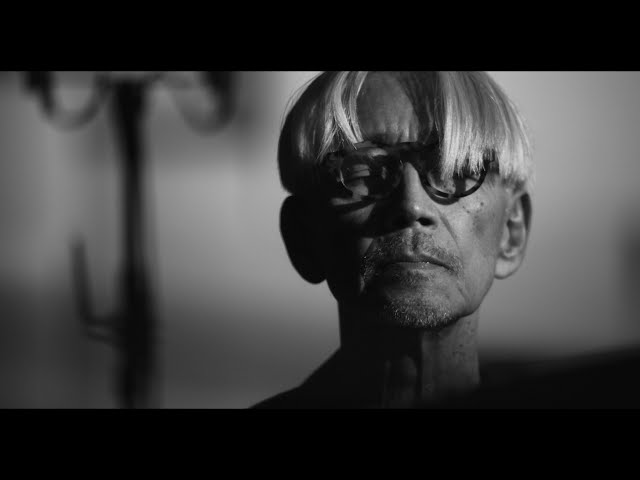
Ryuichi Sakamoto is one of Japan’s greatest composers.
After his nationwide activities with YMO, he went on to create numerous masterpieces as a solo artist.
If we had to name his most iconic piece, wouldn’t it be “Merry Christmas Mr.
Lawrence”? In Japan, it’s known as “Senjō no Merry Christmas.” As it is the theme for a war film, the piece features a serious and heartrending melody throughout.
Sakamoto is currently exploring a variety of genres, focusing on ambient and minimal music.
Those works are also exceptional, so be sure to check them out.

Cherry Blossom ChapterTenmon

Composed by the Japanese composer Tenmon, this piece is a song whose heartrendingly beautiful melody resonates deeply.
It was created as part of the soundtrack for director Makoto Shinkai’s animated film “5 Centimeters per Second.” The work delicately depicts the tenderness of first love and the emotional changes that come with the passage of time.
Like cherry blossom petals scattering in the wind, it paints in music a fleeting yet beautiful moment of youth.
This piece invites deep reflection on human connections and how relationships evolve over time.
It is recommended for fans of anime and coming-of-age dramas, and for anyone seeking a poignant, soul-stirring melody.
Released in 2007, it continues to capture the hearts of many.
Nocturne No. 20 in C-sharp minor (Posthumous)Furederikku Shopan

Not only a renowned pianist but also a composer who produced many solo piano works and is known as the “Poet of the Piano,” the Polish-born Frédéric Chopin is a towering figure.
While many of Chopin’s pieces are often associated with poignantly beautiful melodies, his Nocturne No.
20 is a quintessential example.
Although labeled “posthumous,” it does not mean it was his final work, but rather that it was published after his death.
The Nocturne is said to have been composed around 1830, when Chopin was about 20 years old, as a piece for his elder sister to practice the Piano Concerto No.
2.
Film lovers may also remember it from the acclaimed movie The Pianist, where it is featured in the score.
It is also said that Chopin wrote this piece during a period when he harbored unrequited feelings for the soprano Konstancja Gładkowska.
Within its development—like waves that ebb and flow—you can sense both the sweet, passionate melody of a heart in love and the plaintive melancholy of feelings that never came to fruition, a sentiment likely tied to the young Chopin’s circumstances.
Pavane for a Dead PrincessMōrisu Raveru
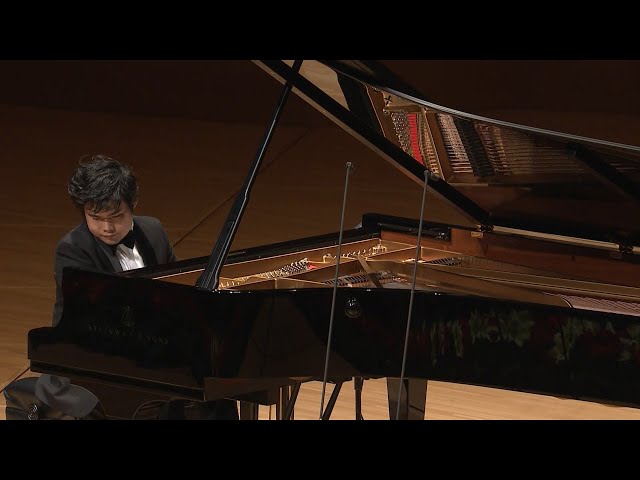
Maurice Ravel, the composer of Pavane for a Dead Princess, is said to have struggled with memory impairment later in life.
There’s an anecdote that in his final years, upon hearing this piece, he remarked something along the lines of, “It’s a very beautiful piece—who wrote it?” The fact that the composer himself, having forgotten he wrote it, listened to it and called it beautiful, speaks volumes about the piece’s poignant beauty, doesn’t it?
Composed in 1899 by the renowned French composer Ravel, Pavane for a Dead Princess was originally written for piano, and Ravel himself later created an orchestral version.
Although it attracted great attention and became popular from the time it was unveiled, it reportedly did not receive glowing evaluations from Ravel’s peers—or from Ravel himself.
Of course, as mentioned above, Ravel’s candid assessment after losing his memory arguably conveys the essence of the work.
It’s not merely beautiful; its heart-wrenching, wistful melody makes any pianist want to take it on.
But be warned: it’s a far more challenging work to play than its listening impression might suggest!