

For Advanced Players: Showstopping Classics to Play at a Piano Recital


A piano recital is a perfect opportunity to showcase the results of your accumulated practice to a wide range of people, including family and friends.
Advanced piano pieces that require high-level technique are sure to make a strong impression at a recital.
In this article, we introduce standout works that are perfect for performers with a fair amount of experience to present at a recital.
Some pieces are highly challenging yet don’t necessarily convey their difficulty to listeners.
However, the selections we introduce here are all captivating works that will draw the audience in.
Choose pieces that are a step above your usual practice repertoire, trust in the effort you’ve put in so far, and perform with confidence!
- [For Advanced Players] A Curated Selection of Classical Masterpieces to Tackle at Piano Recitals
- [Advanced] Super cool if you can play it! Selection of famous piano pieces
- [Piano Recital] Perfect Pieces for Middle Schoolers! A Curated Selection of Impressive, Audience-Pleasing Works
- [For Adults] Recommended for Piano Recitals! A Curated Selection of Impressively Sounding Masterpieces
- [Intermediate Level] A curated selection of piano masterpieces featuring strikingly brilliant melodies!
- [For Intermediate Players] Challenge Yourself! Recommended Masterpieces That Shine at Piano Recitals
- Piano Masterpieces: Surprisingly Easy Despite Sounding Difficult!? A Curated Selection Perfect for Recitals
- [Intermediate Level] Cool Piano Pieces You Can Play [Great for Recitals Too]
- [Piano Recital] Recommended for Middle Schoolers! A Comprehensive Introduction to Classical Masterpieces
- Masterpieces of classical piano that are too beautiful for words. A gathering of delicate tones that cleanse the soul.
- [Advanced] Piano Duet Works | Exquisite Masterpieces to Savor the Rich, Weighty Sonorities of Four Hands
- It’s so cool if you can play these on the piano! A selection of irresistibly charming masterpieces.
- [Beginner-Friendly] Rachmaninoff’s Piano Pieces | A Curated Selection of Accessible Works!
For Advanced Players: Emphasis on Listening Appeal! Classical Music You’ll Want to Play at a Piano Recital (21–30)
DedicationSchumann=Liszt

This Schumann-Liszt “Widmung” is Franz Liszt’s solo piano arrangement of the song cycle Myrthen, Op.
25, which Robert Schumann presented to his wife Clara on the eve of their wedding.
Among arranged classical works, there are many pieces that add such distinctive alterations that the originals are hardly recognizable.
In this piece, however, Schumann’s song is faithfully recreated while incorporating Liszt’s characteristically pianistic expression, resulting in an exceptionally refined work.
If you listen to the original song first and then play it, your performance image will become much clearer!

12 Etudes, Op. 8, No. 12 “Pathétique”Aleksandr Skryabin

Alexander Scriabin’s masterpiece Etude in D-sharp minor, Op.
8, No.
12 (“Pathetic”).
It’s known as one of the more difficult pieces among Scriabin’s works, but in reality it’s only about as hard as—if not easier than—Chopin’s etudes.
That said, it features a great many leaps, so memorization may be essential for some players.
However, since it doesn’t involve intricate arpeggios, it’s also approachable for those who aren’t fully confident in their finger agility.
It’s a work that makes a strong impression in performance, so be sure to check it out.

[For Advanced Players] Sound-Impact Focus! Classical Pieces to Play at a Piano Recital (31–40)
Scherzo No. 1 in B minor, Op. 20Frederic Chopin

Frederic Chopin is known for having an unexpectedly large number of rather intricate pieces.
Among them, the Scherzo No.
1 in B minor, Op.
20, is one of the particularly challenging works.
Chopin had relatively small hands and excelled at fast playing, and this first Scherzo strongly reflects those characteristics in its structure.
With abundant right-hand leaps and rapid passages, its difficulty level can be considered advanced.
That said, it’s a highly impressive piece to listen to, so do give it a try.
Scherzo No. 2 in B-flat minor, Op. 31Frederic Chopin

This work, known as one of the signature pieces by Frédéric Chopin, a representative composer of the Romantic era, is notable for its passionate and dramatic melodies that fully showcase Chopin’s musicality.
Completed in 1837, the piece is said to be set against the backdrop of Chopin’s personal struggles, with his experience of heartbreak believed to be reflected in the music.
Its appeal lies in the contrast between meditative melodies and impassioned passages, allowing listeners to savor Chopin’s rich emotional expression.
It’s a perfect piece to perform at a piano recital, but because it requires advanced technique, be sure to practice thoroughly before taking it on.
Fantasy Pieces: Prelude in C-sharp minor, Op. 3 No. 2 “The Bell”Sergei Rachmaninov
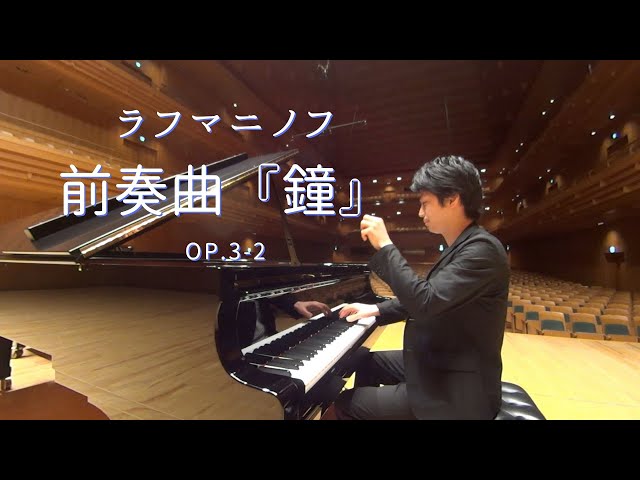
Sergei Rachmaninoff, a Russian composer who was hugely active in the 1890s.
His Prelude in C-sharp minor, Op.
3 No.
2 from the Morceaux de fantaisie, known as “The Bells,” is among his most famous works.
Its difficulty is on the higher end of the intermediate level, though for some players it can rise to an advanced level.
Rachmaninoff had very large hands, and this piece requires the ability to play tenths comfortably.
Conveying the sound of bells on the piano is also challenging, and with its abundance of octaves, the piece is difficult overall.
For those well-versed in piano, however, it makes for a highly impressive listen.
Piano Sonata No. 7 in B-flat major, Op. 83, 1st movementSergei Prokofiev

Sergei Prokofiev’s Piano Sonata No.
7 in B-flat major, Op.
83, is renowned as a formidable work.
Also known as one of the “War Sonatas,” it conveys the chaotic worldview of World War II.
While the piece is highly effective in performance, it demands exceptional technical skill from the pianist.
Even keeping the rhythm poses a significant challenge—be sure to check out this notoriously difficult masterpiece.
Piano Sonata No. 21, Op. 53 “Waldstein”Ludwig van Beethoven

Ludwig van Beethoven’s masterpiece, Piano Sonata No.
21, Op.
53 “Waldstein.” Among Beethoven’s works, this piece is especially famous for its difficulty.
In terms of level, it’s perhaps just one step below the very highest.
To put it simply, it feels easier than La Campanella.
While no single passage is impossibly difficult on its own, the piece is challenging to perform as a whole.
It tends to devolve into merely playing a string of eighth notes, so be sure to deepen your understanding of the music and focus on expressive interpretation.