



A piano recital is a perfect opportunity to showcase the results of your accumulated practice to a wide range of people, including family and friends.
Advanced piano pieces that require high-level technique are sure to make a strong impression at a recital.
In this article, we introduce standout works that are perfect for performers with a fair amount of experience to present at a recital.
Some pieces are highly challenging yet don’t necessarily convey their difficulty to listeners.
However, the selections we introduce here are all captivating works that will draw the audience in.
Choose pieces that are a step above your usual practice repertoire, trust in the effort you’ve put in so far, and perform with confidence!
- [For Advanced Players] A Curated Selection of Classical Masterpieces to Tackle at Piano Recitals
- [Advanced] Super cool if you can play it! Selection of famous piano pieces
- [Piano Recital] Perfect Pieces for Middle Schoolers! A Curated Selection of Impressive, Audience-Pleasing Works
- [For Adults] Recommended for Piano Recitals! A Curated Selection of Impressively Sounding Masterpieces
- [Intermediate Level] A curated selection of piano masterpieces featuring strikingly brilliant melodies!
- [For Intermediate Players] Challenge Yourself! Recommended Masterpieces That Shine at Piano Recitals
- Piano Masterpieces: Surprisingly Easy Despite Sounding Difficult!? A Curated Selection Perfect for Recitals
- [Intermediate Level] Cool Piano Pieces You Can Play [Great for Recitals Too]
- [Piano Recital] Recommended for Middle Schoolers! A Comprehensive Introduction to Classical Masterpieces
- Masterpieces of classical piano that are too beautiful for words. A gathering of delicate tones that cleanse the soul.
- [Advanced] Piano Duet Works | Exquisite Masterpieces to Savor the Rich, Weighty Sonorities of Four Hands
- It’s so cool if you can play these on the piano! A selection of irresistibly charming masterpieces.
- [Beginner-Friendly] Rachmaninoff’s Piano Pieces | A Curated Selection of Accessible Works!
[Advanced] Audience-pleasing selections! Classical pieces to play at a piano recital (1–10)
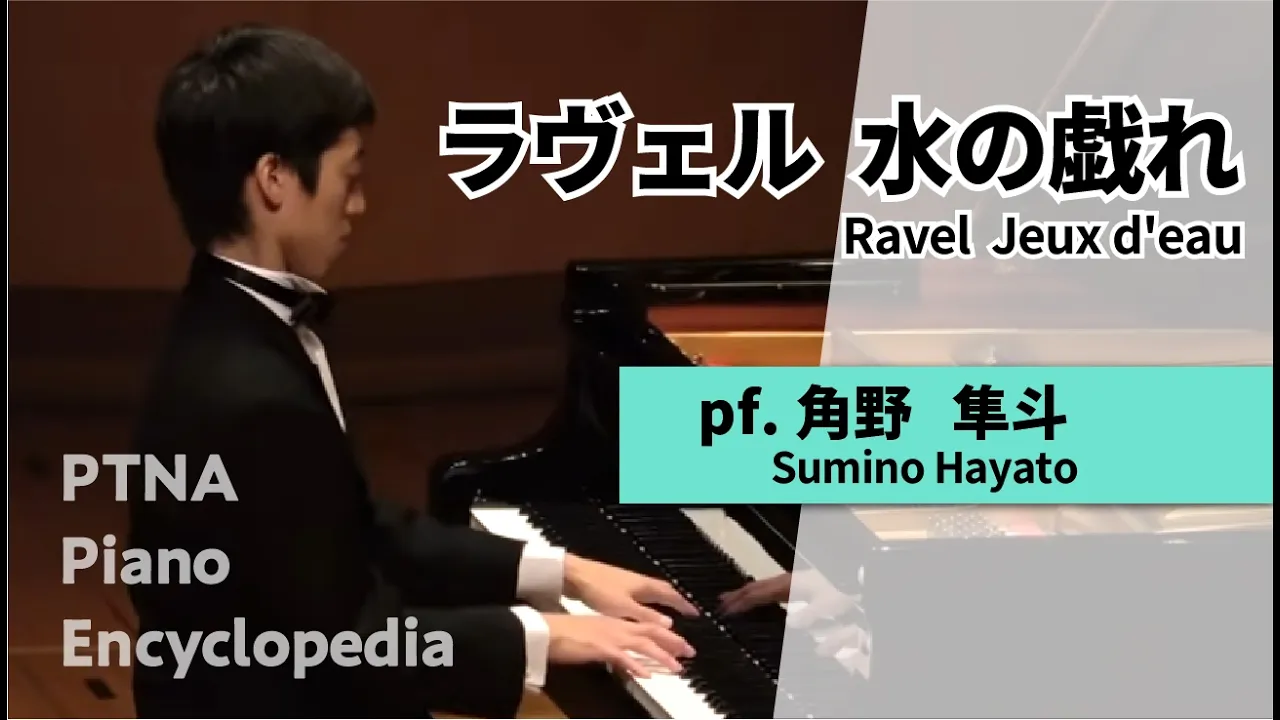
Play of WaterMaurice Ravel

Maurice Ravel, a great composer who created numerous masterpieces with his original musicality.
Among his works, Jeux d’eau (Fountains/Playing Water) is one of his most famous pieces.
Beginning with eighth notes in the left hand and sixteenth notes in the right, this work—despite its restrained structure—demands considerable expressiveness to produce a sound with real core.
There are many deceptively tricky spots, such as at measure 4 and in passages where the same figure jumps up two octaves.
All the more reason, though, that it makes a solid impression when performed well.

Grandes études de Paganini, S.141 No. 3 “La Campanella”Franz Liszt

One of the most difficult piano pieces: Franz Liszt’s Grandes études de Paganini, S.141 No.
3 “La Campanella.” If we include player-piano or automated performances, there are pieces that are even harder, but among works meant for human performers, it boasts a difficulty on par with, if not exceeding, “Feux follets” and “Mazeppa.” It’s a piece filled with rapid fingerwork and wide leaps, making it, quite simply, extremely challenging to play.
In terms of audience appeal, it’s among the very best of all piano works, so if you’re confident in your skills, by all means give it a try.
Two Rhapsodies, Op. 79 No. 1Johannes Brahms

Johannes Brahms’s masterpiece, Rhapsody No.
1 from Two Rhapsodies, Op.
79.
It’s a piece you often hear at piano recitals featuring junior high and high school students.
Overall, the difficulty is advanced, but somewhat unexpectedly, there are few finger crossings and the hand positions are stable, so it may feel relatively approachable to play.
That’s certainly true; however, as the piece develops, you’ll find markings like crescendo and decrescendo on a single note, and the performance tends to demand solid foundational piano technique.
Toccata from Le Tombeau de CouperinMaurice Ravel

This piece, which serves as the finale of a six-movement suite composed in memory of friends who died in World War I, is distinguished by its fast tempo and virtuosic passages—a gem that adds a modern interpretation to a form developed since the Baroque era.
Premiered at the Salle Gaveau in Paris in April 1919, it has continued to captivate performers and audiences alike ever since.
In addition to its brilliant and powerful sonorities, it masterfully fuses Maurice Ravel’s distinctive harmonies and rhythmic sense, overwhelming listeners with its intensity.
Although it demands advanced technical skill, it is a superb work that can enthrall a live audience, making it a perfect choice for those who wish to perform at a piano recital.
Piano Sonata No. 1, Op. 2 No. 1, Fourth MovementLudwig van Beethoven

This piece captivates with its powerful and passionate performance.
Written in cut time (2/2) at a prestissimo (very fast) tempo, its driving development—woven from triplet arpeggios and chordal pulsations—grabs the listener’s heart.
The contrast between piano and forte dynamics is used effectively, and the secondary theme, marked by sequential descending octaves, is striking and full of allure that draws in the entire hall.
Ludwig van Beethoven published this work in 1796 with Artaria in Vienna and dedicated it to his teacher, Franz Joseph Haydn.
Highly recommended as a concert repertoire piece for performers confident in their technique, it is sure to captivate any audience.
RailwayCharles Valentin Alkan

Composed in 1844 by Charles-Valentin Alkan, this piano solo piece takes the railway—an icon of the Industrial Revolution—as its motif.
The steady rhythm pulsed by the left hand intertwines vividly with the brilliant right-hand melodic line, superbly evoking the powerful rumble of a steam locomotive and the regular turning of its wheels.
While the piece is light and rhythmic, it also weaves in the rich expressiveness characteristic of Romantic music, resulting in an original work that captivates listeners.
It is recommended for those who want to deliver a striking performance at a recital or take on a technically demanding piece.
A beloved classic, it is often featured on radio programs and in railway-related documentaries.
Concert Etude “Knight,” Op. 17Charles Valentin Alkan

This piece unfolds a magnificent world in B-flat major and is known as a masterpiece by Charles-Valentin Alkan.
Its dazzling techniques—rapid passages, repeated chord strikes, and octave playing with both hands—evoke the image of a medieval knight galloping gallantly on horseback.
Published in 1844, this six-minute work combines power and elegance, captivating the entire venue with overwhelming presence.
Although it demands exceptionally advanced technique, it fully showcases the piano’s allure, making it perfect for performers aiming to make a strong impression at a recital.
It is a piece I highly recommend to pianists with assured technique and compelling expressive power who wish to enthrall their audience.