
[Classical] Exquisite Tones: Masterpieces and Popular Pieces for Pipe Organ


Among the many musical instruments, the pipe organ is known as the “king of instruments,” with a history so ancient that its origins are said to trace back to the panpipes of Greek mythology.
Even today, it stands with a commanding presence in churches and concert halls.
The resonance of the pipe organ’s tone is both sacred and majestic.
It features manuals for the hands and a pedalboard for the feet, and by combining a variety of stops, it can produce a powerful, orchestra-like sound.
This time, we present a selection of classical masterpieces that put the pipe organ center stage!
- J.S. Bach | Introducing Famous and Representative Works
- [Masterpiece Classics] A special showcase of gem-like masterpieces so beautiful they’ll move you to tears
- A catchy tune that sounds familiar
- [Subwoofer Required] Popular tracks with deep, heavy bass — recommended songs
- Songs that hype you up just by listening—recommended tracks from timeless classics to the latest releases
- [Baroque Music] A Curated Selection of Timeless Masterpieces and Famous Works
- A moving masterpiece that sings of the desire for forever and eternity
- J.S. Bach Popular Songs Ranking [2026]
- Today's Piano: Masterpieces and Popular Pieces Woven with Delicate Tones
- Masterpieces for Harp: A curated selection of distinguished works featuring noble and delicate tones
- Baroque Music on the Piano: A Curated Selection of Masterpieces Perfect for Recitals and Concerts
- A spine-chilling scary song: masterful tracks that evoke fear and eerie recommended songs
- [Songs of Bereavement] Songs about losing a loved one. Tracks to listen to while thinking of someone dear
[Classical] Exquisite Tones: Masterpieces and Popular Pieces for Pipe Organ (1–10)
Prelude and Fugue on the Name B-A-C-HFranz Liszt

A piece that radiates the commanding presence of the pipe organ.
Its solemn resonance and sacred atmosphere leave a strong impression.
Composed by Franz Liszt between 1855 and 1856, this work pays homage to Bach by using the notes B-A-C-H as its main theme.
It exploits a wide range from low to high registers and demands virtuosic performance with dense chords and arpeggios.
There are both organ and piano versions, each deeply satisfying to hear.
Why not surrender yourself to the overwhelming waves of sound reverberating through a church or concert hall? It’s a piece that lets you fully savor the allure of classical music.
Prelude and Fugue in C minor, Op. 37 No. 1: FugueFelix Mendelssohn

Mendelssohn, the great composer of the German Romantic era.
Though his life was short—only 38 years—he left behind a large body of work, having displayed remarkable musical talent from childhood.
He was active not only as a composer, but also as a conductor, pianist, and organist.
It is well known that by staging J.S.
Bach’s St.
Matthew Passion, he brought Bach—who had largely been forgotten—back into the public eye.
This piece exhibits a Romantic elegance within a classically strict form that reflects his respect for Bach.

Mass for the ParishFrançois Couperin

A French composer of the 17th century, he stood at the pinnacle of a family of musicians and is known as “Couperin le Grand.” Over the course of his life as a musician at Versailles, he left masterpieces in chamber ensembles that sought to fuse the French and Italian styles, in small-scale sacred works, and in keyboard music emblematic of the Rococo style.
The Mass for the Parishes was written for the Church of Saint-Gervais, where he served as organist from 1685 to 1723.
It is known as a representative work of the 17th-century French organ mass, notable for its colorful and subtle tonal palette.
[Classical] Exquisite Tones: Masterpieces and Popular Works for Pipe Organ (11–20)
Organ Sonata in B-flat major, Op. 65 No. 4, MWV W59, IV. Allegro maestoso e vivaceFelix Mendelssohn

The final movement of Mendelssohn’s organ sonata composed in 1845.
While adopting Baroque forms, it fuses the Romantic era’s characteristically expressive harmonies with an elegant architectural design to create a majestic work.
The brilliant finale, developed around a fugue, is both solemn and full of vitality, leaving a powerful impression on the listener.
This piece was born out of an organ performance tour in England.
From 1837 onward, Mendelssohn helped popularize organ music in England, and that experience led to the creation of this work.
It’s a highly recommended piece not only for lovers of organ music but also for anyone interested in classical music.
Prelude and Fugue in E-flat major, BWV 552J.S.Bach

A majestic masterpiece left by Johann Sebastian Bach.
Known by the epithet “St.
Anne” Fugue, symbolizing the Holy Trinity, this work is a superb fusion of his faith and musical genius.
Following the grandeur of the Prelude, the fugue woven from three subjects seems to express the harmony of the Father, the Son, and the Holy Spirit.
Included in the Clavier-Übung III, published in 1739, it has since influenced many musicians.
Highly recommended for those who wish to savor the rich timbre and structural beauty of the pipe organ.
When heard in a church or concert hall, its sacred atmosphere envelops you and cleanses the soul.
Prelude and Fugue in E minor, BWV 548J.S.Bach
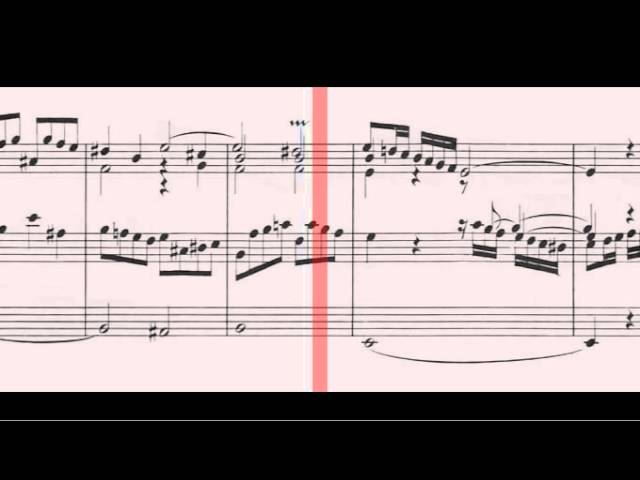
This piece is said to have been written by Bach between 1727 and 1731, and an autograph manuscript is held at the Berlin State Library.
The prelude adheres to traditional compositional practice and has a brilliant character.
The fugue is in three parts: Parts I and III are four-voice fugues, while Part II is constructed like a toccata that showcases virtuosic expression.
Because the subject of the four-voice fugue gradually opens out in interval, the piece is affectionately known as “The Wedge.”

Prelude, Fugue and Variation, Op. 18César Franck

It is a masterpiece distinguished by the resplendent, majestic sound of the pipe organ.
Published by César Franck in 1862, the work comprises three movements—Prelude, Fugue, and Variation—and is notable for its graceful, wistful melodies.
In particular, the gentle oboe-stop melody in the Prelude leaves an indelible impression once heard.
It is said to have been inspired by the Cavaillé-Coll organ at the Basilica of Sainte-Clotilde.
As a representative work of French Romantic music, it continues to be cherished by many organists today.