
[Classical] Exquisite Tones: Masterpieces and Popular Pieces for Pipe Organ


Among the many musical instruments, the pipe organ is known as the “king of instruments,” with a history so ancient that its origins are said to trace back to the panpipes of Greek mythology.
Even today, it stands with a commanding presence in churches and concert halls.
The resonance of the pipe organ’s tone is both sacred and majestic.
It features manuals for the hands and a pedalboard for the feet, and by combining a variety of stops, it can produce a powerful, orchestra-like sound.
This time, we present a selection of classical masterpieces that put the pipe organ center stage!
- J.S. Bach | Introducing Famous and Representative Works
- [Masterpiece Classics] A special showcase of gem-like masterpieces so beautiful they’ll move you to tears
- A catchy tune that sounds familiar
- [Subwoofer Required] Popular tracks with deep, heavy bass — recommended songs
- Songs that hype you up just by listening—recommended tracks from timeless classics to the latest releases
- [Baroque Music] A Curated Selection of Timeless Masterpieces and Famous Works
- A moving masterpiece that sings of the desire for forever and eternity
- J.S. Bach Popular Songs Ranking [2026]
- Today's Piano: Masterpieces and Popular Pieces Woven with Delicate Tones
- Masterpieces for Harp: A curated selection of distinguished works featuring noble and delicate tones
- Baroque Music on the Piano: A Curated Selection of Masterpieces Perfect for Recitals and Concerts
- A spine-chilling scary song: masterful tracks that evoke fear and eerie recommended songs
- [Songs of Bereavement] Songs about losing a loved one. Tracks to listen to while thinking of someone dear
[Classical] Exquisite Tones: Masterpieces and Popular Works for Pipe Organ (11–20)
Fantasia for Mechanical Organ, K. 608Wolfgang Amadeus Mozart

It may come as a surprise to think of Mozart having written organ music.
This piece is a fantasia for a mechanical organ—not played by a performer, but composed for a machine that automatically plays pre-programmed music, like a music box, powered by a spring or hand crank.
It is said to have been commissioned by an aristocratic art collector.
That in itself is quite fascinating.
While the music bears Mozart’s unmistakable touch, it is crafted to suit the organ, showcasing his remarkable talent.

Organ Symphony No. 1 in D minor, Movement VI: FinaleLouis Vierne

Louis Vierne was a French organist and composer.
Despite being visually impaired and nearly blind, he was renowned for improvisations that sounded like fully realized compositions, as well as for a particularly refined and meticulously crafted compositional style that respected classical forms.
Over his lifetime he composed six organ symphonies; Symphony No.
1, a six-movement masterpiece influenced by his teacher Widor, shows varied colors across its movements while maintaining a unified overall design.
The final movement, the Finale, is his most famous piece.

Trio Sonata No. 5 in C major, BWV 529J.S.Bach

A piece known as one of Johann Sebastian Bach’s signature works.
Though said to have been written with educational purposes in mind, its musicality goes far beyond a mere study piece.
Structured in three movements, the Allegro of the first movement is particularly striking for its lively, bright character.
The technique that creates the richness of sound as if there were three performers at a single organ truly showcases Bach’s genius.
Composed around 1727–1730, it is a work that fully conveys the appeal of Baroque music.
Prelude and Fugue in B major, Op. 7 No. 1Marcel Dupré

The majestic tones of the pipe organ resound in the celebrated piece “Prelude and Fugue in B Major, Op.
7 No.
1.” Composed in 1914 by Marcel Dupré, a leading French figure of the modern era, this work features a brilliant prelude and a fugue woven with intricate counterpoint.
While inheriting the tradition of Bach, it incorporates twentieth-century harmonies to create an innovative composition.
Since its publication in 1920, it has been regarded as “difficult to master” due to its technical demands, yet it has now become an essential piece for organists.
Highly recommended for those who want to savor the essence of organ music in churches or in concert halls with a solemn atmosphere.
Toccata, Adagio and Fugue in C major, BWV 564J.S.Bach

A masterpiece crafted by the Baroque master Johann Sebastian Bach.
Its magnificent structure and performance techniques brilliantly showcase the organ’s full allure.
With the Toccata’s brilliance, the Adagio’s poignancy, and the Fugue’s lightness, each of the three movements presents a distinct character.
Composed around 1708 to 1714, this work overwhelms audiences in a performance lasting approximately 16 minutes and 30 seconds.
In the 20th century, it was arranged for piano and orchestra by Busoni and Stokowski, gaining broader performance opportunities.
Highly recommended for those who wish to savor the essence of organ music or delve into the depth of Baroque music.
Organ Sonata in A major, Op. 91 No. 8: II. Adagio con affettoAlexandre Guilmant

Alexandre Guilmant was a French organist and composer active in the 19th century.
He pursued the path of a virtuoso performer, known for transcendental technique in the tradition of Liszt, touring across Europe and dedicating himself to expanding and popularizing the organ repertoire.
Most of his surviving works are for organ, characterized by rich harmonic language and solid, conservative forms.
The Organ Sonata No.
8 consists of five movements, and this second movement unfolds its melody in a slow tempo, in a fugue-like manner.
[Classical] Exquisite Tones: Masterpieces and Popular Pieces for Pipe Organ (21–30)
Symphony No. 3 “Organ”Saint-Saens
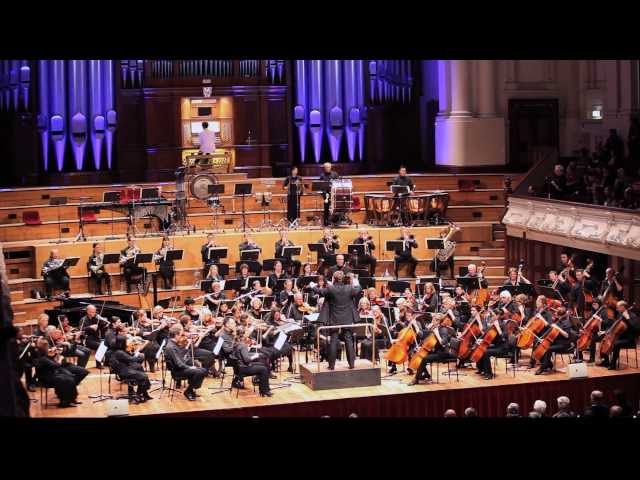
Beginning with the majestic resonance of the organ, the Symphony No.
3 “Organ” is a symphony composed in 1886 by the French composer Charles-Camille Saint-Saëns.
This section corresponds to the second part of the symphony’s second movement and is commonly known by the affectionate nickname “Organ.” Following the imposing organ chords, the beautiful orchestral instruments take up the theme in a canon-like manner.
This work, representative of Saint-Saëns—who was himself an outstanding organist—remains widely beloved today for its grand and stately character, and has been used in films and other media.
