
[Classical] Exquisite Tones: Masterpieces and Popular Pieces for Pipe Organ


Among the many musical instruments, the pipe organ is known as the “king of instruments,” with a history so ancient that its origins are said to trace back to the panpipes of Greek mythology.
Even today, it stands with a commanding presence in churches and concert halls.
The resonance of the pipe organ’s tone is both sacred and majestic.
It features manuals for the hands and a pedalboard for the feet, and by combining a variety of stops, it can produce a powerful, orchestra-like sound.
This time, we present a selection of classical masterpieces that put the pipe organ center stage!
- J.S. Bach | Introducing Famous and Representative Works
- [Masterpiece Classics] A special showcase of gem-like masterpieces so beautiful they’ll move you to tears
- A catchy tune that sounds familiar
- [Subwoofer Required] Popular tracks with deep, heavy bass — recommended songs
- Songs that hype you up just by listening—recommended tracks from timeless classics to the latest releases
- [Baroque Music] A Curated Selection of Timeless Masterpieces and Famous Works
- A moving masterpiece that sings of the desire for forever and eternity
- J.S. Bach Popular Songs Ranking [2026]
- Today's Piano: Masterpieces and Popular Pieces Woven with Delicate Tones
- Masterpieces for Harp: A curated selection of distinguished works featuring noble and delicate tones
- Baroque Music on the Piano: A Curated Selection of Masterpieces Perfect for Recitals and Concerts
- A spine-chilling scary song: masterful tracks that evoke fear and eerie recommended songs
- [Songs of Bereavement] Songs about losing a loved one. Tracks to listen to while thinking of someone dear
[Classical] Exquisite Tones: Masterpieces and Popular Pieces for Pipe Organ (21–30)
Organ Suite No. 2: LamentoDenis Bédard

Denis Bédard is a Canadian-born composer and organist.
He writes not only for the organ—a classical instrument traditionally used to convey the word of God—but also for the saxophone, a modern invention, making him a composer who moves freely between two instruments at opposite ends of the spectrum.
His music is approachable and nostalgic yet mysterious; at times it evokes a sacred atmosphere, while at others it offers witty melodies not found in classical music.
This piece lets you savor the unfamiliar sonorities unique to contemporary works.

Fiat LuxKeith Wright

After serving as an organist at various churches, Keith Wright was appointed Director of Music at St.
Olave’s Church and at St.
Peter’s School in New York in 2011.
While working as an organist and conductor, he is also devoted to music education at the university level.
The title of the piece, Fiat Lux, is Latin for “Let there be light,” and, true to its name, it features a bright character that evokes rays of light filtering down from the heavens like sunbeams through leaves.
[Classical] Exquisite tones: Masterpieces and popular pieces for pipe organ (31–40)
Six piéces d’orgue: VI. Grand choeur dialoguéEugène Gigout
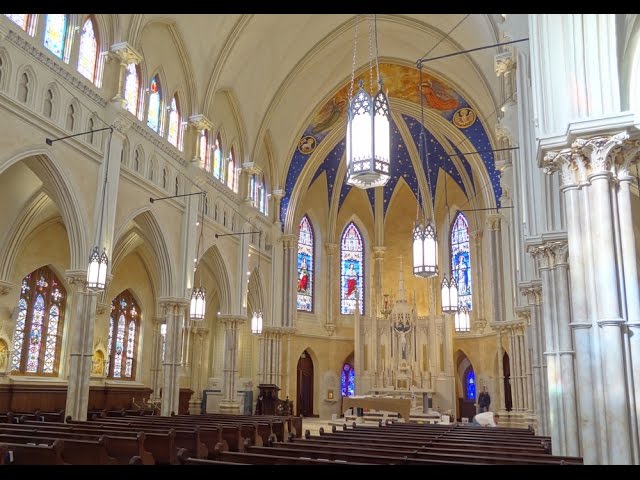
A French organist and composer active from the 19th to the 20th century, he was a pupil of Saint-Saëns, famous for works such as Danse macabre and The Swan.
He served as organist at the Church of the Augustins in Paris for an extraordinary 62 years, and also left many compositions.
The piece is characterized by an opening that begins with a brilliant, fanfare-like flourish, the organ’s solemn and weighty sonority, and extremely accessible melodies.
It is a work that makes excellent use of the ear-pleasing tunes and the organ’s rich, resonant chords, creating a divine atmosphere.
Air on the G StringJ.S.Bach

A Baroque masterpiece woven from gentle melodies and graceful harmonies.
Composed by J.S.
Bach in the 1720s, this piece grew out of secular music that was performed in churches and palaces.
The delicate resonance of the strings and the deeply reverberant bass blend beautifully, guiding listeners into a state of calm.
In the 19th century, it was arranged by the German violinist August Wilhelmj, which helped it spread in a more accessible form.
The work has also gained renewed attention after being featured in the TBS drama “G-senjou no Anata to Watashi” (You and I on the G String).
It’s a recommended track when you want to focus in a tranquil setting or soothe the mind.
Symphony No. 3 in C Minor, Op. 78, R. 176 “Organ”: IIc. MaestosoCamille Saint-Saëns

A French composer, pianist, and organist active from the 19th to the 20th century.
Like Mozart, he was regarded as a prodigy, said to have played the piano at age two and composed at age three.
From boyhood he was interested in many fields, and is said to have reached a first-rate level in poetry, astronomy, mathematics, and painting.
In this piece, the Gregorian chant Dies irae (“Day of Wrath”) is used as a cyclic theme unifying the entire work.
It is a popular composition known for its majestic sonorities created by pipe organ and full orchestra.
L’Ascension: III. Transports de joie d’une ame devant la gloire du Christ qui est la sienneOlivier Messiaen

Messiaen, a master of contemporary music.
He strove to give Catholicism a modern form of expression, developing his own techniques and systems, and was honored with the inaugural Kyoto Prize for his achievements.
This piece is among his most famous works and bears the subtitle “Four Symphonic Meditations.” It consists of four movements; the third movement, “Alleluia on the Trumpet and Cymbal,” depicts the trumpet and cymbal resounding at a fast tempo.
The fourth movement, “The Prayer of Christ to Return to the Father,” by contrast, is striking for its profoundly expressive, solemn melody at an extremely slow tempo.
Toccata [Songs of Praise theme]Stephen Cleobury
![Toccata [Songs of Praise theme]Stephen Cleobury](https://i.ytimg.com/vi/NoVzfHIAV3k/sddefault.jpg)
Stephen Cleobury was a British organist and music director.
For 37 years, he served as Director of Music for the Choir of King’s College, Cambridge—one of the most famous choirs in the world—and his achievements are celebrated across the globe.
The term “toccata,” which is also the title of the piece, refers to an improvisatory, highly virtuosic keyboard work featuring rapid passages and intricate figurations.
While it is a traditional form dating back to Bach’s time, this piece does not remain bound by that tradition; instead, it is a highly approachable work that almost feels like listening to pop music.