

[Rain Songs] Songs to listen to on rainy days. A special feature on Japanese rain-themed songs [2026]


Going out or commuting on a rainy day inevitably makes your steps feel heavy, doesn’t it? That’s exactly when you should try changing the scenery with the power of music.
In this article, we’ll introduce plenty of Japanese “rain songs” perfect for rainy days.
From tender ballads that gently stay close to your heart to bright J-pop tracks that blow away the gloomy skies, we’ve picked a wide range—from timeless classics everyone knows to the latest buzzworthy hits.
Enjoy them alongside the sound of raindrops on the window, and rainy days might just become something to look forward to! Find the one song that’s perfect for you.
- Songs to Listen to in June: Carefully Selected Rain Songs and Father’s Day Classics [2026]
- Songs to Sing on Rainy Days! Introducing Beloved Children’s Songs About Rain That Transcend Generations
- A rainy love song. A love song perfect for a rainy day.
- [Rainy Season Songs] Masterpieces and Rain Songs That Evoke the Rainy Season, Interpreted from Their Lyrics [2026]
- A rainy heartbreak song. A collection of bittersweet love songs set against the backdrop of rain.
- [2026] Songs I want to sing at karaoke in June: classic tracks about rain and more
- [Rain Songs] Japanese songs with “rain” in the lyrics. From the latest J-pop to nostalgic hits [2026]
- A soothing song. A heart-calming tune you’ll want to listen to when you’re tired or feeling down.
- Masterpieces to listen to on a cloudy day
- [Rainy Season] A Collection of Vocaloid Songs to Listen to in June [Early Summer]
- [2026] Cherry Blossom Songs to Hear in Spring: A roundup of classic J‑Pop hits about sakura
- Ranking of Tear-Jerking Japanese Songs [2026]
- Popular Tearjerker Song Rankings [2026]
[Rain Songs] Songs to listen to on rainy days. A special feature on Japanese rain songs [2026] (111–120)
rose flowerkururi
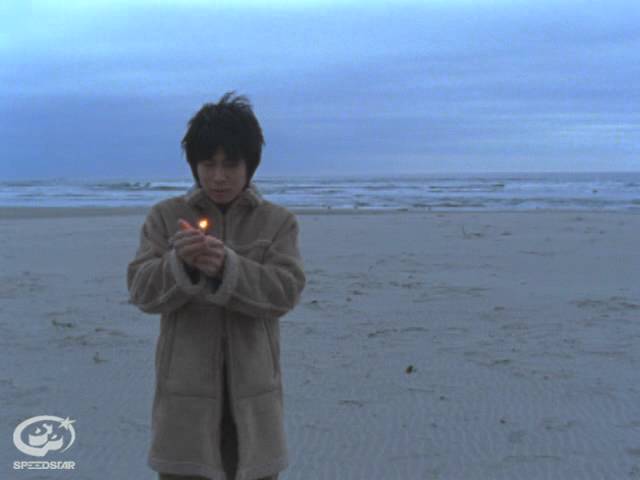
Starting with the word “amefuri” (rainfall), this is Bara no Hana, a song by Quruli, a band from Kyoto.
It was released as their seventh single and was used as an insert song in the drama Orange Days.
On a rainy morning, when you’re feeling a bit languid and can’t get your energy up, its fitting melody and sound bring a sense of comfort.
Also noteworthy is the chorus work by Miki Furukawa, the bass vocalist of the rock band Supercar.
It’s the kind of piece you could listen to all day.

[Rain Songs] Songs to Listen to on a Rainy Day. Special Feature on Japanese Rain Songs [2026] (121–130)
evening showerSuga Shikao

Included on Shikao Suga’s third original album, “Sweet,” released on September 8, 1999.
It was chosen as the theme song for the Toei-distributed film “Boogiepop Doesn’t Laugh.” It’s a slow-tempo, wistful track that makes you want to sing alone in the rain while playing the guitar.
1 hourHanbaato Hanbaato

Rain always accompanies lovers’ partings, doesn’t it? Tears and rain are inseparable, after all.
With vocalist Yuuho Sano’s clear, transparent voice, the scenes come to life before your eyes, and the lyrics sink even deeper into your heart…
Humbert Humbert is a male-female duo, and in fact, they’re a married couple.
March of the RainFujifaburikku

A track included on Fujifabric’s second album, FAB FOX, released in 2005.
It opens with a mechanical, minimalist keyboard accompaniment, followed by the distinctive vocals of Masahiko Shimura.
Although the song exudes a very eerie atmosphere throughout, many Fujifabric fans find themselves wanting to listen to it on gloomy days or when they’re feeling down.
The lyrics, written by Shimura, are also compelling for their literary expressions.
There’s plenty of room for each listener’s own interpretation, so be sure to come up with one that’s uniquely yours!

Helpless RainNakajima Mika

“Helpless Rain” is Mika Nakashima’s fourth single.
It is included on the album “TRUE.” The lyrics were written by Masato Ochi, the music was composed by shinya, and the arrangement was by Daisuke Imai.
It was used as a commercial song for La Parler.
Despite its very painful lyrics, the song has an easy-to-listen tempo and a powerful, driving chorus that makes it very approachable and really excellent.
rainy rainy rainy bluesSato Chiaki

The special rain song “rainy rainy rainy blues,” sung by Chiaki Sato, whose delicate voice grips listeners’ hearts.
It’s included on her second album, KOE, released in September 2021.
The beat, which ticks like raindrops, and the melody that conjures the image of dripping water perfectly match a rainy mood.
The lyrics, which express a desire to keep moving forward while believing in the light even amid a lingering haze of feelings, inspire a positive outlook.
Longing for RainYashiro Aki

Enka singer Aki Yashiro’s 30th single.
The previous year, “Funauta” became a hit, and she closed out that year’s Kōhaku Uta Gassen.
Yu Aku, who wrote the lyrics for “Funauta,” felt that since that song expressed a man’s feelings, he wanted to try writing from a woman’s perspective this time, which led to the creation of “Ame no Bojō.” It became an even bigger hit than Aku had anticipated, winning the 22nd Japan Record Award.
This was also the song with which she took the final spot at the 31st NHK Kōhaku Uta Gassen.