

Johannes Brahms Popular Songs Ranking [2026]

Johannes Brahms, a German composer.
Although his music belongs to the Romantic era, it respects the classical sense of form, allowing you to feel both Romantic expression and a majestic atmosphere.
Here is a ranking of some of his popular pieces!
- Brahms's masterpieces. Popular classical music.
- [Masterpiece Classics] A special showcase of gem-like masterpieces so beautiful they’ll move you to tears
- Ludwig van Beethoven Popular Songs Ranking [2026]
- Anton Bruckner Popular Songs Ranking [2026]
- Johann Burgmüller Popular Song Rankings [2026]
- J.S. Bach Popular Songs Ranking [2026]
- Robert Schumann Popular Song Ranking [2026]
- Taro Hakase’s famous and popular songs
- A poignant classic masterpiece. Recommended classical music.
- Gustav Mahler Popular Songs Ranking [2026]
- Franz Liszt Popular Song Ranking [2026]
- Antonín Dvořák Popular Songs Ranking [2026]
- Johann Strauss II Popular Song Ranking [2026]
Johannes Brahms Popular Songs Ranking [2026] (11–20)
String Sextet No. 2 in G majorJohannes Brahms15rank/position

Johannes Brahms’s String Sextet, composed in 1865, is one of his representative works.
It is notable for incorporating the so-called “Agathe motif,” said to convey his feelings for his former lover Agathe von Siebold.
Although purely an instrumental piece, Brahms’s inner conflicts and experiences in love are expressed in its timbres.
It premiered in Boston in October 1866 and was performed in Zurich the following month.
It remains beloved today, appearing, for example, in the final scene of the film The Cement Garden.
This work, with its deep emotion and rich harmonies, is sure to leave you with a warm feeling.
Six Pieces, Op. 118: No. 2, Intermezzo in A majorJohannes Brahms16rank/position

A piece from the set of piano miniatures Brahms composed in his later years.
Its gentle, serene melody evokes autumn and winter scenes, with a poignant yet beautiful tune that leaves a strong impression.
Composed in 1893, it was dedicated to his close friend Clara Schumann.
Structured in ternary form, the modulation to the minor key in the middle section creates a striking contrast.
Clear expression of the inner-voice melodic lines is required, making it recommended for those who wish to develop finger independence and refined expressivity.
It’s a piece I’d encourage anyone who wants to experience Brahms’s mature musicality to take on.
7 Fantasias, Op. 116: No. 6, Intermezzo in E majorJohannes Brahms17rank/position

This work is known as the first short piece from his late period, and today it is cherished by many classical music enthusiasts as a culmination of Brahms’s artistry.
Its difficulty as a piano piece is approachable even for beginners, and you’ll occasionally hear it at children’s piano recitals.
Because it employs a structure close to counterpoint, it’s also a great choice for learning fundamental and essential piano techniques.
I highly recommend giving it a try.

Eight Pieces, Op. 76: No. 3, Intermezzo in A-flat majorJohannes Brahms18rank/position

Among Brahms’s late works, the indispensable masterpiece Eight Pieces stands out—a set you’ll often hear at piano recitals.
From this collection, today I’d like to introduce the Intermezzo No.
3.
Alongside No.
7, No.
3 is known as one of the most approachable pieces in the set.
If you shape the musical flow not only through the melody but also by imagining the left-hand bass line as a driving force, your performance will gain a more three-dimensional quality.
Scherzo from the F.A.E. SonataJohannes Brahms19rank/position

The opening violin somehow evokes a sense of fate, and the piano rides on the passage as well, making a strong impact.
Like a rondo, this passage repeats, and it concludes brilliantly in the final coda.
There are even rumors that it was created in collaboration with Schumann.
Brahms’ Lullaby (from Burnam Piano Method 4)Johannes Brahms20rank/position

A world-renowned piano method by Edna Mae Burnam, a composer and music educator who made significant contributions to piano education in the United States.
Its content allows learners to steadily and comfortably master the basics of piano playing through repeated practice.
Speaking of Burnam, her Burnam Piano Technique—famous for its unique stick-figure illustrations that match each exercise—is also well known! Each book is designed for quick progress, so it’s also recommended as a supplemental resource alongside another primary beginner method.

Johannes Brahms Popular Song Rankings [2026] (21–30)
Symphony No. 1Johannes Brahms21rank/position
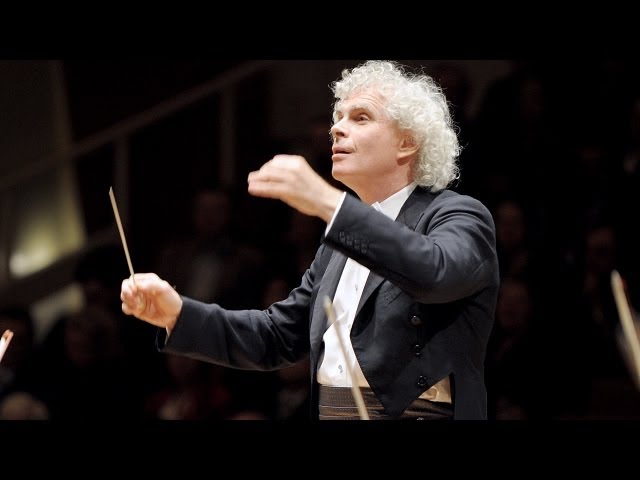
A symphony that Brahms completed in 1876.
So conscious was Brahms of Beethoven’s nine symphonies that he struggled to finish one of his own, taking 21 years from conception to completion.
Nevertheless, the work received such high acclaim that it has been called “Beethoven’s Tenth.” With a structure easily grasped by listeners—“from darkness to light”—it has now become the most frequently performed of Brahms’s symphonies.
