

Johannes Brahms Popular Songs Ranking [2026]

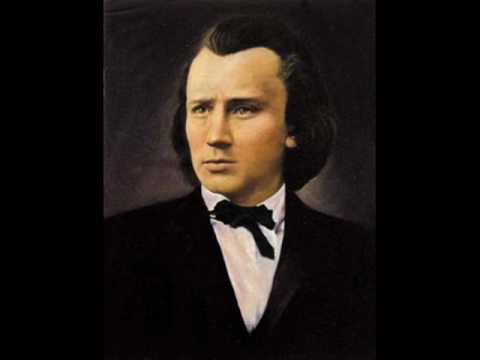
Johannes Brahms, a German composer.
Although his music belongs to the Romantic era, it respects the classical sense of form, allowing you to feel both Romantic expression and a majestic atmosphere.
Here is a ranking of some of his popular pieces!
- Brahms's masterpieces. Popular classical music.
- [Masterpiece Classics] A special showcase of gem-like masterpieces so beautiful they’ll move you to tears
- Ludwig van Beethoven Popular Songs Ranking [2026]
- Anton Bruckner Popular Songs Ranking [2026]
- Johann Burgmüller Popular Song Rankings [2026]
- J.S. Bach Popular Songs Ranking [2026]
- Robert Schumann Popular Song Ranking [2026]
- Taro Hakase’s famous and popular songs
- A poignant classic masterpiece. Recommended classical music.
- Gustav Mahler Popular Songs Ranking [2026]
- Franz Liszt Popular Song Ranking [2026]
- Antonín Dvořák Popular Songs Ranking [2026]
- Johann Strauss II Popular Song Ranking [2026]
Johannes Brahms Popular Songs Ranking [2026] (41–50)
8 Pieces, Op. 76 No. 6: Intermezzo in A majorJohannes Brahms43rank/position

No.
6 from Brahms’s Eight Pieces, composed in 1878.
It has a gentle, lyrical character, marked by a beautifully balanced and harmonious melody.
The mood is calm and elegant, with a performance time of about four minutes.
Despite its simple, approachable tune, it possesses deep emotion and a refined structure, exploring an inner stillness and a reflective atmosphere in particular.
Recommended for those who wish to experience a work that quietly reveals Brahms’s inner world.
8 Pieces, Op. 76: No. 7, Intermezzo in A MinorJohannes Brahms44rank/position

Brahms’s Eight Pieces, composed in 1878, are introspective works that offer a glimpse into the onset of his mature period.
Among them, No.
7 is relatively easy to play compared to many of his pieces.
Written in 2/2 time and marked “gently, simply,” it is performed with a calm, unadorned character.
The same theme appears at the beginning and the end, while the middle section introduces a striking figuration, creating a symmetrical structure that still conveys shifting emotions.
A dark, introspective atmosphere pervades the piece, evoking deep sorrow and loneliness, yet within it one can also sense quiet and repose.
Set in A minor with no key signature, it’s a great recommendation for those who find key signatures challenging but still want to learn to play something.
LullabyJohannes Brahms45rank/position
Brahms’s classic lullaby.
Many people may have heard not only the original but also arranged versions.
It seems there are versions with Japanese lyrics that are sung, but using classical music as background music and letting it play as a lullaby might also feel elegant and nice.
Intermezzo in A major, Op. 118 No. 2, from “Six Pieces”Johannes Brahms46rank/position

Piano Pieces, Op.
118, composed in Brahms’s late years.
One of the pieces is dedicated to Clara Schumann, his close friend and a gifted pianist.
This work is characterized by a gentle tone full of kindness and affection.
It follows a three-part structure: a first section with a beautiful, recurring melody; a middle section that modulates to the minor and incorporates chorale-like elements; and a return to the opening melody.
Completed in 1893, the piece embodies Brahms’s mature musicianship and profound emotional expression, conveying his deep admiration for Clara.
Composed in a quiet summer retreat, the setting may also have influenced the work’s introspective character.
Capriccio, Op. 76 No. 1Johannes Brahms47rank/position

This is Capriccio No.
2 by Brahms, one of the German Three Bs.
Ivo Pogorelić is a pianist from Belgrade, in the former Yugoslavia.
Known as a “heretic,” he has a variety of legendary episodes, and that iconoclasm is evident in his performances as well—unconventional interpretations that reveal new facets of the music.
Cello Sonata No. 1 in E minor, Op. 38Johannes Brahms48rank/position

This is Johannes Brahms’s Cello Sonata No.
1 in E minor, Op.
38.
It is a sonata consisting of three movements—First movement: Allegro non troppo; Second movement: Allegretto quasi menuetto; Third movement: Allegro.
Brahms began composing it in 1862 and completed it three years later, in 1865.
Variations on a Theme by Haydn, Op. 56aJohannes Brahms49rank/position

Johannes Brahms’s 1873 masterpiece Variations on a Theme by Haydn, Op.
56a—also known as the Haydn Variations or Variations on the St.
Anthony Chorale—features a consistently gentle melody that unfolds while giving each variation its own character.
It’s a perfect piece for a leisurely weekend morning.
With its slightly noble tone, it also pairs nicely with breakfast listening.
Be sure to give it a try.
