

Franz Liszt Popular Song Ranking [2026]

Franz Liszt, a pianist and composer born in Hungary who was active in Europe in the 19th century.
He possessed extraordinarily advanced piano skills, earning him the nickname “the Wizard of the Piano.”
This time, we’ve selected the most popular pieces from his catalog of masterpieces.
Please enjoy them with a cup of tea!
- A masterpiece by Franz Liszt. Popular classical music.
- [Lower Difficulty] Recommended Piano Pieces by Franz Liszt [Intermediate]
- Johannes Brahms Popular Songs Ranking [2026]
- Frederic Chopin Popular Songs Ranking [2026]
- [Piano Recital] Recommended for Middle Schoolers! A Comprehensive Introduction to Classical Masterpieces
- Franz Schubert Popular Songs Ranking [2026]
- Franz Joseph Haydn Popular Song Rankings [2026]
- François Couperin Popular Songs Ranking [2026]
- [Highest Difficulty] A selection of challenging pieces crafted by Liszt, the magician of the piano
- César Franck Popular Songs Ranking [2026]
- Sergei Rachmaninov Popular Songs Ranking [2026]
- Richard Wagner Popular Songs Ranking [2026]
- Johann Burgmüller Popular Song Rankings [2026]
Franz Liszt Popular Songs Ranking [2026] (81–90)
Dark Cloud S.199 / R78Franz Liszt85rank/position

This is an experimental late work by Franz Liszt, one of the representative composers of the Romantic era.
Composed in 1881 for piano, it is characterized by innovative musical expression for its time, including attempts at non-functional harmony and a departure from traditional tonality.
Despite its short duration of about two minutes and thirty seconds, it exudes a gloomy atmosphere that conveys deep sorrow and a religious hue.
Today, it is widely recognized as a work that symbolizes Liszt’s spirit of musical inquiry and avant-garde stance.
It was also used on the soundtrack of Stanley Kubrick’s film Eyes Wide Shut, and its continued influence on contemporary culture is another compelling aspect.
Dance at the village tavernFranz Liszt86rank/position

Starting with a lively rhythm that conjures vivid images of ringing voices, the graceful dances of the ballerinas, and villagers chatting with drinks in hand, this piece could well be called one of Liszt’s hidden gems.
It was actually featured in the drama Nodame Cantabile, so many of you may have heard it before—but I highly recommend listening to it in full.
Totentanz, S.126/R.457Franz Liszt87rank/position

A work for solo piano and orchestra that incorporates the melody of the Gregorian chant Dies Irae (Day of Wrath).
It is said to have been inspired by the 14th-century fresco The Triumph of Death in a church in Pisa, Italy, resulting in a piece with a weighty and dramatic character.
Bagatelle in AtonalityFranz Liszt88rank/position

This piece is one of Franz Liszt’s innovative works from his late period, reflecting his spirit of inquiry.
Premiered in Weimar in July 1885, it embodies Liszt’s intention to “obliterate tonality.” Employing abundant tritones and diminished seventh chords to create a distinctive atmosphere, the work is highly regarded as an exploration in freeing music from traditional tonality.
It is recommended for listeners interested in bold musical expression unconstrained by conventional harmony, as well as for those who wish to experience Liszt’s relentless musical curiosity.
Bagatelle without tonality, S.216a / R.60cFranz Liszt89rank/position
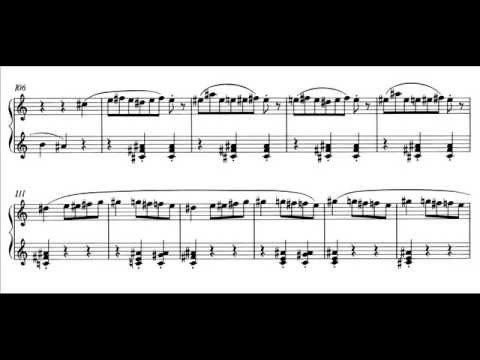
Composed in the final year of his life in 1885, this piece is the first in music history to be explicitly labeled “atonal.” It was originally conceived as “Mephisto Waltz No.
4,” but in the end appears to have been composed as a separate work.
Throughout, beautiful harmonies resonate, yet the piece carries an elusive, hard-to-grasp atmosphere.
DedicationFranz Liszt90rank/position

This Schumann–Liszt piece exemplifies a beautiful fusion of Romantic music.
Schumann dedicated the original song to his wife Clara in 1840, and Liszt, the “magician of the piano,” arranged it for solo piano in 1848.
While preserving the original’s emotional depth, he added pianistic virtuosity and profound expressiveness unique to the instrument.
The poetic lyrics, which sing of deep love and respect for a beloved, are rendered even more radiant through Liszt’s arrangement.
Widely cherished as a piano recital staple, this work is highly recommended for those who wish to savor the richness of Romantic-era music.
Franz Liszt Popular Songs Ranking [2026] (91–100)
Etude of Supreme Virtuosity No. 5: Will-o’-the-WispFranz Liszt91rank/position

Among the works of Franz Liszt, known as the “magician of the piano,” this étude is particularly difficult.
Published in 1851, it takes as its theme the fantastical, elusive “Will-o’-the-Wisp,” and showcases Liszt’s trademark transcendental virtuosity throughout.
With rapid multi-note passages and arpeggios, wide-ranging leaps, and extensive shifts in register, it demands advanced technique from the pianist—but even more, it calls for delicate expressiveness.
Its otherworldly, elusive melody seems to lure listeners into another realm.
This piece is highly recommended not only for classical music enthusiasts but also for anyone who wants to experience the pinnacle of pianistic technique.