

Franz Liszt Popular Song Ranking [2026]

Franz Liszt, a pianist and composer born in Hungary who was active in Europe in the 19th century.
He possessed extraordinarily advanced piano skills, earning him the nickname “the Wizard of the Piano.”
This time, we’ve selected the most popular pieces from his catalog of masterpieces.
Please enjoy them with a cup of tea!
- A masterpiece by Franz Liszt. Popular classical music.
- [Lower Difficulty] Recommended Piano Pieces by Franz Liszt [Intermediate]
- Johannes Brahms Popular Songs Ranking [2026]
- Frederic Chopin Popular Songs Ranking [2026]
- [Piano Recital] Recommended for Middle Schoolers! A Comprehensive Introduction to Classical Masterpieces
- Franz Schubert Popular Songs Ranking [2026]
- Franz Joseph Haydn Popular Song Rankings [2026]
- François Couperin Popular Songs Ranking [2026]
- [Highest Difficulty] A selection of challenging pieces crafted by Liszt, the magician of the piano
- César Franck Popular Songs Ranking [2026]
- Sergei Rachmaninov Popular Songs Ranking [2026]
- Richard Wagner Popular Songs Ranking [2026]
- Johann Burgmüller Popular Song Rankings [2026]
Franz Liszt Popular Songs Ranking [2026] (41–50)
Rhapsodie espagnole, S.254/R.90Franz Liszt50rank/position

Franz Liszt, born in 1811 in Hungary, was known as a virtuoso pianist and was called the “magician of the piano.” This work is a dazzling piece that incorporates the allure of Spanish music and was completed in 1845.
It strongly reflects elements of flamenco and the folia, combining rhythmic dance sections with lyrical passages.
Technically demanding, it calls for Liszt’s signature brilliant performance techniques.
The piece conveys impressions from Liszt’s visit to Spain during his performance tours, expressing an understanding of and respect for a different culture.
It is recommended not only for classical music enthusiasts but also for anyone who wants to enjoy passionate music.
Franz Liszt Popular Songs Ranking [2026] (51–60)
Spanish Rhapsody, Op. 254Franz Liszt51rank/position

Franz Liszt, the great composer known for writing devilishly difficult pieces.
Many people are familiar with his high-difficulty works such as La Campanella and Mazeppa.
Among Liszt’s works, however, there is a lesser-known piece of extreme difficulty: the Rhapsodie espagnole.
It not only demands rapid fingerwork and great stamina, but also features fierce leaps throughout every section.
And because it must be performed with lightness at the same time, it can be considered one of the most challenging pieces even among Liszt’s compositions.

Reading Dante: Sonata-FantasiaFranz Liszt52rank/position
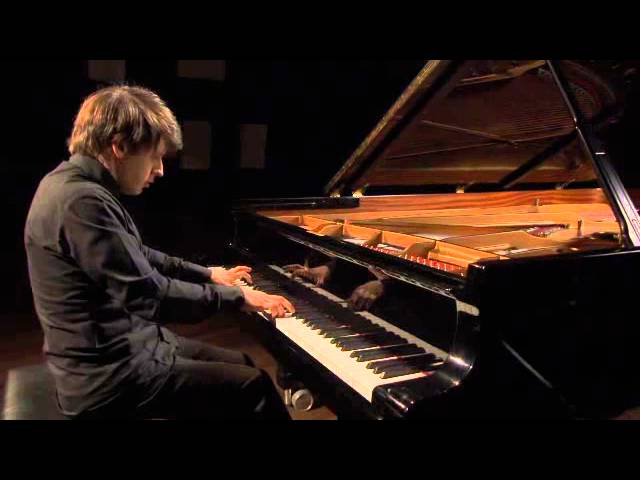
Inspired by depictions of hell in literary works, Franz Liszt’s grand masterpiece is perfect when you want to create a Halloween atmosphere that’s not just scary but profoundly evocative.
From the very beginning, the dissonance known as the “Devil’s interval” resounds, instantly dragging listeners into an unsettling world.
Records show that the work’s prototype was performed in Vienna in November 1839; it was later revised and included in the album Années de pèlerinage, Deuxième année: Italie.
Famous interpretations by Alfred Brendel and Georges Cziffra are well known.
As a piano piece it is extremely challenging, and the key is to bring out the dramatic contrast between infernal torment and heavenly redemption.
Aim to express a grand, story-like world.
Dante Symphony, S.109/R.426Franz Liszt53rank/position

Influenced by Dante, the Italian poet, this work is a grand symphony depicting Hell and Purgatory.
Completed in 1855 and premiered in Weimar in 1857, it uses intense orchestration to convey the horror and despair of Hell, then transforms in Purgatory into music filled with hope—an overwhelming experience.
Showcasing Liszt’s religious inquisitiveness and innovative musical expression, it is recommended for those who wish to take on the challenge of expressing literature through music.
It is one of the signature works of Franz Liszt, a master of Romantic music.
Hungarian Rhapsody No. 17Franz Liszt54rank/position

This is a late work by Franz Liszt, composed in 1884.
Unlike his earlier rhapsodies, which are often bold and flamboyant, it exudes a concise, shadowed, and distinctive atmosphere.
While it retains the contrast between slow and fast sections, the stripped-down ornamentation and highly concentrated development are striking.
Folk-inflected sonorities meld beautifully with Liszt’s characteristic introspective expression, packing a complex aesthetic into a short duration.
Even if you’re not yet ready for the large-scale works that demand transcendental virtuosity, this is a piece I highly recommend to anyone wishing to experience the depth of Liszt’s unique musicality.
Try performing it while savoring the nuances of tone.
Hungarian Rhapsody No. 2, S/G 244, R 106Franz Liszt55rank/position

Composed with inspiration from Hungarian folk songs and Romani music, this piece conveys the love of Franz Liszt—who was born in Hungary—for his homeland.
It opens with a melancholic, elegiac introduction and gradually accelerates, drawing listeners in.
Published in 1851, the work incorporates highly demanding virtuoso techniques that push the technical limits of the piano, offering performers a chance to showcase their skills.
As one of the signature works by Liszt, a leading composer of the Romantic era, it is recommended for those who cherish Hungary’s traditional music or who enjoy dazzling piano performances.
Prelude and Fugue on the Name B-A-C-HFranz Liszt56rank/position

A piece that radiates the commanding presence of the pipe organ.
Its solemn resonance and sacred atmosphere leave a strong impression.
Composed by Franz Liszt between 1855 and 1856, this work pays homage to Bach by using the notes B-A-C-H as its main theme.
It exploits a wide range from low to high registers and demands virtuosic performance with dense chords and arpeggios.
There are both organ and piano versions, each deeply satisfying to hear.
Why not surrender yourself to the overwhelming waves of sound reverberating through a church or concert hall? It’s a piece that lets you fully savor the allure of classical music.