

Franz Liszt Popular Song Ranking [2026]

Franz Liszt, a pianist and composer born in Hungary who was active in Europe in the 19th century.
He possessed extraordinarily advanced piano skills, earning him the nickname “the Wizard of the Piano.”
This time, we’ve selected the most popular pieces from his catalog of masterpieces.
Please enjoy them with a cup of tea!
- A masterpiece by Franz Liszt. Popular classical music.
- [Lower Difficulty] Recommended Piano Pieces by Franz Liszt [Intermediate]
- Johannes Brahms Popular Songs Ranking [2026]
- Frederic Chopin Popular Songs Ranking [2026]
- [Piano Recital] Recommended for Middle Schoolers! A Comprehensive Introduction to Classical Masterpieces
- Franz Schubert Popular Songs Ranking [2026]
- Franz Joseph Haydn Popular Song Rankings [2026]
- François Couperin Popular Songs Ranking [2026]
- [Highest Difficulty] A selection of challenging pieces crafted by Liszt, the magician of the piano
- César Franck Popular Songs Ranking [2026]
- Sergei Rachmaninov Popular Songs Ranking [2026]
- Richard Wagner Popular Songs Ranking [2026]
- Johann Burgmüller Popular Song Rankings [2026]
Franz Liszt Popular Songs Ranking [2026] (51–60)
Fantasia and Fugue on the Name B-A-C-H, S.260/S.529Franz Liszt57rank/position

A work originally composed as an organ piece and later arranged for piano.
Liszt was deeply familiar with Bach’s music, and Bach’s themes are employed effectively in this piece as well.
Rapidly ascending and descending arpeggios and a stormily raging bass make a striking impression.
Grandes études de Paganini, S.121, No. 3 “La Campanella”Franz Liszt58rank/position

Among the set of études by Franz Liszt—dubbed the “magician of the piano”—the Grandes études de Paganini, S.121, No.
3, “La Campanella,” stands out as especially famous and popular.
Its difficulty and artistry are so extraordinary that one can’t help but ask, “Wait, this is an étude?”—and it’s fair to say many people don’t really think of it as one.
Although Liszt composed numerous works of transcendental virtuosity, this piece is an arrangement for piano of a violin work by Niccolò Paganini.
Paganini, the prodigy whose playing was so astonishing he was said to have “sold his soul to the devil,” and Liszt, the magician—no wonder the result is a parade of transcendental technique.

Grandes études de Paganini, S.141 No. 3 “La Campanella”Franz Liszt59rank/position

La Campanella, the third piece from Transcendental Etudes after Paganini S.141, is known as a notoriously difficult work.
A masterpiece by Franz Liszt, it is striking for its highly challenging, intricate structure and performance impact worthy of its difficulty.
One of its great attractions is the dramatic, grandiose playing that emerges toward the end.
Thanks to its highly accessible melody, even those uninterested in classical music are likely to be moved.
Not only the performance but also the sheet music itself leaves a strong impression, so if you can read music, be sure to take a look at the score as well.

Grandes études d’après Paganini, S.141 No. 3 in G-sharp minor “La Campanella”Franz Liszt60rank/position
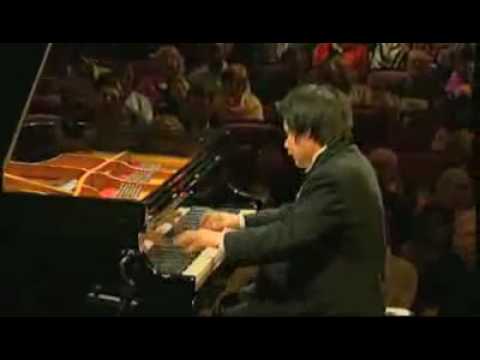
Franz Liszt’s Grandes études de Paganini, S.141 No.
3 in G-sharp minor—one of the pieces many pianists aspire to play—is widely known by its title La Campanella, meaning “the little bell.” This hallmark of Liszt’s demands transcendental technique: it’s a notoriously difficult work packed with passages that torment performers, including rapid, repeated two-octave leaps.
But the sense of fulfillment when you master it is surely exceptional.
While it’s hard to push the tempo like a concert pianist, it might be nice to follow the notes slowly to savor the atmosphere.

Franz Liszt Popular Song Rankings [2026] (61–70)
Grand Étude after Paganini No. 3 “La Campanella”Franz Liszt61rank/position

Franz Liszt—Liszt is a famous pianist on par with Chopin.
In contrast to the small-statured Chopin, Liszt was tall and apparently had very large hands.
His hand size is fully showcased in the Grandes études de Paganini No.
3, “La Campanella.” It’s a wonderful piece that portrays the sound of bells through rapid alternation of the thumb and little finger.
As expected of Liszt.
Large hands are a treasure for a pianist.

Grand Étude No. 5 after PaganiniFranz Liszt62rank/position

When it comes to the Grandes Études de Paganini, No.
3 La Campanella and No.
6 Variations on a Theme are the famous ones, but I highly recommend No.
5 as well.
In the first half and at the end it evokes people setting out on a hunt, the middle signals the start of the chase, and you can almost hear birds chirping—it’s a charming little piece.
Grand Etude No. 6 “Theme and Variations” by PaganiniFranz Liszt63rank/position

Using the melody that begins the piece as its main theme, this work unfolds while constantly shifting character.
It is so famous that many people may feel they have heard it even if they do not recognize its name.
Originally an extremely difficult piece for violin, it was arranged by Liszt into a set of variations for piano that faithfully reproduces even the technical challenges of the original.