

Fuyumi Sakamoto Popular Song Ranking [2026]

Enka singer Fuyumi Sakamoto debuted in 1987 with the song “Abare Daiko,” which sold over 800,000 copies.
She has also collaborated with artists outside the enka genre and is active in various ways.
Here is a roundup of rankings of Fuyumi Sakamoto’s popular songs.
- Fuyumi Sakamoto's Most Popular Karaoke Songs Ranking [2026]
- Fuyumi Sakamoto’s famous and popular songs
- Maaya Sakamoto Popular Songs Ranking [2026]
- Fuyumi Sakamoto Popular Song Ranking [2026]
- Sayuri Ishikawa Popular Song Ranking [2026]
- [Wakayama’s Treasure] Fuyumi Sakamoto’s Easy-to-Sing Songs
- Aki Yashiro’s Most Popular Songs Ranking [2026]
- Kaori Mizumori Popular Songs Ranking [2026]
- Chiyoko Shimakura’s Most Popular Songs Ranking [2026]
- Harumi Miyako Popular Songs Ranking [2026]
- Debut song of an enka singer
- An enka singer who blossomed on the fourth debut! Natsuko Godai’s popular song ranking
- Ranking of Ami Sakaguchi’s Popular Songs [2026]
Fuyumi Sakamoto Popular Songs Ranking [2026] (21–30)
A Man’s Love StorySakamoto Fuyumi22rank/position

It was released in 1989 as Fuyumi Sakamoto’s fourth single.
This song became her first to enter the weekly top ten on the Oricon charts and won the 15th Japan Enka Grand Prize.
A version with spoken lines was released as her fifth single, and that version also became a hit.
Kinokawa (Kii River)Sakamoto Fuyumi23rank/position

Set against a river flowing through Fuyumi Sakamoto’s hometown of Wakayama, this song is an epic, story-driven piece that portrays the bond passed down from mother to daughter to grandchild across three generations.
Released in March 2008, it serves as the concluding installment of the “Masterpiece Series,” based on Sawako Ariyoshi’s novels, and was also used as the ending theme for TBS’s “Kaiun Ongakudo.” Its universal theme— a mother’s deep love, single-mindedly praying for her child’s happiness, intertwining with the eternal flow of a river—resonates powerfully with listeners.
The fact that Sakamoto was appointed a “Hometown Ambassador” for Wakayama Prefecture in November of the same year further conveys the work’s heartfelt connection to her roots.
It is a song to hear when you want to be reminded of family bonds or to reflect on your hometown; its warm vocals will gently permeate the heart.
Would you like some Noto?Sakamoto Fuyumi24rank/position

This is one of Fuyumi Sakamoto’s signature songs, evoking scenes of sharing drinks while reminiscing about one’s hometown.
The lyrics depict the sights and everyday life of Noto, imbued with a deep affection for one’s roots and a poignant yet passionate longing to return.
It’s remarkable how this warm worldview, combined with Sakamoto’s powerful yet embracing vocals, stirs a sense of nostalgia in listeners.
Released in May 1990 as her seventh single, the song won the Wire Music Award at the 23rd Japan Cable Radio Awards.
Its popularity is also evident from her performance of it at that year’s 41st NHK Kōhaku Uta Gassen.
For those striving away from home, hearing it may bring back memories of familiar landscapes and cherished loved ones.
Firefly LanternSakamoto Fuyumi25rank/position

Even among Fuyumi Sakamoto’s songs, Hotaru no Chochin stands out for its unique vibe and has gained popularity.
Rather than a kayōkyoku number, it leans heavily into pop elements, and for enka it’s quite rare in featuring a solid, weighty bassline.
The reggae-like bounce of the rhythm is also striking.
This piece prioritizes overall groove over elaborate phrasing.
As a result, there are no kobushi ornaments that require complex pitch bends.
The vocal range is also on the narrower side, so if you follow the vocal line carefully, it’s possible to aim for a high score.

Rampaging Taiko Drum ~Including ‘Outlaw Generation’~Sakamoto Fuyumi26rank/position
A classic enka song I wish more young people would sing.
Fuyumi Sakamoto, who debuted as the last disciple of composer Kimimasa Inomata, has now become a true grand dame of the enka world.
Apparently, she began her training as a singer by serving as Inomata-sensei’s driver—an anecdote brimming with Showa-era flavor.
Her debut ‘Abare Daiko’ and its version with the spoken introduction, ‘Abare Daiko ~Muho Ichidai-iri~,’ both deliver that quintessential enka feel.
It’s a beautiful piece showcasing Sakamoto’s powerful vibrato that recalls the great Harumi Miyako of yesteryear.
Original songSakamoto Fuyumi, Kitamura Takumi27rank/position
In the Clear Asahi commercial, Fuyumi Sakamoto appears alongside Takumi Kitamura, the vocalist of DISH//.
In the ad, the two perform a duet of the Clear Asahi jingle “Clear Boogie-Woogie.” This song, an arrangement of Shizuko Kasagi’s signature hit “Tokyo Boogie-Woogie,” has been given a more mature, jazz-inspired twist this time.
It’s striking how they meet each other’s gaze and sing joyfully together.

I’ve always liked you.Sakamoto Fuyumi28rank/position
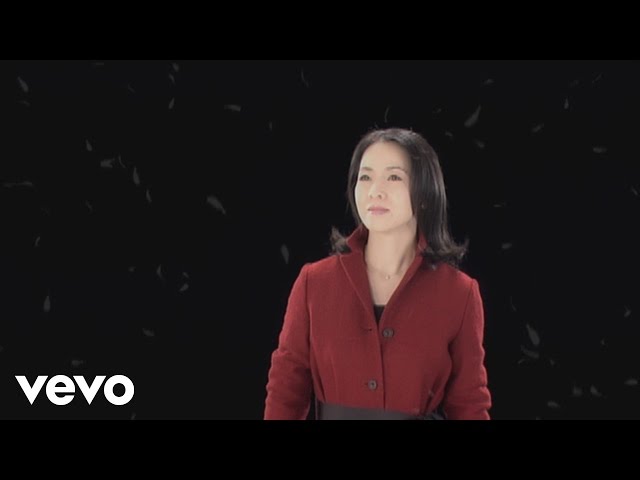
Among Fuyumi Sakamoto’s pop songs, “Zutto Anata ga Suki Deshita” is especially popular.
Many of you have probably heard Billy BanBan sing it in the iichiko commercial.
This piece contains none of the intricate vibrato ornamentation typical of enka.
Because the dynamics are emphasized throughout and there are no challenging elements like shouts or long sustained notes, even those who feel uneasy about singing enka should find it approachable.
Furthermore, its vocal range is quite narrow, making it easy to sing without strain even at a karaoke after-party.
It’s one of the easiest songs to sing in Fuyumi Sakamoto’s catalog, so be sure to check it out.