

Fuyumi Sakamoto Popular Song Ranking [2026]

Enka singer Fuyumi Sakamoto debuted in 1987 with the song “Abare Daiko,” which sold over 800,000 copies.
She has also collaborated with artists outside the enka genre and is active in various ways.
Here is a roundup of rankings of Fuyumi Sakamoto’s popular songs.
- Fuyumi Sakamoto's Most Popular Karaoke Songs Ranking [2026]
- Fuyumi Sakamoto’s famous and popular songs
- Maaya Sakamoto Popular Songs Ranking [2026]
- Fuyumi Sakamoto Popular Song Ranking [2026]
- Sayuri Ishikawa Popular Song Ranking [2026]
- [Wakayama’s Treasure] Fuyumi Sakamoto’s Easy-to-Sing Songs
- Aki Yashiro’s Most Popular Songs Ranking [2026]
- Kaori Mizumori Popular Songs Ranking [2026]
- Chiyoko Shimakura’s Most Popular Songs Ranking [2026]
- Harumi Miyako Popular Songs Ranking [2026]
- An enka singer who blossomed on the fourth debut! Natsuko Godai’s popular song ranking
- Ranking of Ami Sakaguchi’s Popular Songs [2026]
- Hiroko Moriguchi’s Most Popular Songs Ranking [2026]
Fuyumi Sakamoto Popular Songs Ranking [2026] (31–40)
Migratory Birds of HarimaSakamoto Fuyumi36rank/position

A travel-tinged song by Fuyumi Sakamoto.
Released in September 2004, it’s set in the Harima region of Hyogo and portrays the lonely feelings of a protagonist who wanders like a migratory bird after leaving their hometown—truly heart-wrenching.
Sakamoto’s powerful voice and intricate vocal inflections, honed through rokyoku narrative singing, deepen the poignancy of the story’s world.
Its popularity is evident from her performance of the song at that year’s NHK Kouhaku Uta Gassen.
Why not immerse yourself in the scenery of Harima and sing it as if you were the protagonist?
Like cherry blossomsSakamoto Fuyumi37rank/position

With its warm, lively melody and lyrics, “Sakura no Gotoku” is a fan favorite.
Released to commemorate the 25th anniversary of their debut, the single is crafted less as a showcase of virtuosity and more as an approachable enka number.
The kobushi (melodic ornamentation) is relatively easy, it’s rare to repeatedly move the pitch up and down on the same vowel, and there aren’t many particularly forceful sections.
However, there is a shout-like, raspy vocal delivery at the end of the chorus, so that part requires caution.

To the Kumano RoadSakamoto Fuyumi38rank/position
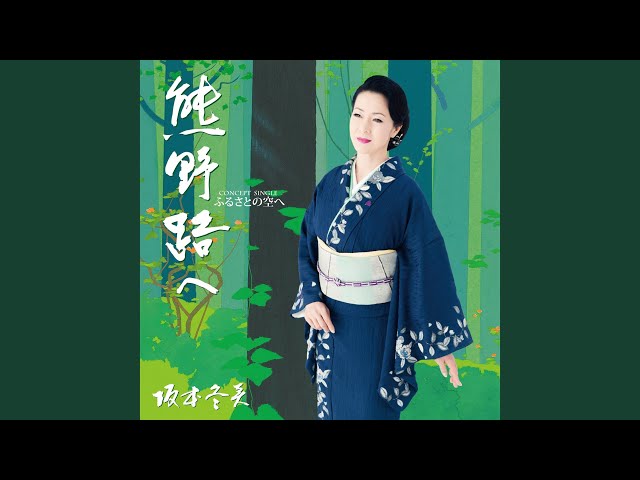
Set against the World Heritage–listed Kumano Kodo, a pride of Wakayama Prefecture, this song traces a journey of memories shared with a beloved person who has passed away.
Fuyumi Sakamoto’s richly expressive voice evokes both the quiet, sacred vistas of the pilgrimage route and the poignant recollections that tighten the chest.
Some listeners may find their hearts stirred by the image of the protagonist walking through places of remembrance while mourning someone they can no longer meet.
The track appears on the concept single “Furusato no Sora e,” released in September 2018.
It gently seeps into the hearts of those living away from their hometowns and those who carry precious memories close.
A Hundred Nights’ JourneySakamoto Fuyumi39rank/position

Fuyumi Sakamoto has many famous songs, but among them, Hyakuyakō is known as one of her most heartrending tracks.
The piece has a very relaxed tempo and leans more toward kayōkyoku (Japanese popular song) than traditional enka.
There are none of the scale inflections typical of enka (kobushi); throughout, while there is some dynamic expression, the vocal line remains simple with relatively little dramatic fluctuation.
It may seem somewhat high at first, but the overall key is on the lower side, so as long as you set the key properly, anyone can sing it through.
RashōmonSakamoto Fuyumi40rank/position

Fuyumi Sakamoto is a female enka singer renowned for excelling at “male songs.” Among her works, one of the most popular male songs is Rashomon.
It’s a piece noted for its particularly serious melody even within Sakamoto’s repertoire, and it enjoys strong support from fans.
Although the song stands out for its power, the vocal line itself is simple and the range is relatively narrow.
The ornamental kobushi that require complex pitch movements appear only at the end of the chorus and involve upward and downward motion no more than twice, so anyone accustomed to singing enka should be able to perform it without difficulty.
Fuyumi Sakamoto Popular Song Ranking [2026] (41–50)
Flower in DrunkennessSakamoto Fuyumi41rank/position

Sakamoto Fuyumi’s song “Suichūka,” released in 2022.
Although Sakamoto Fuyumi studied under Futaba Yūrikō and has tackled challenging enka in her later years, she also works on catchier enka.
Among these, this piece is particularly easy to sing.
While there are some kobushi (ornamental vocal turns), the overall difficulty is low, and there are no repeated, dramatic ups-and-downs typical of elaborate kobushi.
The vocal range is somewhat wide, but even if your voice flips into head voice, it will sound like kobushi to listeners, making it easy to sing even for those with a narrower range.
The sun rises.Sakamoto Fuyumi42rank/position

Released on May 11, 2005 (Heisei 17).
It’s a song very characteristic of Fuyumi Sakamoto, along the same lines as her more manly, chivalrous style from three years earlier.
Right after her debut she often sang about the subtleties of men’s and women’s hearts, but around this time she began incorporating plenty of natural imagery into her lyrics—things like spring, summer, autumn, winter, and flowers such as yamakawa-bana.
It peaked at No.
27 and sold 35,000 copies.