

Fuyumi Sakamoto Popular Song Ranking [2026]

Enka singer Fuyumi Sakamoto debuted in 1987 with the song “Abare Daiko,” which sold over 800,000 copies.
She has also collaborated with artists outside the enka genre and is active in various ways.
Here is a roundup of rankings of Fuyumi Sakamoto’s popular songs.
- Fuyumi Sakamoto's Most Popular Karaoke Songs Ranking [2026]
- Fuyumi Sakamoto’s famous and popular songs
- Maaya Sakamoto Popular Songs Ranking [2026]
- Fuyumi Sakamoto Popular Song Ranking [2026]
- Sayuri Ishikawa Popular Song Ranking [2026]
- [Wakayama’s Treasure] Fuyumi Sakamoto’s Easy-to-Sing Songs
- Aki Yashiro’s Most Popular Songs Ranking [2026]
- Kaori Mizumori Popular Songs Ranking [2026]
- Chiyoko Shimakura’s Most Popular Songs Ranking [2026]
- Harumi Miyako Popular Songs Ranking [2026]
- An enka singer who blossomed on the fourth debut! Natsuko Godai’s popular song ranking
- Ranking of Ami Sakaguchi’s Popular Songs [2026]
- Hiroko Moriguchi’s Most Popular Songs Ranking [2026]
Fuyumi Sakamoto Popular Song Ranking [2026] (41–50)
Whimsical JourneySakamoto Fuyumi50rank/position

In 2003 (Heisei 15), she resumed her activities, and on September 3 released “Kimagure Dōchū.” As the title suggests, it’s an enka song evoking the sentiments of travel.
Around this time, Kiyoshi Hikawa had debuted, and there may have been some influence from his early songs.
Rather than a trip to a specific place, however, it conveys a message of taking life as a journey—easygoing and relaxed.
It peaked at No.
17 and sold 67,000 copies.
The B-side of the next single, “Sui-Kazura (Honeysuckle)” (released November 12, 2003), includes a duet version with composer Chiaki Oka.
Fuyumi Sakamoto Popular Songs Ranking [2026] (51–60)
chivalry (manly valor); manly spiritSakamoto Fuyumi51rank/position
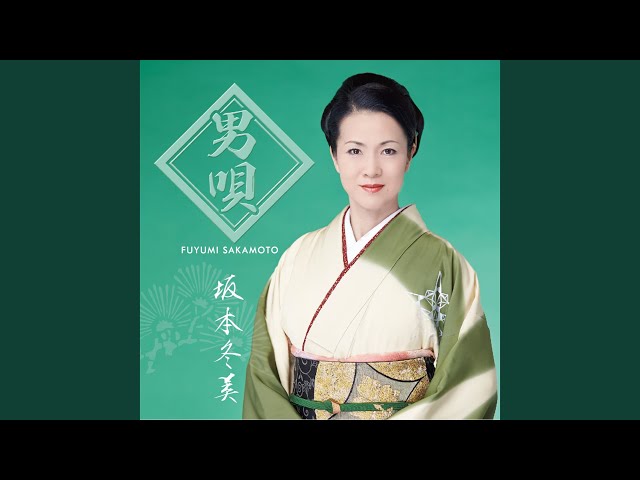
Released on January 17, 2002 (Heisei 14).
Since his debut, he has sung songs themed around men—starting with “Otoko no Jowa” and “Otoko-bore”—while also continuing a line of life-affirming anthems such as “Taishi,” “Kaze ni Tatsu,” and “Rin to Shite.” This song seems to have been created with both of those currents in mind.
It also features local place names from Kyushu, giving it a back-to-basics feel—perhaps a culmination of his work to date.
It peaked at No.
37 and sold 53,000 copies.
That year, he suffered from pancreatitis, which affected his health, and he suspended his activities for a while.
man crushSakamoto Fuyumi52rank/position

Released on April 22, 1992 (Heisei 4).
The setting is Kansai/Osaka.
Although the song portrays a masculine world similar to “Otoko no Jōwa,” she delivers it with a gentle, feminine touch.
Being originally from Wakayama, her Kansai dialect expressions are impeccable.
It peaked at No.
16 and sold 168,000 copies.
You, returning by boatSakamoto Fuyumi53rank/position

Released on February 2, 1994 (Heisei 6).
A song that depicts the heart of a woman waiting for her husband to return.
It marked quite a departure from the world of the masculine songs right after her debut.
Composer Kimisho Inomata, who had worked on numerous songs since Abare Daiko, passed away the previous year, making this his final composition.
It peaked at No.
29 and sold 48,000 copies.
A love song from long agoSakamoto Fuyumi54rank/position

This piece portrays a scene where memories of past love intersect with a present reunion.
Written and composed by Yuka Kawamura, it is a commemorative single marking the 40th anniversary of her debut.
Its supple, jazz-inflected resonance leaves a strong impression.
The song also carries a delicate atmosphere that only a seasoned performer can truly convey.
With its calm mood, it feels perfect for moments when you want to quietly reflect on the journey of life.