

Party games that get everyone excited at school


How do you spend your recess at school?
Some of you might play party games with your friends!
Party games that are fun even during school breaks used to be popular on TV variety shows, but these days, games played by YouTubers are getting all the buzz!
In this article, we’ll introduce a wide range of games—from timeless classics to those trending on YouTube!
It’s packed with fun games that will make you think, “We want to try that ourselves!!” so be sure to give them a go!
- [For Kids] Popular party games. Fun games that get everyone excited
- Recommended for upper elementary grades! Exciting indoor recreation and games
- Recreation Ideas That Truly Excite High School Students! A Fun Collection of Activities
- Get the Fun Going! Easy Classroom Games You Can Play at School: Recreational Activities for the Whole Class
- [Classic] Funny! Hilarious! A roundup of punishment games that will liven up the classroom
- [Simple but Fun] Penalties That Hype Up Elementary School Classrooms
- [Doable at School!] Fun Punishment Game Ideas That Will Hype Up High Schoolers
- [For University Students] A Roundup of Fun Games and Recreational Activities
- [Easy] Punishments that will get middle schoolers excited
- Ideas for Grade-Level Activities That Will Make Middle Schoolers Go Wild with Excitement!
- Party Games That Will Liven Up Your Workplace [2026]
- Performances that liven up an elementary school thank-you party! A collection of ideas everyone can enjoy
- Fun and exciting penalty games recommended for high school students
Party games that get everyone excited at school (31–40)
linked ring traversal
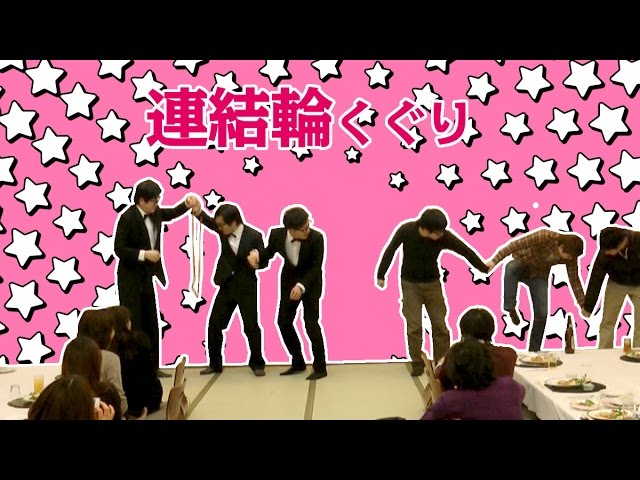
In groups of two or three, hold hands and take turns passing through a loop made of ribbon or string starting from one end.
The people on both ends can use their hands, but the person in the middle can’t use theirs at all, so it goes more smoothly with help from the people on the sides.
Using just one loop ends quickly, so doing several rounds back and forth might be more fun.
Rating Check Game
https://www.tiktok.com/@artbellangenagoya/video/7484572781951061256We’d like to introduce the “Ranking Check Game,” a perfect party activity to test participants’ discerning eye! The host prepares two options, and players simply choose which one they think is the real deal.
If you’re correct, you stay top-tier; if you’re wrong, your rank drops—a simple yet thrilling set of rules.
Anyone can join, and the unexpected results are sure to spark laughter! It’s great as a team competition too, and the moment you reveal who remained “first-class” at the end is always a highlight.
Give this game a try to instantly liven up your event!

Rhythm 4 Game

It’s a game where you ride a 4-beat rhythm, call out a player and a number, and answer in time.
If you miss the beat or say the wrong words, you’re out! One of the fun parts is that you can add various rules—like “when you nominate this person, do this pose and say this chant.” You can customize it to your style and enjoy.
It might be tricky at first, so start practicing at a slow tempo.
Once you get the hang of it, speed it up and raise the difficulty!

Which is the AI-generated image?

AI technology has advanced rapidly in recent years, and we’re now seeing fake images so accurate they look completely real.
A quiz game that uses such AI images can really liven up a party at a thank-you event.
You show two images and have participants guess which one is real and which one was generated by AI.
The key to keeping it exciting is to start with easy questions and gradually increase the difficulty.
Even genuine photos can look AI-generated depending on how they’re shot, the effects used, or the lighting, which can make them hard to tell apart.
It’s the kind of game that’s likely to fill the room with surprise and smiles.

Pedometer Game

It’s a game where you attach a pedometer somewhere on your body and move around, and the person with the highest count within the time limit wins.
Pedometers normally count the number of steps you take, but since you can’t actually walk in the game, you’ll need to march in place or move your body to rack up more counts.
How you move will change depending on where you attach the pedometer, so if everyone places it in different spots, each person’s movements will have their own flair—and that should make it more entertaining for the spectators, too.
Party games that get everyone excited at school (41–50)
Telepathy Game

The Telepathy Game is a game where all participants try to give the same answer to a prompt.
For example, if the prompt is “What flower represents spring?” the challenge is successful if everyone answers “cherry blossom,” but it fails if even one person answers “tulip.” It’s a game where you don’t write the answer that first comes to your mind—you try to imagine what everyone else will write.
You can answer by having each person write a full answer, or by having players write one character each to form the answer together.
Try for a perfect score with your close friends!
Fastest buzzer quiz tournament

A fast-response quiz competition is recommended as an activity that both participants and spectators can enjoy.
The rules are simple: a quiz question is asked, and anyone who knows the correct answer presses a button to respond.
Since the person who presses the button first gets to answer, how quickly you can press the button will lead to victory.
However, an important point is that it’s not just a game of pressing quickly.
If your answer is wrong, you won’t be able to answer that question anymore, so be careful! It’s a game that gets everyone excited, whether played in teams or individually.