

Party games that get everyone excited at school


How do you spend your recess at school?
Some of you might play party games with your friends!
Party games that are fun even during school breaks used to be popular on TV variety shows, but these days, games played by YouTubers are getting all the buzz!
In this article, we’ll introduce a wide range of games—from timeless classics to those trending on YouTube!
It’s packed with fun games that will make you think, “We want to try that ourselves!!” so be sure to give them a go!
- [For Kids] Popular party games. Fun games that get everyone excited
- Recommended for upper elementary grades! Exciting indoor recreation and games
- Recreation Ideas That Truly Excite High School Students! A Fun Collection of Activities
- Get the Fun Going! Easy Classroom Games You Can Play at School: Recreational Activities for the Whole Class
- [Classic] Funny! Hilarious! A roundup of punishment games that will liven up the classroom
- [Simple but Fun] Penalties That Hype Up Elementary School Classrooms
- [Doable at School!] Fun Punishment Game Ideas That Will Hype Up High Schoolers
- [For University Students] A Roundup of Fun Games and Recreational Activities
- [Easy] Punishments that will get middle schoolers excited
- Ideas for Grade-Level Activities That Will Make Middle Schoolers Go Wild with Excitement!
- Party Games That Will Liven Up Your Workplace [2026]
- Performances that liven up an elementary school thank-you party! A collection of ideas everyone can enjoy
- Fun and exciting penalty games recommended for high school students
Party games that get everyone excited at school (41–50)
Paper Cup Tower

Here’s a game that gets both participants and spectators excited: the Paper Cup Tower.
Haven’t you played it at least once? The rules are very simple—stack paper cups into a tower, and if you knock it over, it’s game over.
The tricky part is placing each cup carefully so it doesn’t fall, while keeping up the pace to smoothly pass the turn to the next person.
It keeps viewers on the edge of their seats and makes them want to cheer.
If you get not only the participants but also the audience involved and have more people take part, it’ll get even more exciting!

Memory game

The memory game is similar to a memory-based shiritori.
Participants take turns naming one sheet of construction paper from those set on the table, each a different color.
However, when responding, they must recite all previously named colors starting from the first one.
In other words, if the first player names “blue,” the second player points to the blue sheet before naming another color.
As the game progresses, the list of colors grows, putting everyone’s memory to the test.
Anyone who gets the order wrong is out, and the person who continues without making a mistake until the end wins.
You can enjoy this game with items other than construction paper as well—try using mementos or photos of the participants.

Improv Acting Showdown
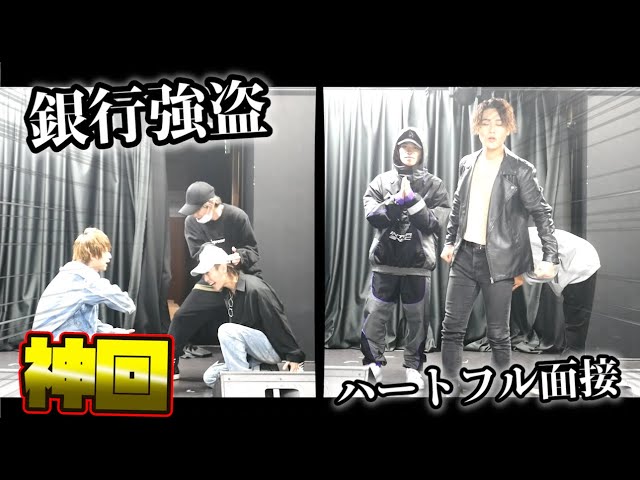
Decide on three elements—the setup, the punchline, and the constraint rules—tell the performers, and start the game! Since it’s all improvised, you can’t practice beforehand or agree on the flow with the group.
In other words, it’s a pretty challenging game where you have to reach the punchline while sticking to the setup and constraints, all without knowing how the others will play it.
Even the person who came up with the setup and punchline doesn’t know how things will unfold, so it’s a thrilling, exciting experience! Who knows—an unexpected masterpiece might be born!
Fruits Basket

I think it’s a pretty classic game often played in class, but it’s fun no matter when you do it.
It’s a game where people who fit a certain condition—like “people who are ○○”—have to stand up and move to a different seat.
You can’t sit back down in the same seat, and there will always be one person left over, so it turns into an intense game of musical chairs.
Number Guessing Clap Game

It’s a game where everyone claps together after calls like addition or subtraction in order, or prompts like “How many legs does an octopus have?” When you speed up the clapping, everyone has to think while their minds start to panic.
It’s a party game where you count numbers while clapping and everyone gets excited together.

Without Katakana

In everyday life, we often use words written in katakana.
Here, we’d like to introduce “Katakana-ashi,” a game where you explain a given topic without using katakana.
For example, you show a ball used in P.E.
and ask, “What is this?” The answer will likely be “ball.” Next, have them describe the ball without using any katakana.
Children will likely search for answers by thinking of various words in their heads.
Try switching the roles of questioner and answerer and give it a go.

IKKO game

The “IKKO Game” is a game that uses celebrity and hair-makeup artist IKKO’s catchphrase, “Dondake~!” In simple terms, it’s a shiritori word game restricted to four-letter words, but when you answer, you have to wag your index finger and say it with the same intonation as “Dondake~!” It sounds easy, but it’s surprisingly tricky! Once you get into it, though, it’s a lot of fun—using the “Dondake~!” intonation makes any word funny, so everyone’s sure to have a great time together.